Beauty packaging in 2026 will be defined by sustainability, refillability, emotional resonance, smart tech, and inclusivity—with leading brands already setting benchmarks in each area.
Trend 1 : Sustainable Materials
Consumers are demanding eco-conscious solutions, and brands are responding with biodegradable, compostable, and recycled packaging.
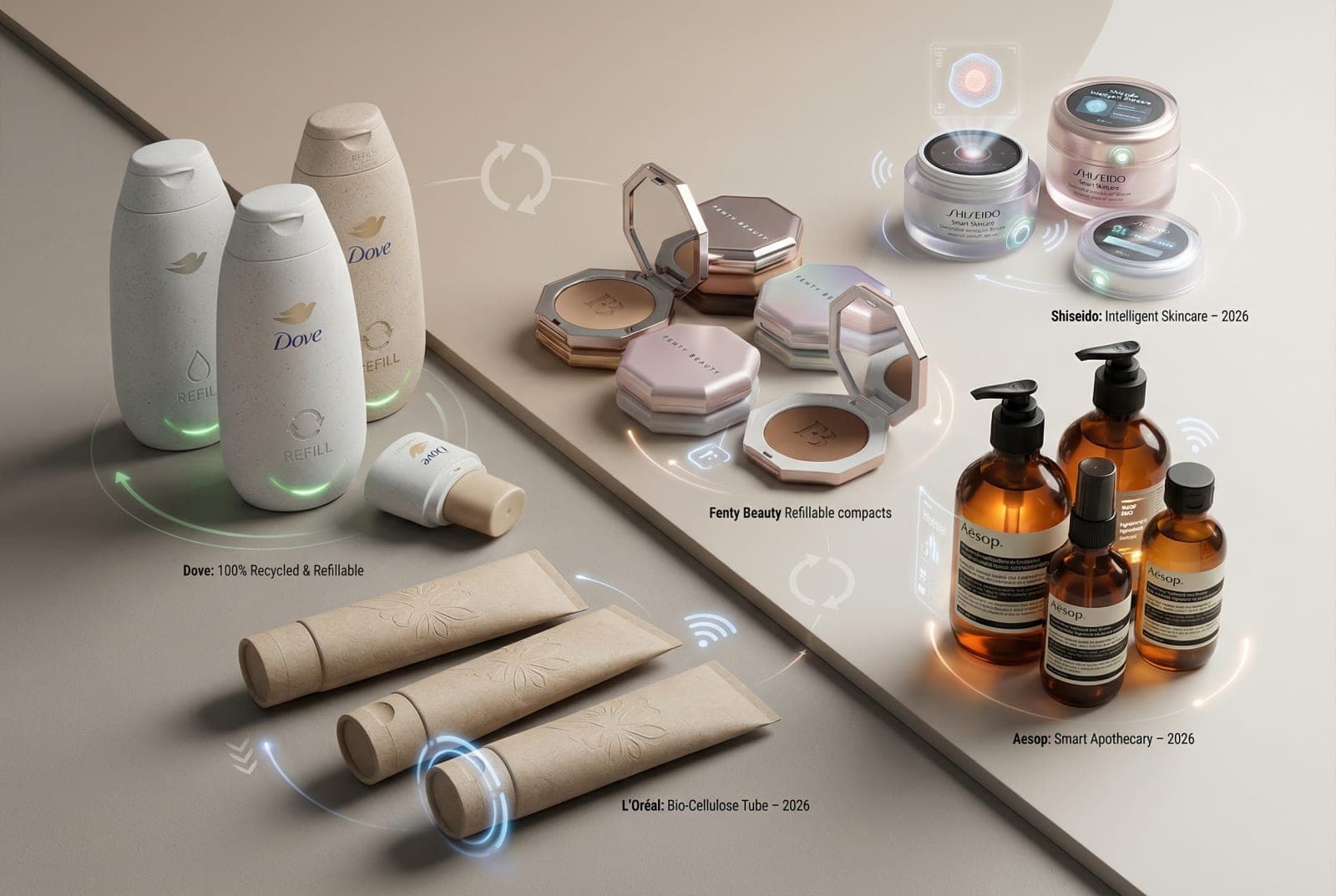
– L’Oréal has invested heavily in paper-based tubes and bottles, reducing reliance on virgin plastics.
– Unilever’s Dove continues to expand its use of 100% recycled plastic bottles, showcasing large-scale sustainability.
– Indie brands like Seed Phytonutrients are experimenting with shower-friendly paper bottles, proving that eco-design can be both functional and premium.
Trend 2 : Refillable & Reusable Systems
Refill culture is moving mainstream, with packaging designed for multiple lives.
– Fenty Beauty offers refillable compacts for foundation and powder, combining luxury with sustainability.
– Charlotte Tilbury has introduced refillable lipstick bullets, encouraging consumers to keep the case and swap shades.
– In India, Forest Essentials is piloting refill stations for skincare, tapping into local traditions of reuse.
Trend 3 : Emotional Wellness & Design Authenticity
Packaging aesthetics are shifting toward comfort, authenticity, and tactile engagement.
– Glossier embraces minimalist, pastel packaging that evokes calm and intimacy.
– Aesop continues to champion understated amber bottles with clinical typography, reinforcing trust and authenticity.
– Emerging D2C brands are experimenting with “perfectly imperfect” textures—matte finishes, embossed surfaces, and hand-drawn motifs—to connect emotionally with consumers.
Trend 4 : Smart Packaging & Tech Integration
Interactive packaging is becoming a key differentiator, offering ingredient transparency, tutorials, and gamified engagement.
– Shiseido has piloted NFC-enabled skincare jars that link to personalized usage guides.
– Estée Lauder integrates QR codes on packaging to provide instant access to sustainability data and product provenance.
– Startups like Yuni Beauty are experimenting with AR overlays, letting consumers visualize product rituals before purchase.
Trend 5 : Inclusive & Ergonomic Packaging
Accessibility is now a design priority, ensuring packaging is easy to open, hold, and use for diverse consumers.
– Procter & Gamble’s Herbal Essences bottles feature tactile markings to help visually impaired consumers distinguish shampoo from conditioner.
– Rare Beauty by Selena Gomez designs applicators with ergonomic grips, mindful of users with limited dexterity.
– Lush Cosmetics continues to champion gender-neutral, universally appealing packaging, reinforcing inclusivity at every touchpoint.
For us in the Cosmetic industry , these trends highlight how packaging is no longer just functional—it’s a storytelling medium. Brands are using materials, textures, and technology to institutionalize sustainability, deepen emotional connection, and expand accessibility. The winners in 2026 will be those who treat packaging as both a strategic marketing asset and a cultural statement.
Beauty packaging in 2026 is about more than aesthetics—it’s about responsibility, resonance, and relevance.