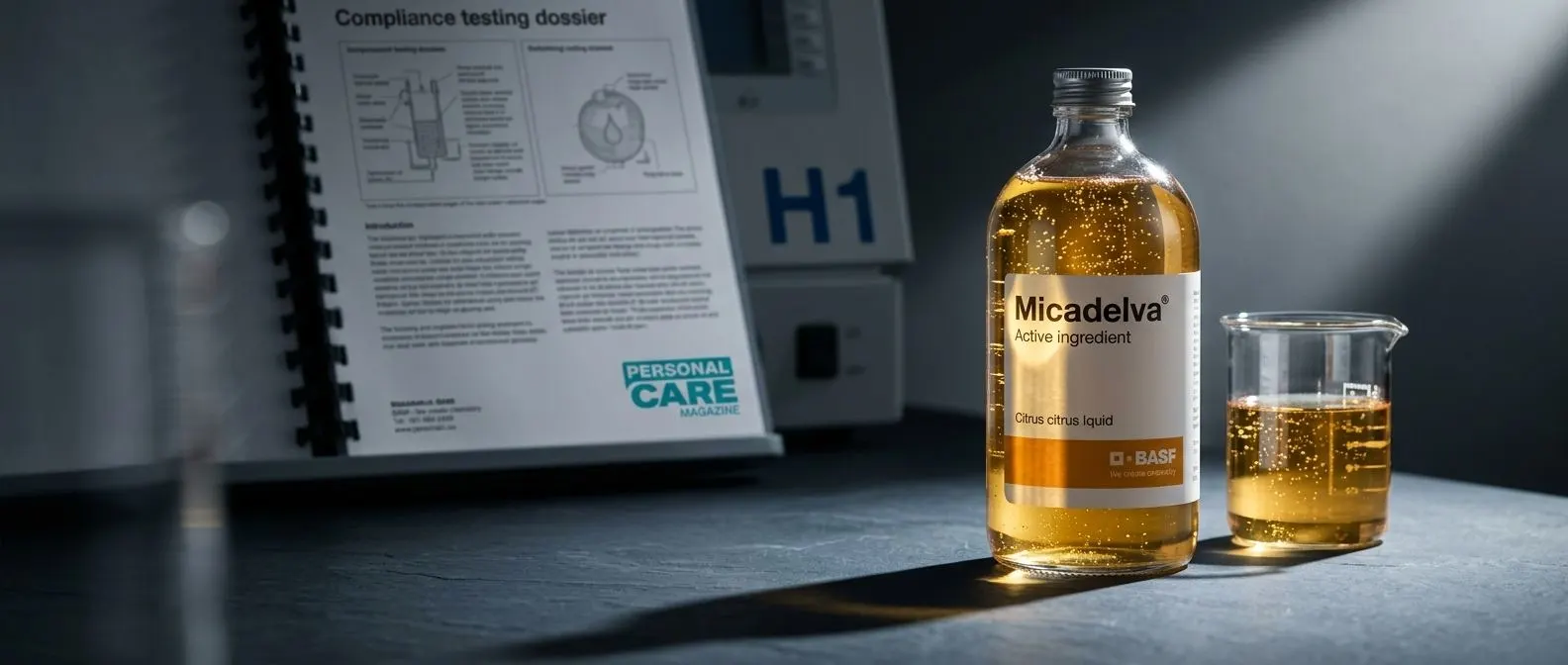
Ask any cosmetic chemist: formulating stable, non-sensitising citrus top notes is an absolute nightmare. Cold-pressed citrus oils and natural terpenes like *d*-limonene or citral break down almost instantly when exposed to air and light. This auto-oxidation forms sensitising hydroperoxides—the primary culprit behind fragrance-induced contact dermatitis.
BASF built its new Micadelva™ citrus aroma platform using a Safe-by-Design predictive framework to eliminate this structural flaw at the computational stage. Rather than fixing an unstable ingredient after the fact, the platform gives R&D teams a chemically resilient, non-allergenic alternative engineered for high-performance personal care.
Molecular Architecture via Safe-by-Design
Micadelva™ fundamentally alters how R&D teams approach fragrance synthesis. Instead of running toxicological tests on a finished chemical batch, BASF integrates Quantitative Structure-Activity Relationship (QSAR) and *in silico* modeling into the earliest design phase. This computational screening catches and removes hazardous molecular traits before anyone ever touches a beaker in the lab.
Specifically, the system screens out hydroperoxide precursors—the reactive groups that turn standard citrus notes into skin irritants upon oxidation. At the same time, it filters out potential endocrine-disrupting profiles and persistent bioaccumulative structures right at the blueprint stage. The end product is an ingredient that delivers a crisp orange-peel olfactive signature backed by subtle metallic and floral facets. Better yet, Micadelva™ carries an 80% Renewable Carbon Index (RCI), allowing formulators to hit strict corporate sustainability targets without compromising structural performance.
Substrate Compatibility and Formulation Stability
Traditional citrus terpenes fall apart in aggressive chemical bases. Low photostability and extreme pH levels routinely destroy their olfactive integrity, causing off-odors and severe discolouration. Micadelva™ bypasses these operational hurdles, giving contract development and manufacturing organisations (CDMOs) a robust aroma molecule that holds up across notoriously difficult chassis.
In acidic skincare—such as exfoliant serums formulated with high-concentration AHAs and BHAs—the molecule resists both discolouration and structural breakdown. It demonstrates similar endurance at the opposite end of the pH spectrum. In alkaline chassis like depilatory creams or intensive scalp treatments, where natural citrus extracts typically sour into foul chemical notes, Micadelva™ retains its clean profile. It also offers exceptional photolytic endurance, standing up to direct light exposure in clear packaging without fading or chemical quenching.
Indian Regulatory Strategy and CDSCO Compliance
For Indian brands navigating Central Drugs Standard Control Organisation (CDSCO) mandates, citrus formulations carry distinct compliance hurdles. Under Indian Standard IS 4707 (Parts 1 & 2), regulatory teams must strictly monitor oxidized terpene thresholds due to allergen risks.
Because BASF engineered Micadelva™ without hydroperoxide precursors, it avoids the regulatory traps associated with oxidized terpenes under IS 4707 altogether. Furthermore, under the CDSCO Cosmetic Rules 2020, an inherently non-sensitising molecule simplifies the entire safety dossier. R&D directors can strip out the mandatory warning labels required for standard EU/IFRA fragrance allergens, clearing a fast path for hypoallergenic and sensitive-skin claims across domestic and export markets.
B2B Commercial Opportunities
This technical breakthrough unlocks immediate commercial whitespace. In active skincare, formulators can finally add a signature citrus scent to exfoliant pads, vitamin C serums, and clinical acne treatments that previously required unfragranced bases. Sensitive-skin and dermatological lines gain a safe path into citrus-scented baby care, eczema-friendly body lotions, and barrier-repair treatments. Even high-performance hair care benefits: the molecule withstands the aggressive oxidative environments of permanent hair dyes and texturising treatments.
By combining predictive toxicological safety with high chemical endurance, BASF’s platform offers a clear, actionable roadmap for non-allergenic fragrance innovation across the Indian personal care landscape.