A Packaging Material Designed Around End-of-Life
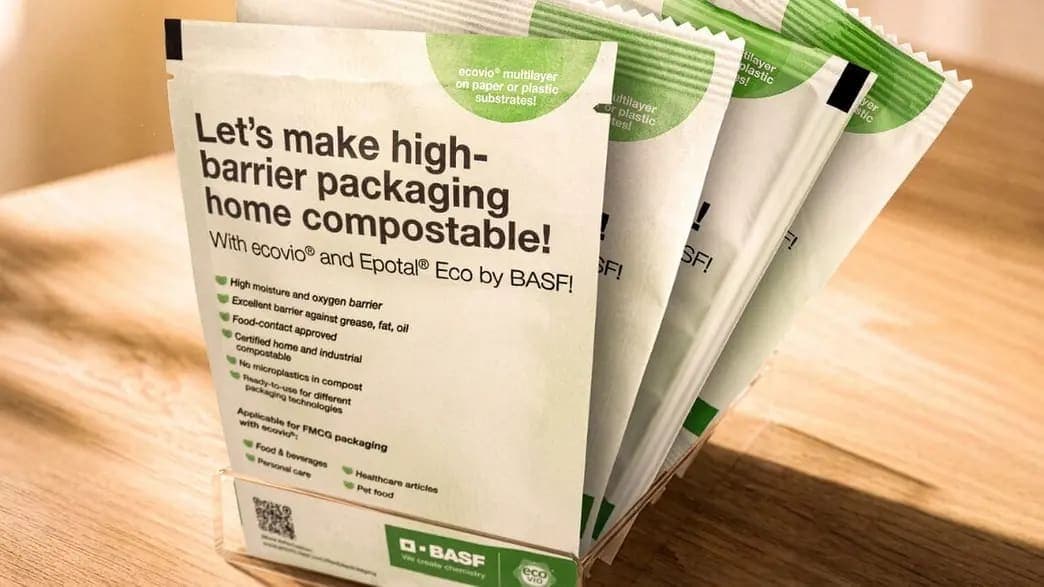
BASF has expanded its ecovio portfolio with new certified home-compostable grades designed for extrusion coating and film lamination applications. The materials can be applied to both paper and plastic substrates while providing configurable barriers against grease, liquids, oxygen, and moisture.
At first glance, the announcement appears to be another sustainability-focused material launch.
However, for packaging engineers, procurement teams, and sustainability managers, the more important story lies elsewhere.
The development reflects a broader shift in packaging strategy. Historically, packaging decisions were driven primarily by performance, cost, and shelf-life requirements. Increasingly, end-of-life considerations are becoming equally important design parameters.
That shift is being accelerated by tightening regulatory requirements, expanding Extended Producer Responsibility (EPR) frameworks, and growing retailer expectations around packaging sustainability.
Why Flexible Packaging Remains a Problem
Flexible packaging remains one of the most difficult packaging categories to address from a sustainability perspective.
Its popularity is understandable.
Flexible formats offer lower transportation costs, reduced material consumption, lightweight logistics advantages, and strong product protection.
For cosmetics and personal care brands, flexible pouches, sachets, refill packs, wipes packaging, and laminated structures continue to deliver compelling commercial advantages.
The challenge emerges after use.
Many conventional flexible packaging structures rely on multi-material laminates that combine plastics, adhesives, coatings, and barrier layers. These combinations often provide excellent performance but can create significant recycling challenges.
As regulators place greater emphasis on packaging recovery rates, brands are being forced to reconsider material architectures that historically prioritised functionality above circularity.
The Significance of Configurable Barrier Performance
One of the most notable aspects of BASF's new ecovio grades is their ability to deliver adjustable barrier performance.
Barrier requirements vary significantly across applications.
A shampoo refill pouch requires different protection than a facial mask, a wet wipe, or a powdered beauty supplement.
The new grades are designed to allow manufacturers to create either single-layer or multi-layer structures depending on product requirements.
This flexibility matters because packaging sustainability frequently fails when performance compromises become unacceptable.
Consumers may support sustainable packaging in principle, but product failures caused by moisture ingress, oxygen exposure, leakage, or reduced shelf life quickly undermine adoption.
The ability to customise barrier properties while maintaining alternative end-of-life pathways addresses one of the industry's most persistent packaging challenges.
Home Compostability Is Becoming Strategically Relevant
The new ecovio grades are certified for home composting.
This distinction is important.
Industrial composting infrastructure remains limited in many regions globally. Materials requiring specialist collection and processing systems often struggle to achieve their intended environmental outcomes.
Home-compostable materials reduce dependence on dedicated infrastructure by allowing disposal through domestic composting systems where local conditions permit.
That does not automatically make compostable packaging the best solution for every application.
However, it does expand the available toolkit for sustainability teams seeking alternatives to difficult-to-recycle flexible structures.
The significance lies less in replacing conventional materials entirely and more in creating additional options for specific packaging categories.
The Paper Recycling Opportunity
Perhaps the most commercially interesting aspect of the announcement is the potential compatibility with paper recycling streams.
Historically, barrier coatings have complicated paper recyclability.
Many paper-based packaging formats lose recyclability once coatings, laminates, or protective layers are added to achieve necessary performance characteristics.
BASF's approach seeks to maintain packaging functionality while supporting recycling through paper recovery channels where local recycling processes and packaging designs allow.
For packaging engineers, this represents a potentially valuable middle ground.
Rather than choosing exclusively between recyclability and functionality, brands may gain access to solutions that support both objectives under appropriate conditions.
Why Indian Manufacturers Should Pay Attention
Although the announcement is global, the implications are highly relevant for Indian cosmetics and personal care manufacturers.
India's Plastic Waste Management Rules and EPR framework continue to increase pressure on producers regarding packaging recovery obligations.
Many beauty companies are already evaluating recycled content targets, refill systems, mono-material structures, and alternative packaging materials.
Flexible packaging remains a particularly difficult category.
Refill packs, sachets, wipes packaging, and laminated pouches often present recovery challenges under current waste collection and processing systems.
Materials that provide additional end-of-life pathways could become increasingly attractive as EPR costs and compliance expectations evolve.
For sustainability heads, the key question is not whether compostable materials will replace all flexible packaging.
The question is where they may provide a commercially viable compliance advantage.
The Procurement Reality
New packaging materials rarely succeed based solely on sustainability credentials.
Procurement teams ultimately evaluate solutions through multiple criteria:
* Material cost
* Supply security
* Processing compatibility
* Machinery requirements
* Shelf-life performance
* Regulatory compliance
* End-of-life benefits
The adoption of home-compostable materials will depend heavily on how effectively suppliers address these practical considerations.
Packaging innovation becomes significantly easier when it integrates into existing production infrastructure.
Manufacturers should therefore focus not only on material properties but also on operational implications.
Building an EPR-Focused Packaging Roadmap
The broader lesson from BASF's announcement is that packaging strategy is increasingly becoming an end-of-life strategy.
The brands best positioned for future compliance requirements are already evaluating multiple recovery pathways rather than relying on a single sustainability solution.
For cosmetics manufacturers, several priorities are emerging:
Audit High-Risk Flexible Packaging
Identify packaging formats most exposed to recycling limitations and future EPR cost increases.
Evaluate Alternative Recovery Models
Consider recyclability, compostability, refillability, and reuse alongside conventional packaging metrics.
Engage Suppliers Earlier
Material innovation cycles are accelerating. Early supplier engagement improves access to emerging technologies and testing opportunities.
Quantify Compliance Costs
Future packaging decisions should increasingly include EPR costs alongside material and logistics costs.
Sustainability Is Becoming a Packaging Design Constraint
The significance of BASF's expanded ecovio portfolio extends beyond a single material launch.
It reflects a broader industry transition in which packaging is no longer evaluated solely by what it protects, but also by what happens after disposal.
For manufacturers, compliance teams, and sustainability leaders, end-of-life planning is becoming inseparable from packaging design.
The companies that integrate recovery pathways into packaging development today are likely to face lower compliance risk, stronger retailer alignment, and greater flexibility as sustainability regulations continue to evolve.