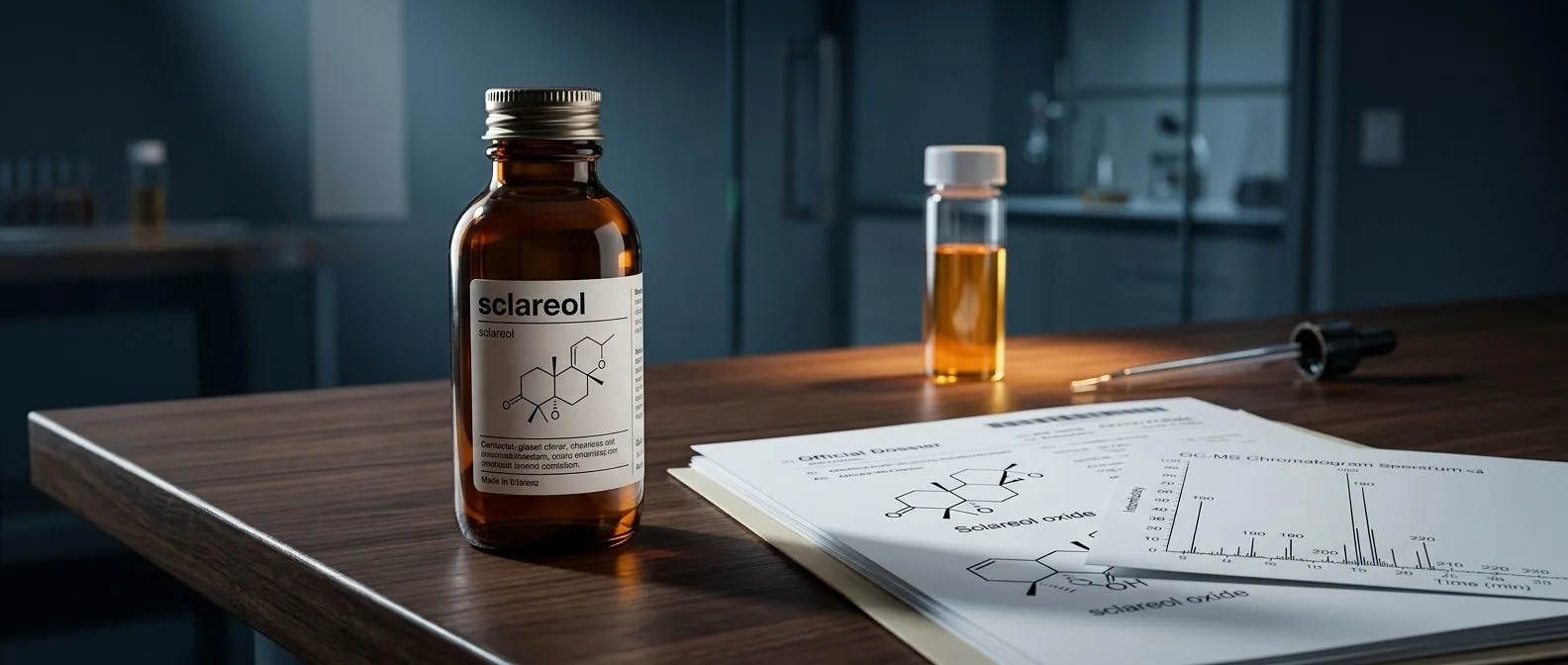
The ongoing IP infringement lawsuit filed by dsm-firmenich in China over biotechnological sclareol establishes a critical legal precedent for the global fragrance and personal care industries. As precision fermentation steadily replaces botanical farming and synthetic petrochemistry, high-value bio-derived aroma intermediates face intense legal exposure. For Indian cosmetics brand owners, R&D chemists, and contract manufacturing organizations (CMOs), this dispute highlights the severe operational risk of rushing into green chemistry without rigorous supply chain vetting.
The Biotechnology Behind Sclareol & Amber Aroma Intermediates
Sclareol, a labdane diterpene diol, is the core chemical precursor used to synthesize (−)-Ambrox (marketed in high-purity grades as Ambrox® Super)—the key molecule responsible for the distinct, warm fixative performance of natural ambergris.
Traditionally extracted from clary sage (*Salvia sclarea*), modern biomanufacturing uses engineered microbial strains like *Saccharomyces cerevisiae* or *Escherichia coli*. Instead of relying on vulnerable seasonal crop yields, bio-engineers modify these host chassis to express heterologous enzymes—specifically diterpene synthases and cytochrome P450s. These metabolic pathways cyclize geranylgeranyl diphosphate (GGPP) directly into sclareol during precision fermentation.
While this route delivers consistent, weather-independent raw materials, the underlying IP—covering engineered genetic constructs, enzymatic pathways, and specialized downstream purification techniques—is heavily guarded by early industry innovators.
Freedom-to-Operate (FTO) and Supply Chain Risks for Indian CDMOs
The dsm-firmenich lawsuit in Chinese courts demonstrates the direct financial risk of sourcing unverified bio-aroma chemicals from discount overseas suppliers. Indian CDMOs and beauty brands exporting finished fine fragrances to North America, Europe, or East Asia face immediate secondary infringement liabilities if imported input materials breach active global patent families.
Before scaling production, Indian procurement teams must run independent Freedom-to-Operate (FTO) checks rather than relying solely on vendor certificates. R&D leaders should insist on enforceable IP indemnification clauses, verified patent mapping, and complete supply-chain batch traceability from every raw material distributor before sign-off.
Regulatory Compliance: Navigating BIS, CDSCO, and GEAC
Integrating fermentation-derived fragrance intermediates into domestic formulations demands active quality control and strict regulatory compliance across three core oversight bodies:
BIS Standards (IS 7303): Bio-derived fragrance ingredients must strictly meet IS 7303 specifications for physical constants, heavy metals, and purity profiles before clearing incoming inspection.
Cosmetics Rules, 2020 (CDSCO): Regulatory audits of Product Information Files (PIF) now demand raw GC-MS peak integration data to confirm structural isomerism and verify the complete absence of residual fermentation solvents. QA directors must also establish threshold testing for residual host-cell proteins (HCP) to prove complete cellular clearance during downstream processing.
GEAC Biosafety Guidelines: Importing or processing unrefined biomanufactured fractions derived from genetically modified microorganisms (GMMs) requires explicit biosafety approvals from the Genetic Engineering Appraisal Committee (GEAC) under the Ministry of Environment, Forest and Climate Change.
Strategic Imperatives for the Indian Market
Driven by growing global demand for sustainable, petroleum-free formulations, bio-sclareol-derived ambroxan has become a standard ingredient for modern perfumers. However, commercial adoption cannot outpace legal due diligence. Indian manufacturers must pair analytical QC with strict supplier audits. Securing legitimate, FTO-cleared biotechnological raw materials remains the only reliable strategy for building globally competitive, export-ready beauty portfolios.