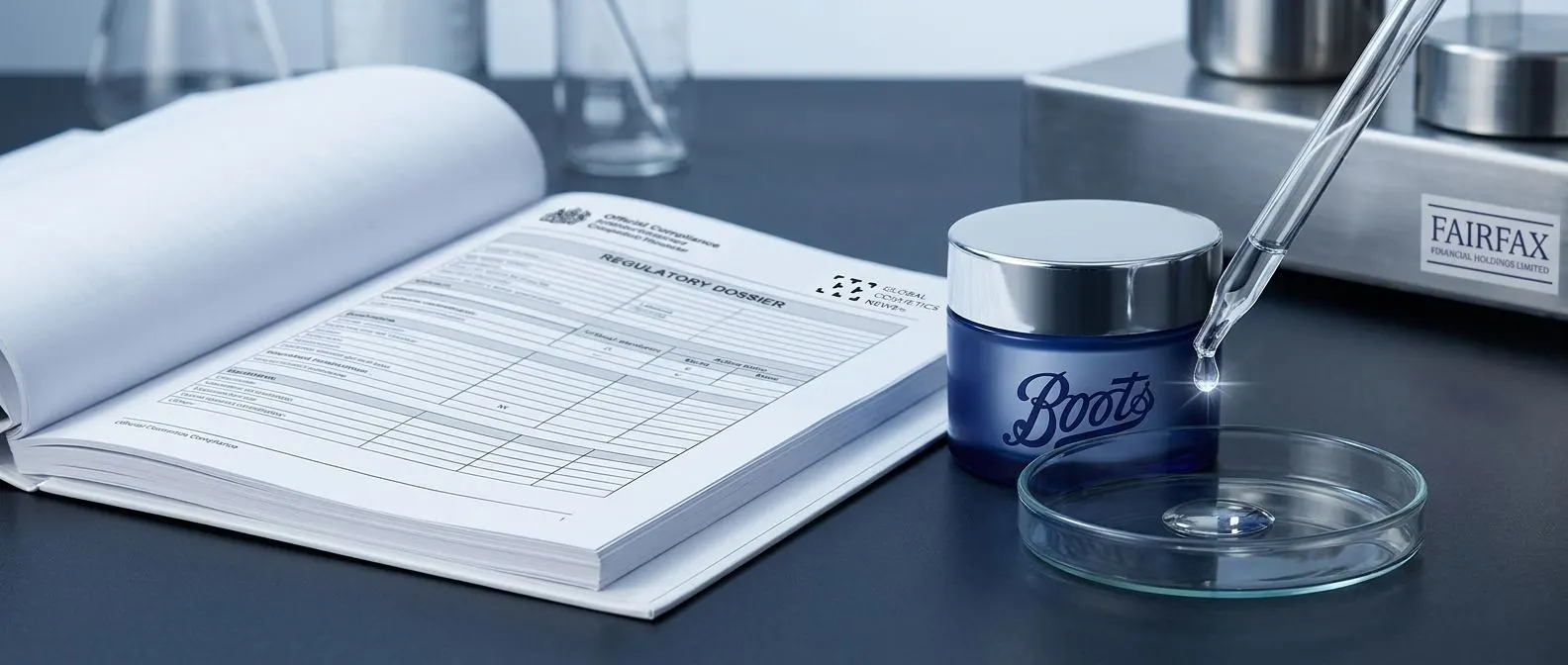
When Fairfax Financial Holdings and Wittington Investments sealed their $8.9 billion deal for Boots, they didn't just buy a retail giant—they kicked off a massive margin squeeze across flagship private labels like No7. As the new owners audit supply chains to cut manufacturing costs and lift gross margins, legacy European contract manufacturers face intense price pressure. That gives Indian suppliers direct leverage to pitch for private-label contracts and high-capacity manufacturing runs. Overseas buyers want nimble partners who can formulate complex, high-performance dermocosmetics at scale without compromising on international quality standards.
Advanced Active Focus: Scalable Dermocosmetics
To win these tenders, Indian formulators must move beyond basic mixing and deliver active delivery systems built for high-volume production:
Anti-Ageing Peptide Platforms: Combine signal peptides like Palmitoyl Tripeptide-1 and Palmitoyl Tetrapeptide-7 with lipid nanocarriers. This protects peptide integrity under shear stress and thermal load during industrial batch processing.
Stabilised Retinoids: Use ethosomal or liposomal encapsulation when processing Retinol to prevent heat-induced oxidation on large-batch mixing lines and maintain potency across varied supply chain temperatures.
Barrier Repair & Brightening Systems: Source 99% pure-grade Niacinamide with ultra-low residual nicotinic acid to stop skin flushing, then pair it with micro-encapsulated L-Ascorbic Acid for stable, targeted hyperpigmentation treatments.
Bio-Identical Lipid Emulsions: Blend Ceramides NP, AP, and EOP in precise physiological ratios that match the stratum corneum, turning everyday lotions into clinical-grade barrier repair lines.
Regulatory Rigour: Navigating CDSCO and Global Standards
Cross-border supply agreements require airtight compliance on both ends. Bringing Boots formulations into India means clearing Central Drugs Standard Control Organization (CDSCO) hurdles. Importers must secure Form COS-2 licensing and enforce strict alignment with IS 14299 safety standards. That includes verifying zero-animal-testing declarations and holding heavy metals below tight limits—specifically Lead under 20 ppm and Arsenic under 2 ppm.
For Indian CDMOs targeting export markets, matching local *Cosmetics Rules, 2020* with international norms is mandatory. Factories must operate under ISO 22716 (cGMP) standards across all compounding and filling lines. Finished goods exported to the UK or EU must fully satisfy Regulation (EC) No 1223/2009, requiring comprehensive Cosmetic Product Safety Reports (CPSR) and complete batch traceability from raw material to retail shelf.
Strategic Playbook for Indian Manufacturers
High-street retail margin pressures create a clear opening for Indian suppliers to offer turnkey, market-ready solutions. Rather than playing a race-to-the-bottom commodity game, CDMOs should pitch pre-formulated, clinically backed white-label serums. Formulations combining multi-molecular weight Hyaluronic Acid complexes with stabilized peptide matrices allow Western brands to bypass lengthy R&D cycles and fill retail shelf gaps in record time.
Simultaneously, R&D directors need to phase out legacy surfactant formulations. European retail buyers are demanding clean-label, green-chemistry systems. Replacing harsh sulfates with mild alternatives like Sodium Cocoyl Isethionate (SCI) and switching to green preservative blends—such as Phenoxyethanol combined with Ethylhexylglycerin—gives Indian suppliers the exact product profile modern retail buyers want. Pairing advanced encapsulation tech with verified cGMP credentials turns Indian CDMOs into indispensable long-term production partners.