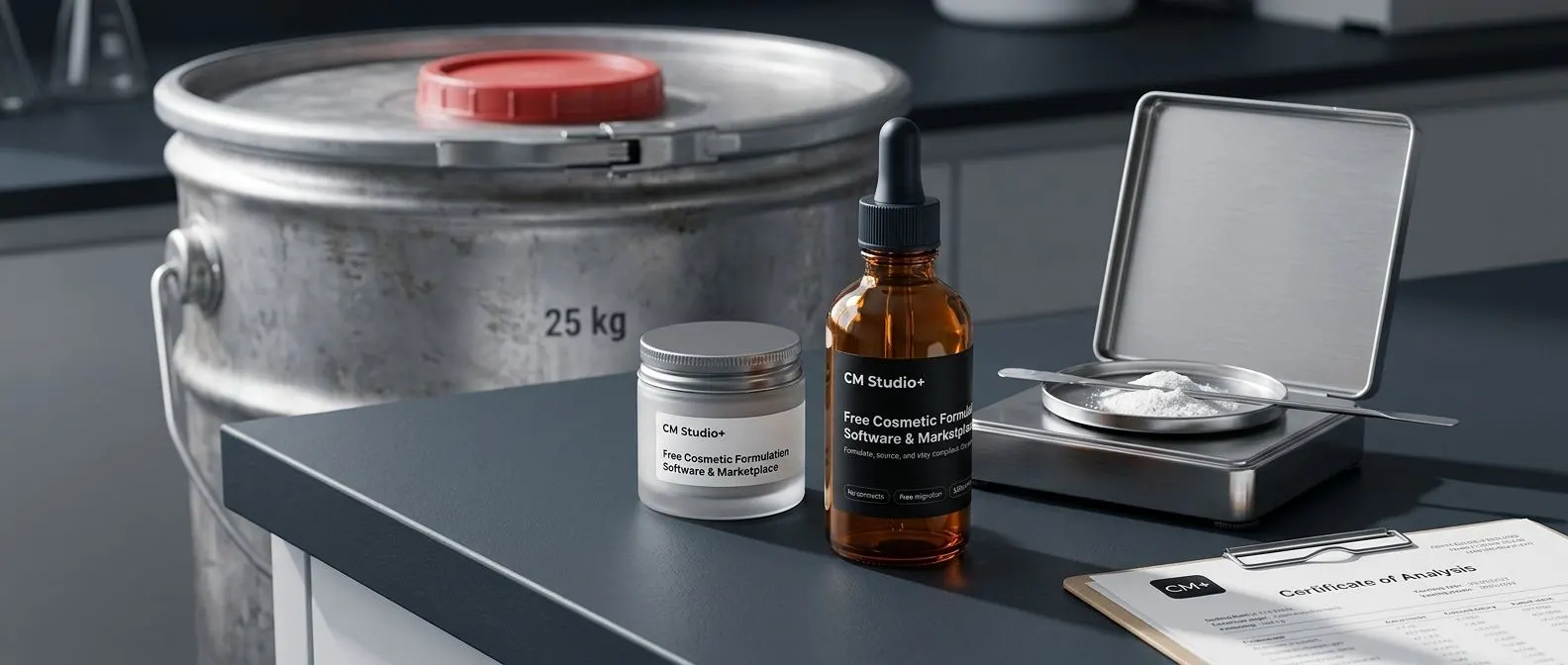
Ask any cosmetic chemist in India about their biggest practical headache, and they will likely point to raw material minimum order quantities (MOQs). Independent D2C brands routinely delay product launches because a single niche peptide requires buying a 25-kilogram drum. Meanwhile, established contract development and manufacturing organizations (CDMOs) watch millions of rupees in active ingredients sit idle in climate-controlled storage, slowly creeping toward expiration.
To fix this structural imbalance, beauty tech firm CM Studio+ has launched SwapBoard. This dedicated B2B platform connects Indian formulators, brand owners, and CDMOs to trade surplus cosmetic raw materials securely. By establishing a verified marketplace for secondary-market inventory, SwapBoard frees up frozen working capital for manufacturers while giving indie brands quick access to smaller, bench-scale raw material lots.
Preventing Active Ingredient Degradation in Transferred Stock
Trading raw materials outside primary distributor networks demands strict technical oversight. High-value actives like L-Ascorbic Acid, topical peptides, and retinoids degrade rapidly when exposed to fluctuating temperatures, light, or oxygen. Even standard functional surfactants like Sodium Cocoyl Isethionate (SCI) and botanical extracts can clump or oxidize if stored in poor warehouse conditions.
To stop compromised stock from causing phase separation or sudden viscosity drops during pilot runs, SwapBoard builds clear technical verification steps directly into the listing process:
CoA Verification: Quality control teams match listed stock directly against the original primary manufacturer's Certificate of Analysis to verify active purity and assay levels.
Physicochemical Testing: Formulators test secondary-market stock for pH drift, active concentration, and peroxide values before committing ingredients to production batches.
Shelf-Life Tracking: Listings require verified remaining shelf-life data, giving R&D teams total visibility into ingredient stability before bench testing begins.
Navigating India’s CDSCO Regulatory Standards
Transferring cosmetic raw materials between commercial facilities requires strict adherence to India’s Central Drugs Standard Control Organisation (CDSCO) Cosmetics Rules, 2020. Secondary market trading cannot bypass regulatory rigor, as maintaining product safety remains mandatory for state licensing audits.
SwapBoard embeds key compliance steps directly into the transaction workflow to keep supply chains fully traceable:
Unbroken Chain of Custody: Every trade generates a digital paper trail linking the buyer back to the primary manufacturer’s master batch records and authentic CoAs.
Schedule M-II GMP Standards: Sellers must verify that warehousing conditions meet Schedule M-II Good Manufacturing Practices, maintaining active temperature and humidity logs to prevent contamination.
Mandatory Analytical Re-Testing: Receiving CDMOs and OEMs must re-analyze all incoming stock—verifying raw identity, testing heavy metal limits (such as Lead ≤ 20 ppm), and running microbial screens before releasing materials into production.
Form RS-1 Tracking: For imported ingredients, the platform tracks active Form RS-1 registration details to keep cross-facility transfers fully legal.
Cutting NPD Timelines and Unlocking Idle Capital
Beyond meeting regulatory standards, SwapBoard restructures the economics of product development across India. Traditional global suppliers often mandate large minimum purchases that lock up operational cash and force startups to hoard excess stock. SwapBoard enables buyers to source downscaled 1-to-5 kg quantities tailored specifically for trial runs and small batches.
Bypassing standard 8-to-12-week international import delays accelerates the New Product Development (NPD) cycle from months to days. At the same time, CDMOs can liquidate stagnant stock, converting dead inventory into active cash flow while directly cutting Scope 3 material waste across the beauty supply chain.