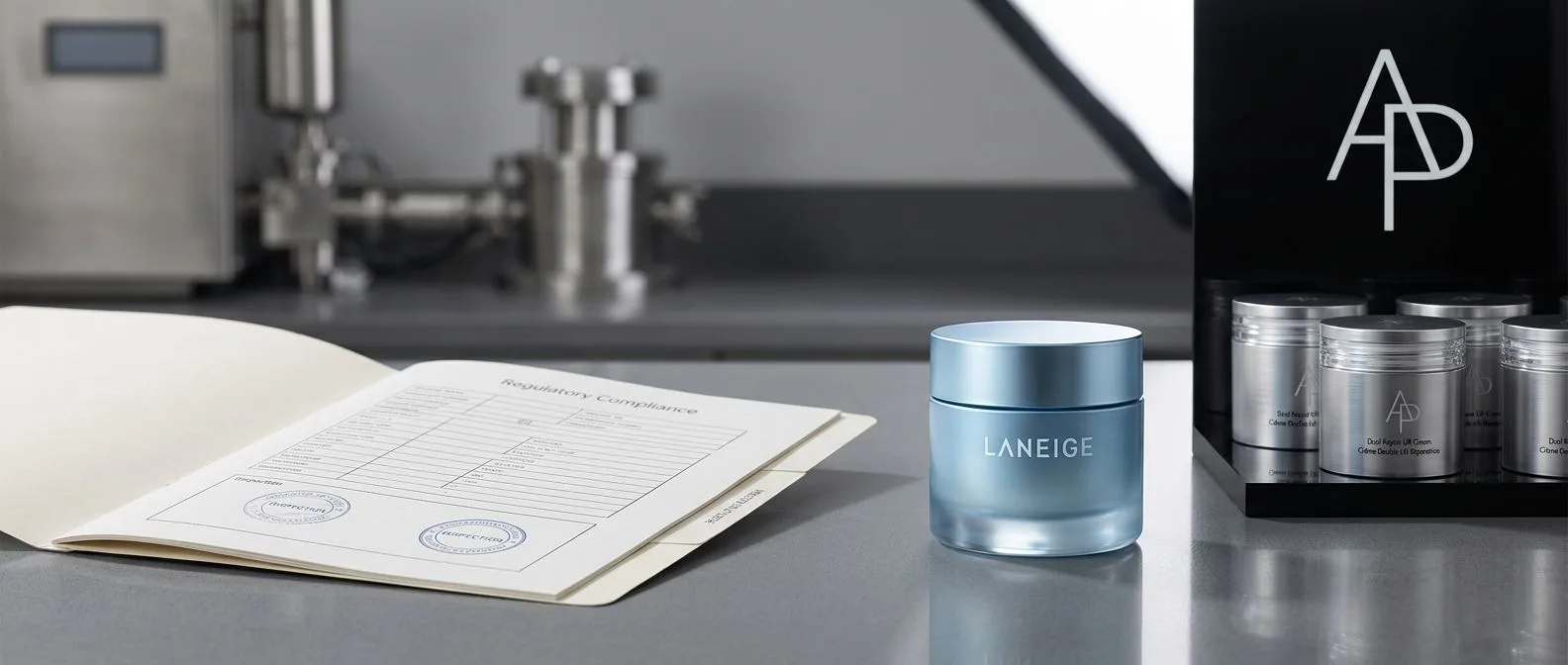
EU-bound cosmetic shipments face immediate regulatory exposure at European ports following the publication of SCCS/1689/26. The Scientific Committee on Consumer Safety (SCCS) has established an absolute 100 ppm (0.01%) concentration cap on Acetophenone (CAS No: 98-86-2) across finished leave-on and rinse-off formulations. Driven by reproductive toxicity data (classified as Repr. 1B under EU CLP regulations), this opinion shifts acetophenone from a standard fragrance constituent to a high-risk compliance bottleneck for Indian exporters, fragrance houses, and Contract Development and Manufacturing Organisations (CDMOs).
Identify Hidden Acetophenone in Natural Complex Substances (NCS)
The primary compliance bottleneck stems from natural ingredient profiles rather than synthetic additions alone. Acetophenone occurs naturally within widely used Natural Complex Substances (NCS), including cinnamon leaf, tea tree, labdanum, and common essential oil bases.
The SCCS restriction targets the compound’s metabolic oxidation into reactive intermediates and its aggregate systemic load across consumer exposure routes. Because raw botanical matrices suffer from inherently unpredictable batch variation, unmonitored natural oils will quietly push finished formulations over the 100 ppm boundary. Relying on historical supplier safety sheets without testing specific lots exposes finished goods to immediate border rejections and costly product holds.
Prepare for CDSCO IS 4707 Realignment
While European exporters must comply immediately, domestic Indian manufacturers cannot afford to wait. The Central Drugs Standard Control Organisation (CDSCO) routinely mirrors EU SCCS rulings by updating Indian Standard IS 4707 (Part 2), which governs raw material allowances in cosmetics. To insulate operations against both international detentions and domestic regulatory shifts, quality assurance teams must execute three immediate operational shifts:
Deploy High-Resolution GC-MS Quantification: Replace standard Flame Ionization Detection (FID) protocols. FID testing frequently lacks the sensitivity required to accurately isolate trace ketone peaks at or below 100 ppm within dense essential oil matrices. Mandate high-resolution Gas Chromatography-Mass Spectrometry (GC-MS) for all incoming botanical lots.
Revoke Legacy CoAs and Require Batch-Level Limits: Cancel supplier agreements relying on outdated baseline specifications. Require raw material vendors to issue batch-specific Certificates of Analysis (CoAs) that explicitly verify acetophenone concentrations remain below 0.01%.
Recalculate Aggregate Formulation Loads: Run quantitative exposure audits on all active SKUs containing natural fragrance blends or raw essential oils. Measure total combined acetophenone presence across multi-component fragrance pyramids before committing to commercial production runs.
Engineer Low-Acetophenone Botanicals and Turnkey Compliance
This regulatory shift creates a clear commercial advantage for ingredient suppliers and contract manufacturers equipped with advanced processing technologies.
Advanced Processing and Ketone Stripping: Raw material manufacturers must transition to specialized isolation techniques. Deploying targeted fractional distillation and supercritical carbon dioxide (CO2) extraction allows processing teams to selectively strip trace aromatic ketones like acetophenone while preserving the original olfactory profile of the natural botanical.
Turnkey EU Compliance for CDMOs: Indian contract manufacturers can capture market share by offering pre-certified, "EU-Ready" private-label formulations. By building pre-validated botanical libraries and verified non-detect fragrance bases, CDMOs eliminate regulatory friction for domestic brands expanding into European retail channels.
Future-Proof Formulations Against Trace-Contaminant Enforcement
The SCCS ruling on acetophenone signals an accelerating enforcement trend targeting trace-contaminant thresholds across natural ingredients. Indian beauty brands and CDMOs must abandon reactive compliance in favor of rigorous, batch-level raw material qualification. Integrating precision analytical testing and securing engineered, stripped botanical actives are now fundamental requirements for maintaining access to high-value global markets.