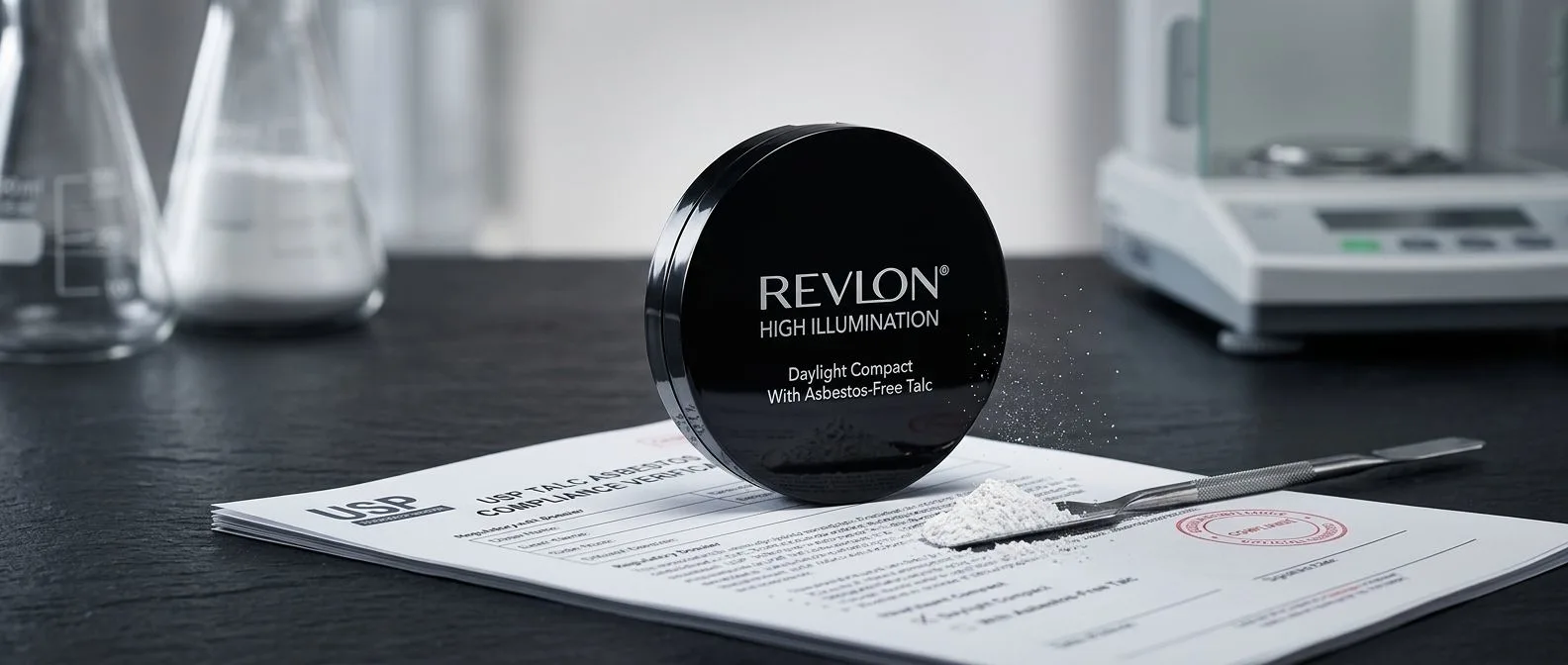
Congressional lawmakers in Washington are pulling back the curtain on legacy cosmetic formulations, putting industry giants like Revlon directly in their crosshairs following intensified US FDA action on talc asbestos contamination. The fallout isn't staying inside US borders. For Indian brand owners, contract development and manufacturing organisations (CDMOs), and raw material importers, this oversight forces an immediate audit of raw material quality assurance. Expect the Central Drugs Standard Control Organization (CDSCO) to step up spot-checks on imported talc shipments and dry-powder inventories across domestic facilities, especially those exporting to North American and European markets.
The Analytical Gap: Why XRD and PLM Fail
Cosmetic-grade talc is a naturally occurring hydrous magnesium silicate—Mg3Si4O10(OH)2—that often forms alongside fibrous amphibole and serpentine asbestos minerals like tremolite and chrysotile.
The practical problem with XRD (X-Ray Diffraction) and PLM (Polarised Light Microscopy) is their resolution limit. These traditional factory-floor methods routinely miss trace, sub-micron asbestos fibres that trigger regulatory alerts. To align with updated United States Pharmacopeia (USP) talc monograph standards, quality heads must upgrade to Transmission Electron Microscopy (TEM) paired with Selected Area Electron Diffraction (SAED). This analytical combination pinpoints sub-micron Elongate Mineral Particles (EMPs), stopping microscopic contamination at the warehouse door before raw materials hit production pipelines.
Navigating CDSCO Oversight and Rule 39 Exposure
In India, raw cosmetic talc operates under the Drugs and Cosmetics Rules, 2020, requiring strict conformity with Bureau of Indian Standards specification IS 1462:1985. However, as Capitol Hill pushes for tighter oversight, the CDSCO is shifting from passive monitoring to aggressive enforcement.
A single non-compliant batch of imported talc can freeze production lines, spark import alerts, and trigger enforcement under Rule 39 of the Drugs and Cosmetics Rules, which strictly bars adulterated or harmful ingredients. Quality teams must immediately implement two defensive protocols:
Batch-Specific Traceability: Require lot-by-lot Certificates of Analysis (CoAs) verified through NABL-accredited laboratories using high-resolution TEM analysis.
Rule 39 Audits: Document rigorous compliance records to insulate supply chains against sudden import halts and regulatory holds.
Reformulation Mandates: Replacing Talc on the Plant Floor
To remove long-term compliance friction and meet the global push for clean formulations, Indian R&D teams and CDMOs should pivot dry-powder categories toward high-performance talc substitutes across setting powders, colour cosmetics, and body formulations.
1. Functional Alternatives
Formulators have proven options that deliver required skin feel, slip, and oil absorption:
Starch Polymers: Modified Zea Mays (corn) starch and rice starch provide natural mattifying and smooth application.
Synthetic Inorganic Fillers: Boron nitride and synthetic fluorphlogopite deliver high purity, enhanced slip, and superior luminosity without geological asbestos risks.
Specialty Silicas: Surface-treated silicas effectively manage sebum while maintaining tactile payoff.
2. Operational Dual-Sourcing
Plant managers should establish dual-source qualifications for all dry-powder ingredients today. Supply agreements must legally bind raw material vendors to provide lot-by-lot TEM asbestos screening before shipment. Updating plant SOPs now ensures uninterrupted production for both domestic retail shelves and export pipelines across Western markets.