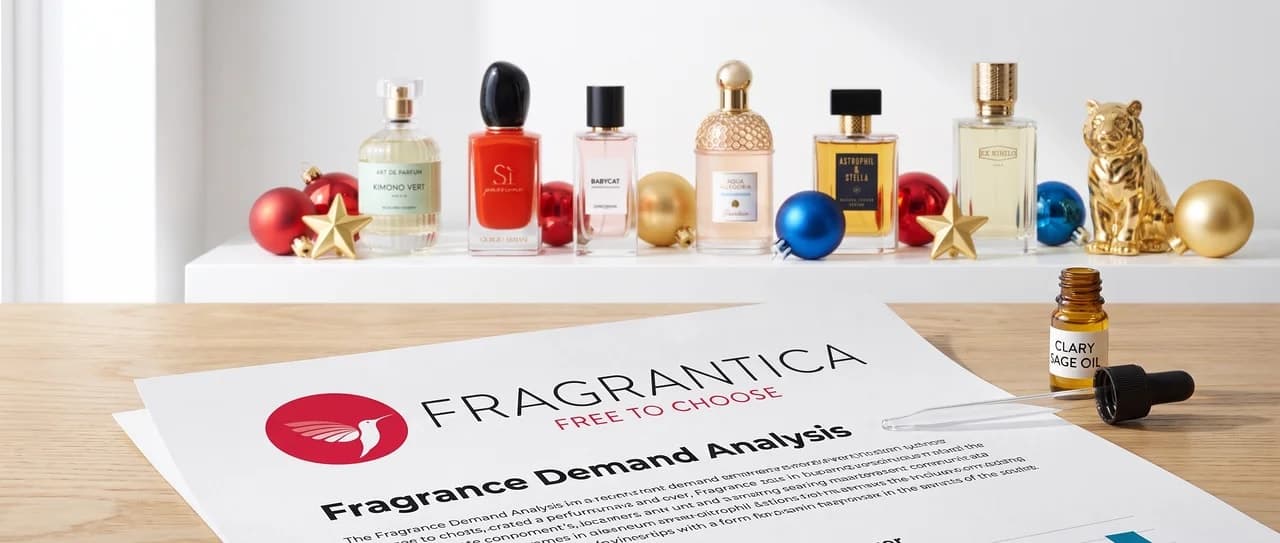
Fragrantica: The Demand Signal India's Perfumers Are Missing
Every month, 40 million people visit Fragrantica with a very specific intention: they are looking for their next fragrance. They are not browsing casually. They are reading ingredient pyramids, comparing accords, leaving detailed reviews, and building wish lists. For B2B procurement managers and brand formulation teams in India, this behavioural data is not a marketing curiosity — it is one of the most precise demand intelligence signals available to the industry, and most teams are not reading it.
The platform indexes over 100,000 fragrances from more than 3,000 brands. Fragrantica entries rank consistently on Google's first page. When a consumer searches a fragrance name, a note, or an ingredient, Fragrantica surfaces before most brand websites. For Indian perfumers building premium portfolios, understanding what the Fragrantica community actively seeks translates directly into more informed ingredient sourcing, formulation briefs, and procurement priorities.
Reading Fragrantica as a Formulation Brief
The architecture of a Fragrantica listing is, in functional terms, a structured formulation brief. Each entry features a fragrance pyramid (top, heart, and base notes), a scent descriptor wheel voted on by the community, longevity and sillage ratings, and a gender-appropriateness slider. Taken together, these fields tell procurement teams exactly which accords consumers are finding compelling and which ingredient combinations are generating the most engagement.
Trending data from the platform consistently shows elevated demand for specific olfactory families: ambery woody accords, smoky oud, solar musks, and what the community terms gourmand drydowns — vanilla, tonka, and benzoin-heavy base structures. For a formulation team tasked with developing new SKUs for the next season, this data eliminates guesswork from the brief and directly informs which raw material categories to prioritise in procurement.
Mapping Note Trends to Ingredient Categories
When Fragrantica users rate a fragrance as long-lasting and describe it with notes of Ambroxan, that signals a market preference for the macrocyclic amber captive as a fixative. Ambroxan is synthesised from Sclareol (derived from clary sage) by dsm-firmenich and Givaudan, and carries a substantial cost premium — currently trading at approximately USD 90–120 per kilogram for cosmetic-grade material. Procurement teams must factor in lead times of eight to twelve weeks for import into India, requiring forward purchasing contracts to maintain production schedules.
Similarly, high engagement around oud and bakhoor-adjacent accords on Fragrantica maps directly to sourcing pressure on Aquilaria malaccensis resin. Indian procurement teams have an advantage here: domestic sources in Assam and Meghalaya supply Agarwood oil, though consistency and grade standardisation remain significant quality management challenges.
Navigating the IFRA 51st Amendment Compliance
For any brand looking to sell domestically or export internationally, compliance with the International Fragrance Association (IFRA) standards is a mandatory step in product development. The IFRA 51st Amendment is now fully enforced for all cosmetic products as of October 2025, setting strict new concentration limits for 59 fragrance compounds based on updated dermal sensitisation and systemic toxicity data.
Ingredients the Community Loves That Carry Restrictions
The most-discussed ingredients on Fragrantica frequently include compounds that now face tighter regulatory limits:
- Linalool and Limonene: Found in lavender, bergamot, and citrus-heavy compositions — two of Fragrantica's most reviewed fragrance families. Both terpenes require antioxidant stabilisation (Tocopherol at 0.05–0.10% w/w) to prevent peroxide formation, which triggers dermal sensitisation thresholds under the 51st Amendment.
- Synthetic Musks: Several nitro-musks and polycyclic musks face tighter concentration limits or outright prohibitions due to environmental bioaccumulation concerns, requiring perfumers to reformulate using biodegradable macrocyclic musks such as Habanolide or Exaltolide.
- Oakmoss and Tree Moss: These classic chypres remain extremely popular in Fragrantica's vintage and niche segments, but Atranol and Chloroatranol restrictions limit usage to near-trace levels in leave-on applications. Formulators must substitute with low-atranol moss fractions or synthetic chypre accords.
The CDSCO Safety Dossier Requirement
Under the CDSCO (Central Drugs Standard Control Organisation) Cosmetics Rules in India, manufacturers must certify that their fragrance formulations are safe for consumer use. Obtaining an official IFRA Certificate of Conformity from the fragrance supplier is the standard method to demonstrate safety to regulatory assessors. Brands exporting to the US or EU must ensure their safety dossiers are updated to the 51st Amendment standard, as international retailers will reject non-compliant inventory.
India's Sourcing Infrastructure and the Market Opportunity
India's fragrance market is projected to cross USD 4–5 billion in valuation through 2026, with growth concentrated in the premium and ultra-premium segment. This creates both an opportunity and a supply chain stress point for domestic manufacturers.
Where India Has a Natural Advantage
India holds a globally recognised position in several key natural raw material categories that align with what Fragrantica users are actively seeking:
- Vetiver (Khus): Sourced from Uttar Pradesh, providing the smoky, earthy base structure popular in niche masculine accords.
- Jasmine Grandiflorum (Madurai): One of the most costly and coveted florals in the global perfumery supply chain, with India as a primary exporter.
- Rose Damascena (Kannauj): Kannauj's steam distillation tradition produces rose attar and hydrosols sought by niche houses globally.
These ingredients appear regularly in the top-rated Fragrantica accords. Indian brands that source these materials domestically — and communicate that provenance story through their Fragrantica listings — can build a differentiated narrative that commands premium pricing in both domestic and export markets.
The Synthetic Gap
Despite strong natural sourcing infrastructure, Indian manufacturers remain heavily dependent on imports for synthetic captives. Materials like Iso E Super (woody cedar), Cashmeran (warm spicy musk), and Calone (fresh ozonic) are not produced domestically and must be imported from European chemical houses. Procurement teams should establish multi-supplier frameworks and maintain a 90-day rolling buffer inventory to prevent formulation downtime.
Strategic Checklist for Procurement and R&D Teams
To capitalise on the growing B2C demand while maintaining compliance and supply chain security, B2B teams should act on the following immediately:
- Audit all fragrance formulations against the IFRA 51st Amendment. Request updated Certificates of Conformity from your fragrance suppliers and reformulate any non-compliant SKUs before the next production run.
- Establish direct sourcing channels for key Indian naturals. Secure supply agreements for Kannauj vetiver, Karnataka sandalwood, and Madurai jasmine to protect against pricing volatility and adulteration.
- Optimise raw material inventory for synthetic aroma chemicals. Build a three-month buffer stock of core synthetics (Ambroxan, Iso E Super, Hedione) to protect against import delays from European chemical houses.
- Include antioxidant stabilisation in all citrus-heavy formulas. Ensure that linalool- and limonene-containing fragrance oils are stabilised with tocopherol to prevent peroxide formation and maintain IFRA compliance.
Fragrantica is not a consumer platform to delegate to marketing. It is a live, ranked, community-validated database of what the fragrance market values. Reading it as a sourcing document is one of the lowest-cost, highest-signal intelligence moves available to Indian perfumers building their next generation of premium products.