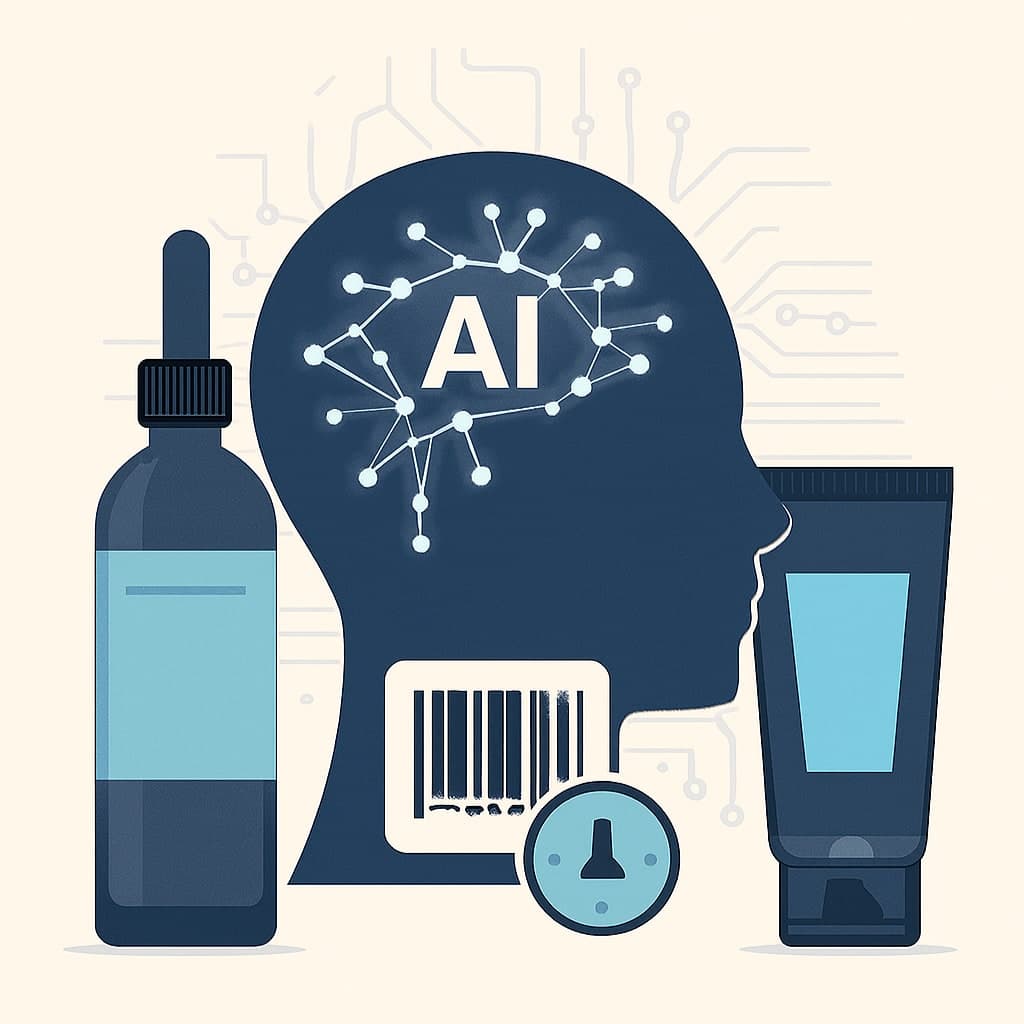
As the beauty industry accelerates toward personalization, transparency, and sustainability, artificial intelligence (AI) is emerging as a powerful ally in one of its most overlooked yet critical domains: product labelling. From skincare serums to haircare masks, AI is revolutionizing how labels are created, validated, and optimized—bridging science, regulation, and storytelling.
Cosmetic labels are no longer just compliance checkboxes. They’re micro-narratives—conveying efficacy, safety, sustainability, and brand ethos in seconds. In skincare and haircare, where ingredient literacy and claims scrutiny are high, labels must balance:
– Regulatory accuracy (INCI names, allergen disclosures, country-specific mandates)
– Consumer clarity (layman-friendly descriptions, usage instructions)
– Marketing appeal (claims, certifications, sensorial cues)
AI Enhancing Cosmetic Labelling
- Automated INCI Mapping and Validation
AI models trained on global regulatory databases can instantly map raw ingredient lists to correct INCI nomenclature, flag banned substances, and suggest compliant alternatives—especially useful for multi-market launches.
Example: A brand formulating a niacinamide serum for India, the EU, and the UAE can use AI to validate ingredient thresholds and claim language per region.
- Claim Substantiation and Risk Prediction
AI can analyze formulation data, clinical studies, and consumer reviews to assess the validity of claims like “anti-frizz,” “brightening,” or “non-comedogenic.” It can also predict potential regulatory or consumer backlash based on historical patterns.
Example: A hair mask claiming “keratin repair” can be cross-checked against ingredient efficacy and flagged if the keratin source is synthetic and non-functional.
- Multilingual Label Generation
Natural Language Processing (NLP) enables real-time translation and localization of labels—ensuring cultural relevance and regulatory compliance. This is vital for brands expanding into tier-2 and tier-3 cities or exporting to diverse markets.
Example: Translating “suitable for sensitive skin” into regionally nuanced language for Tamil Nadu, Maharashtra, and West Bengal.
- Sustainability and Ethical Sourcing Tags
AI can trace ingredient sourcing data and automatically generate eco-labels, carbon footprint indicators, and ethical sourcing badges—making sustainability claims more credible and auditable.
Example: A shampoo containing argan oil can be tagged with “Fair Trade Morocco” if sourcing data aligns.
- Visual Label Optimization
AI-driven design tools can analyze consumer eye-tracking data and cultural aesthetics to recommend label layouts, font sizes, and icon placements that maximize shelf impact and readability.
Example: For a minimalist skincare brand, AI might suggest monochrome palettes with bold INCI highlights to appeal to ingredient-savvy consumers.
AI in Action: Skincare vs Haircare
Feature
Skincare Labelling
Haircare Labelling
Claim Sensitivity
High (e.g., “anti-aging”, “acne-safe”)
Moderate (e.g., “volumizing”, “frizz-free”)
Ingredient Complexity
Often active-heavy, pH-sensitive
Often surfactant-heavy, texture-driven
Regulatory Scrutiny
High (especially for dermocosmetics)
Moderate
AI Use Case Highlight
INCI validation, claim substantiation
Sensory descriptors, visual optimization
Future Frontiers
– Real-time label audits via mobile apps for formulators and marketers
– AI-generated QR codes linking to ingredient traceability and clinical data
– Voice-enabled label readers for visually impaired consumers
– Dynamic labels that update based on batch-specific ingredient sourcing
My Final Thoughts
AI is not replacing human expertise—it’s amplifying it. For founders, formulators, and marketers, it offers a strategic edge: faster compliance, deeper consumer trust, and smarter storytelling. As India’s regulatory landscape evolves and global beauty converges on transparency, AI-powered labelling will be a cornerstone of innovation.
Author : Sheela Iyer
sheela@cosmetech.co.in
Sheela Iyer is an observer of the Indian Cosmetics & personal care industry and the editor of ‘Cosmetech’. She regularly video interviews industry experts on Cosmetech TV and has her fortnightly podcast ‘Cosmetics Today’