KorinMi Raises ₹10 Cr as K-Beauty Clinics Bet on India
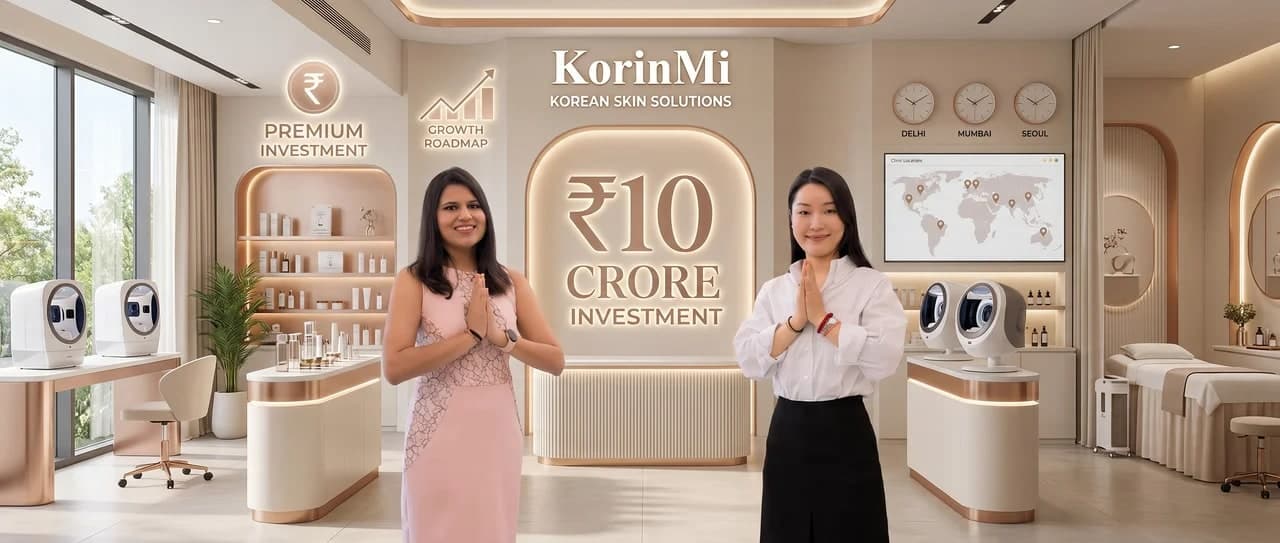
KorinMi, the Gurugram-based skin clinic startup founded in 2024, has secured ₹10 crore from the Lotus Herbals Innovation Fund — marking the fund's third deployment since its $50 million launch in June 2024 and its most direct bet yet on the intersection of Korean beauty science and Indian clinical skin services. The capital will be used to expand KorinMi's advanced clinic footprint into Mumbai, Bengaluru, and Hyderabad, adding to its flagship Gurugram location, which has served over 3,000 clients since opening in October 2024.
This is not a story about a single startup raising seed capital. It is a signal about where India's premium beauty and wellness market is structurally moving — and the B2B implications extend from clinical product suppliers to contract manufacturers and equipment distributors.
Lotus Herbals' Strategic Bet Is Not Accidental
The Lotus Herbals Innovation Fund was created with a clear thesis: as the Indian beauty consumer matures and premiumises, the most durable growth will come from brands that offer demonstrably differentiated, science-backed products and services that legacy players cannot easily replicate. The fund's portfolio reflects this clearly.
Before KorinMi, Lotus Herbals had already acquired a 32% stake in Fixderma — a dermatologist-recommended skincare brand with a strong pharmacy and clinic distribution presence — and taken minority positions in Conscious Chemist and Perfora, both D2C brands with ingredient-transparency and science-first positioning. KorinMi extends this pattern into the physical service channel, adding clinical touch-points that reinforce product recommendations and create consumer trust at a deeper level than digital marketing can achieve.
The KorinMi investment represents a third pillar in the Lotus Herbals ecosystem: product development (its core brand), retail-adjacent skincare (Fixderma), and now clinical services (KorinMi). This three-pillar architecture reflects what sophisticated FMCG beauty houses in markets like South Korea and Japan figured out much earlier — that the most defensible position in beauty combines formulation credibility, distribution reach, and clinical authority.
The KorinMi Model: K-Beauty Science, Indian Skin Reality
KorinMi was co-founded by Reshbha Munjal and Jenovia Daun Jung in 2024 with a specific brief: bring the clinical rigour of Korean skincare science to India, but adapted explicitly for Indian skin types, pigmentation patterns, and climate conditions. The clinics use equipment and clinical products sourced directly from South Korea, and treatment protocols are designed around the distinct needs of melanin-rich skin in tropical and semi-arid Indian environments.
This localisation is commercially critical. K-beauty as an import category performs well in India for product aesthetics and formulation storytelling, but clinical protocols developed for Korean skin — which tends toward thinner epidermis, lower melanin density, and different sebum production patterns — cannot be applied wholesale to Indian skin. KorinMi's proposition is precisely this translation: Korean clinical technology, Indian dermatological understanding.
The hybrid model — clinical services combined with a direct-to-consumer product line — is the architecture that makes the economics viable. Single-service clinic models face significant capacity constraints; revenue per square foot is bounded by appointment throughput. A D2C product range that clients purchase post-treatment extends the relationship, generates recurring revenue, and creates a referral mechanism. Before the Lotus Herbals round, KorinMi had already raised ₹3 crore in May 2025 from angel investors including Vikas Agarwal, the former CEO of Kaya Skin Clinic (UAE) — an early signal of operator-level conviction in the model.
The Broader K-Beauty Clinical Services Trend
KorinMi's funding does not exist in isolation. India is experiencing a structural expansion of organised, branded skin clinic chains — driven by rising disposable incomes, increased dermatological awareness, a post-pandemic preference for professional-grade treatments, and the social media-driven aspiration for visibly clear, even, and luminous skin.
The K-beauty influence specifically is accelerating for two reasons. First, South Korean clinical skincare has a 20-year track record of producing demonstrably effective treatments for concerns — hyperpigmentation, acne, enlarged pores, textural irregularity — that are disproportionately common in South Asian skin. Second, Korean clinical brands have invested heavily in research validating their protocols across diverse skin populations, providing a credibility platform that domestic alternatives have historically lacked.
India's organised skin clinic market is estimated to be growing at double-digit rates annually, with significant white space outside the top five metro markets. The next wave of expansion — which KorinMi's funding is designed to capture — targets Tier-1 cities outside Delhi-NCR and, thereafter, Tier-2 markets where dermatological services are under-supplied relative to consumer demand.
What Distinguishes Viable Clinic Operators
The skin clinic space in India is not without its failures. Several organised chains have struggled with the fundamental tension between clinical quality (which requires trained practitioners and equipment investment) and operational scalability (which requires standardisation). The models that have demonstrated durability — Kaya, Dermalogica, and now emerging players like KorinMi — share three characteristics: proprietary treatment protocols, a branded product back-end that creates revenue beyond the service transaction, and a consumer experience design that justifies premium pricing relative to independent dermatologist clinics.
KorinMi's sourcing of Korean clinical equipment and formulations directly from South Korea addresses the first two, while the D2C product line addresses the third by extending the brand relationship beyond the clinic visit.
B2B Opportunities Emerging From This Shift
The growth of organised, premium skin clinic chains in India creates concrete commercial opportunities across the supply chain that B2B players should actively position for.
- Clinical product suppliers: Brands manufacturing professional-grade treatment products — peeling solutions, post-procedure serums, barrier repair formulations — have a growing qualified buyer base in organised clinic chains. These buyers have different procurement requirements from retail: they need clinical efficacy documentation, hygiene compliance certification, and staff training support.
- Korean formulation and equipment distributors: KorinMi's sourcing model creates a distribution need for Korean clinical-grade actives and aesthetic devices within India. Distributors with established Korea-India supply chains are well positioned to serve emerging clinic chains as they scale.
- Contract manufacturers for clinic-exclusive D2C lines: As clinic chains build proprietary D2C product portfolios, they require contract manufacturing partners with the capacity for small-batch, clinically positioned formulations. Formulators with dermatological testing credentials and the ability to produce clinic-compliant safety dossiers are directly relevant.
- Packaging suppliers for clinical aesthetics: Clinic-brand products require packaging that bridges professional credibility and consumer desirability — typically clean, minimalist, clinically coded. Packaging partners able to deliver this aesthetic at commercial volumes appropriate for emerging clinic chains are in active demand.
The investment signals a conviction that the Indian consumer is ready to pay for Korean clinical-quality skin services adapted to their specific biology. For B2B players across formulation, distribution, and manufacturing, the more practical question is: what does your supply proposition look like to a growing chain of premium skin clinics?