# Monk&Metal Signals Lotus Herbals’ Next Growth Play
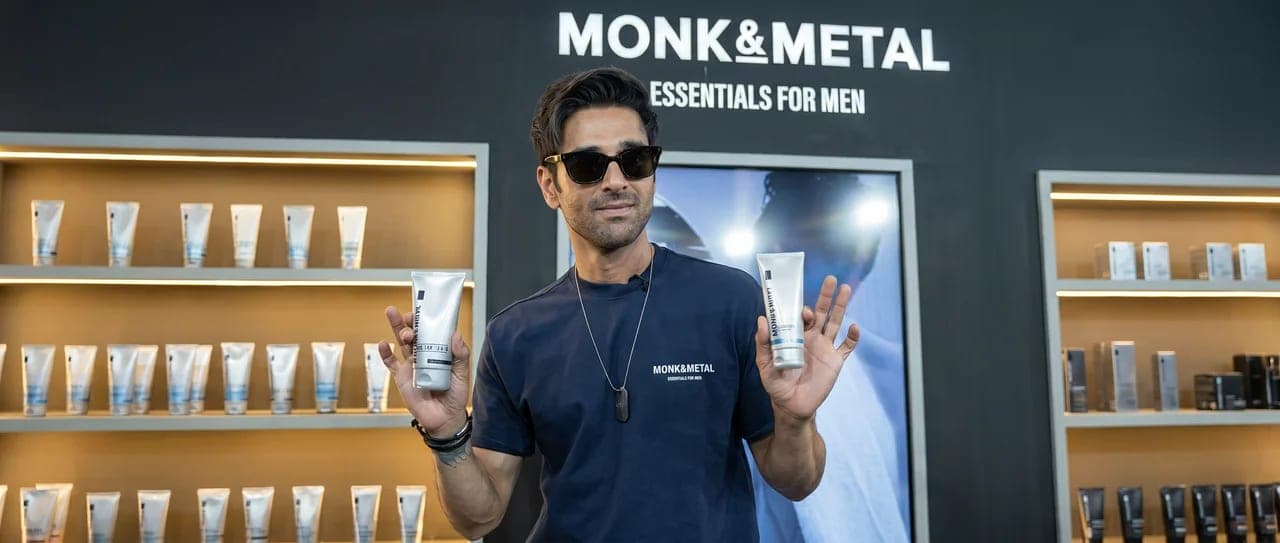
The launch of Monk&Metal, the newest brand from the House of Lotus Herbals Pvt Ltd, highlights a notable shift in how established beauty companies are approaching the men's personal care market. Positioned as a brand built for the modern man, Monk&Metal reflects changing consumer expectations around grooming, self-care, and personal identity.
For Lotus Herbals, the move is more than a product launch. It represents a strategic effort to capture a category that has evolved far beyond traditional shaving creams and deodorants.
A Different Kind of Male Consumer
Over the past decade, male grooming has transitioned from a functional category to a lifestyle segment. Younger consumers are increasingly comfortable investing in skincare, haircare, beard care, and wellness products that align with their personal image.
The rise of social media, creator culture, fitness communities, and workplace presentation standards has accelerated this trend. Men are becoming more informed about ingredients, routines, and product efficacy, creating demand for brands that speak directly to their needs.
This shift has created space for both specialist grooming brands and larger beauty companies looking to diversify their portfolios.
Monk&Metal appears designed to address this evolving consumer mindset by combining masculinity with self-care rather than treating the two as opposing concepts.
Why Established Beauty Houses Are Creating New Brands
Large beauty companies increasingly face a challenge when targeting emerging consumer segments. Legacy brands often carry strong associations that may not resonate with younger audiences.
Launching a standalone brand offers several advantages:
* Distinct brand identity
* Targeted communication strategy
* Greater flexibility in product development
* Ability to test new retail channels
* Clearer positioning for digital-first consumers
For Lotus Herbals, Monk&Metal provides an opportunity to engage male consumers without altering the positioning of its existing portfolio.
This strategy mirrors broader industry trends where established FMCG and beauty players create focused brands rather than extending existing ones into every category.
Premiumisation Continues to Drive Growth
One of the most significant shifts in the Indian beauty and personal care market is premiumisation. Consumers are increasingly willing to pay more for products that offer better performance, elevated experiences, or specialised formulations.
The men's segment is no exception.
Premium beard oils, targeted skincare products, anti-ageing solutions, scalp treatments, and performance-driven grooming products are gaining traction across urban markets.
Brands entering the category today are competing less on price and more on:
* Product efficacy
* Ingredient transparency
* Design aesthetics
* Brand storytelling
* Lifestyle relevance
Monk&Metal's launch suggests that Lotus Herbals sees continued headroom for premium growth within male grooming.
Digital Discovery Is Reshaping Category Dynamics
Consumer discovery patterns have changed significantly in recent years.
Rather than relying solely on traditional retail shelves, consumers increasingly encounter new brands through:
* Social media platforms
* Influencer recommendations
* Content creators
* E-commerce marketplaces
* Quick-commerce applications
This shift reduces barriers to entry while increasing competition for attention.
For a new brand like Monk&Metal, digital-first storytelling becomes as important as product formulation. Consumers are evaluating whether a brand understands their lifestyle and aspirations before making purchasing decisions.
As a result, content strategy and community-building have become core business functions rather than marketing add-ons.
The Retail Opportunity Beyond Metro Cities
While metro markets remain important, growth opportunities increasingly exist in Tier II and Tier III cities.
Rising disposable incomes, improved digital access, and expanding beauty awareness are creating new consumer cohorts willing to experiment with specialised grooming products.
This expansion is particularly relevant for male personal care because grooming adoption often follows broader lifestyle trends such as fitness, wellness, and professional aspirations.
Brands that can balance premium positioning with accessibility may find significant opportunities beyond traditional urban strongholds.
For established players such as Lotus Herbals, existing distribution capabilities can provide an advantage when scaling new brands nationally.
What This Means for Manufacturers and Suppliers
The emergence of focused male grooming brands creates opportunities across the beauty value chain.
Manufacturers should expect increased demand for:
* Specialised men's skincare formulations
* Beard and scalp care products
* Functional ingredient systems
* Premium packaging solutions
* Sustainable packaging formats
Packaging suppliers may also benefit as brands seek distinctive visual identities capable of standing out in highly competitive digital environments.
The category increasingly rewards premium aesthetics and strong shelf presence across both physical and digital channels.
Building Relevance in a Crowded Market
The men's grooming category has become more competitive as specialist brands, D2C challengers, and legacy companies compete for consumer attention.
Success will depend on delivering genuine differentiation rather than relying solely on gender-specific branding.
Brands entering the space must answer key consumer questions:
* Does the product solve a specific need?
* Is the formulation credible?
* Does the brand reflect modern lifestyles?
* Is the value proposition clear?
Consumers are increasingly sceptical of superficial positioning and expect brands to demonstrate substance through product performance and transparency.
A Broader Signal for India's Beauty Industry
Monk&Metal's arrival reflects a wider trend shaping the beauty and personal care sector: the fragmentation of consumer demand into highly targeted segments.
Consumers increasingly expect products designed around their specific needs, lifestyles, and identities. As a result, beauty companies are moving towards specialised portfolios rather than broad, one-size-fits-all offerings.
For Lotus Herbals, the launch represents an opportunity to participate more actively in the evolving men's grooming landscape. For the wider industry, it reinforces the continued attractiveness of categories built around personalisation, premiumisation, and focused consumer engagement.
As beauty companies search for their next growth engines, male grooming remains one of the segments capable of delivering both scale and differentiation.