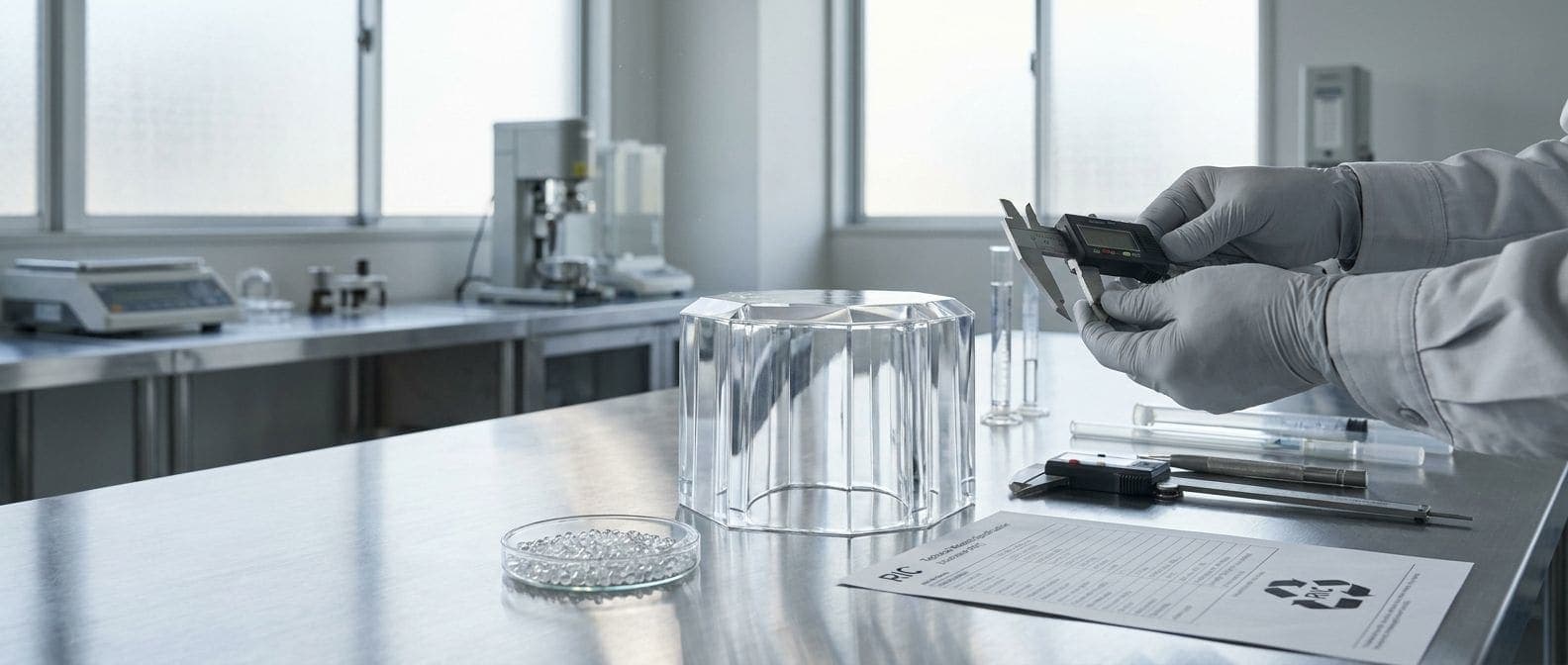
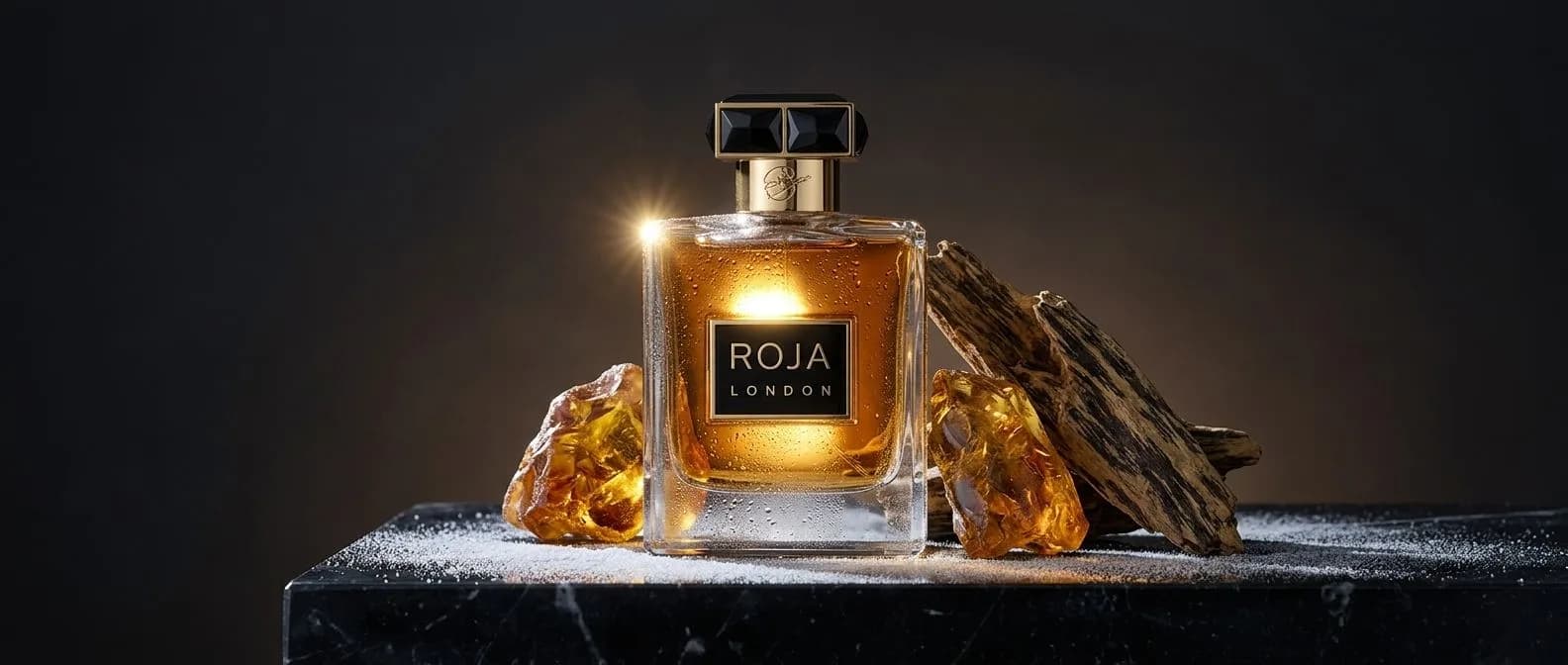
When luxury beauty brands demand the substantial weight and crystal-clear depth of glass in a shatterproof format, packaging engineers face an immediate physics bottleneck. Molding heavy-walled jars, serum droppers, and perfume caps requires balancing optical clarity against cycle times, melt strength, and structural integrity.
Standard Polyethylene Terephthalate (PET) remains the industry workhorse for thin-walled bottles due to its low resin cost and universal RIC #1 recyclability. However, its molecular structure limits performance in heavy-wall applications. When injection-molded into wall sections exceeding 4mm to 6mm, slow cooling rates inside the mold core trigger spherulite crystallization. This thermal lag causes standard PET to suffer severe haze, internal cloudiness, and stress-whitening under mold pressure, destroying the glass-like transparency high-end skincare formulations require.
To bypass these optical deficiencies, packaging engineers historically turned to legacy polymers like polymethyl methacrylate (PMMA/acrylic) or styrene-acrylonitrile (SAN). PMMA provides optical clarity with a haze value under 0.5% and a high refractive index matching real glass. Yet, PMMA carries critical structural vulnerabilities: poor impact resistance leads to shatter failures during transit, and low chemical resistance causes environmental stress cracking when exposed to essential oils, active lipid formulations, or ethanol-based solvents. SAN offers a stiffer, lower-cost alternative, but it suffers from brittle fracture behavior and yellowing over extended UV exposure.
This clear trade-off between mechanical toughness and optical clarity has driven modern cosmetic R&D teams toward advanced copolyesters, specifically PETG and PCTA.
PCTA (Polycyclohexylenedimethylene Terephthalate Glycol-modified) solves the heavy-wall crystallization problem at a molecular level. By introducing cyclohexanedimethanol into the polymer backbone, PCTA suppresses spherulite formation entirely during extended cooling phases. Tooling engineers can mold wall sections up to 10mm thick while consistently maintaining an optical haze under 1.0%.
Beyond aesthetics, switching to PCTA delivers measurable performance advantages across production and logistics:
Impact Resistance: PCTA achieves a notch Izod impact strength significantly higher than PMMA or SAN, virtually eliminating drop-test failures during transit and consumer use.
Chemical Compatibility: Unlike PMMA, PCTA resists attack from aggressive lipid matrices, low-pH active serums, and high-percentage fragrance oils without developing micro-crazing or structural failure.
Cycle Time Optimization: While heavy-wall PCTA requires extended cooling cycles compared to thin-wall PET, its drop-in compatibility with existing injection-molding tooling minimizes thermal stress and flash formation compared to acrylic processing.
The primary trade-off rests in end-of-life circularity. Standard PET maintains seamless integration into RIC #1 municipal recycling streams, whereas PCTA falls under RIC #7 (Other). However, for premium