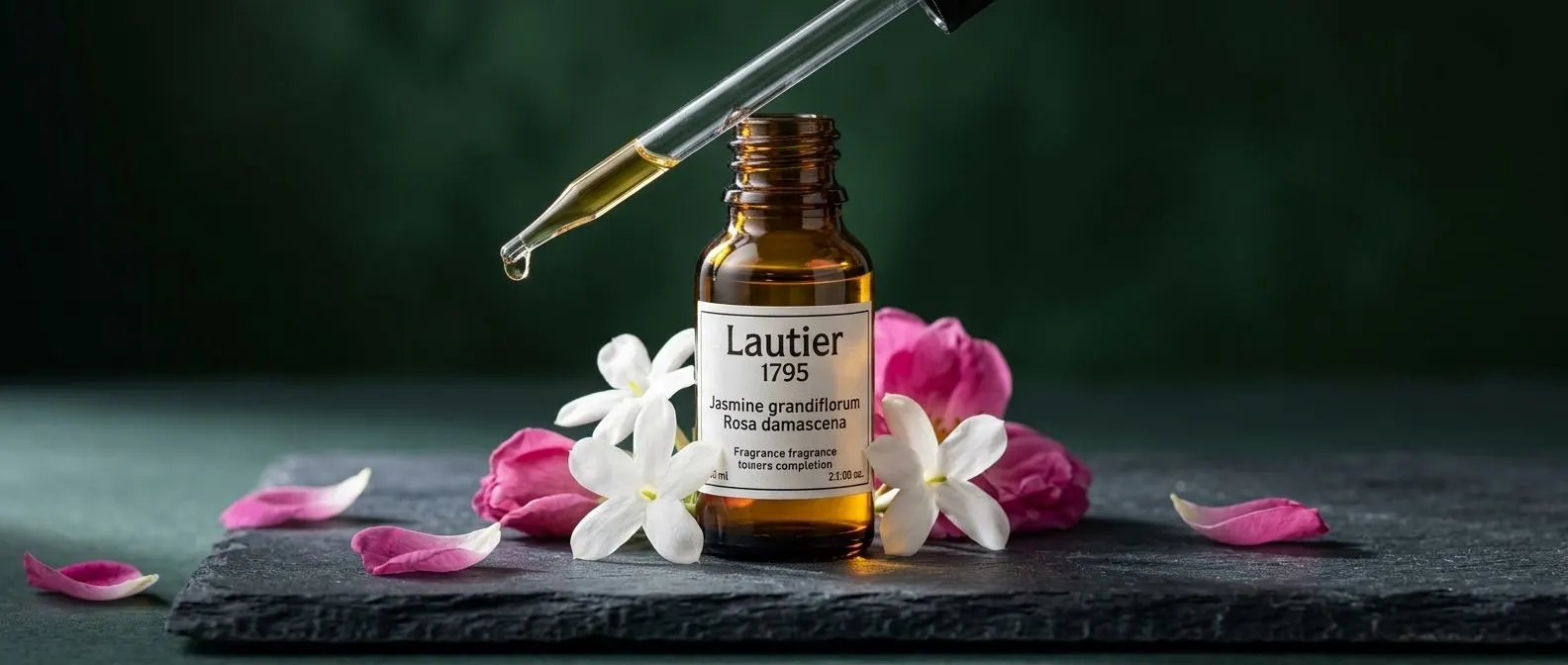
Executive Overview: A Practical Shift for Natural Complex Substances
The global fragrance and personal care supply chain is quietly moving away from unpredictable raw botanicals toward traceable, ultra-pure extracts. Symrise has expanded production on this front by commercialising its high-purity natural aroma platform at its historic Lautier 1795 facility in Grasse, France, backed by the botanical expertise of Floral Concept.
For Indian cosmetics brand owners, R&D chemists, and Contract Development and Manufacturing Organisations (CDMOs), this commercial launch delivers a scalable pipeline of premium Natural Complex Substances (NCS). These ingredients directly fix the age-old trade-off between natural authenticity, batch consistency, and regulatory compliance.
Technical Processing: Molecular Isolation via Green Extraction
Traditional steam distillation and old-school solvent extractions often burn delicate volatiles or concentrate unwanted allergens. By combining low-impact green solvent fractioning with subcritical and supercritical CO2 fluid extraction, the Grasse site isolates specific fragrance molecules without degrading the wider botanical matrix.
This dual-processing methodology targets four key botanical feedstocks:
Jasmine (*Jasminum grandiflorum*): Retains fragile ester profiles while stripping away heavy indolic notes.
Rose (*Rosa damascena*): Isolates key phenylpropanoids while cutting restricted constituents like methyleugenol.
Orange Blossom (*Citrus aurantium*): Preserves volatile terpenes without bringing along photosensitising furocoumarins.
Ambrette Seed (*Abelmoschus moschatus*): Concentrates macrocyclic lactones to deliver clean natural musks without thermal degradation.
By running at low temperatures with non-toxic, recyclable solvents, the process isolates target scent molecules while stripping out regulated impurities. R&D teams get standardized chemical profiles that behave predictably in complex formulas every single time.
Navigating Indian Regulatory Frameworks: CDSCO, BIS, and IFRA
For Indian beauty brands eyeing global expansion, regulatory paperwork can stall product launches. The Central Drugs Standard Control Organisation (CDSCO) continues to tighten oversight, leaning heavily on Bureau of Indian Standards (BIS) specifications.
IS 4707 (Parts 1 & 2): Sets strict limits on restricted cosmetic inputs. Selectively stripping natural allergens—like methyleugenol in rose or oxidized linalool—keeps formulations safely below IS 4707 thresholds.
IS 14636: Defines quality criteria for raw materials. Uniform NCS fractions eliminate batch-to-batch chemical drift, speeding up QA sign-offs for local CDMOs.
IFRA Alignment: As CDSCO aligns with International Fragrance Association limits, purer fractions simplify INCI allergen declarations. Formulators can boost natural floral levels without breaching safe concentration limits.
Strategic Impact on Indian CDMOs and Formulation Stability
Bad weather and shifting crop yields cause sudden price swings and unpredictable supply chains. Unprocessed essential oils frequently cause formulation headaches—turning creams yellow, splitting emulsions, or going rancid on retail shelves.
The Lautier 1795 platform addresses these practical R&D issues through three core mechanisms:
1. Batch-to-Batch Standardization: Supercritical extraction delivers repeatable chemical fingerprints. R&D teams no longer need to tweak fragrance bases for every new lot.
2. Traceable Provenance: White-label and prestige brands get verified Grasse origin data to back up clean-label claims with hard analytical proof.
3. Longer Shelf Life: Stripping easily oxidized terpenes prevents formula discoloration, off-odors, and rancidity during accelerated shelf-life testing.
For Indian manufacturers targeting local luxury shelves and export markets, standardized Grasse-grade natural extracts eliminate regulatory friction while protecting product performance.