AI Is Becoming the Foundation of Clinical Skincare
The beauty industry has spent years integrating artificial intelligence into isolated functions such as virtual try-ons, product recommendations, chatbots, and skin analysis tools.
A new category is now emerging.
AI-first clinical skincare brands are building their businesses around artificial intelligence from the outset rather than adding AI as a supplementary feature.
This distinction is important.
Traditional skincare brands often use AI to enhance customer experiences. AI-first brands use artificial intelligence to shape product development, consumer diagnostics, treatment recommendations, engagement strategies, and ongoing skincare management.
The result is a fundamentally different operating model.
For manufacturers, brand owners, and R&D teams, this trend represents one of the most significant technology shifts currently unfolding within beauty.
From Product-Centric to Data-Centric Beauty
Historically, skincare brands developed products first and marketing strategies second.
Consumers were grouped into broad categories such as oily skin, dry skin, sensitive skin, or anti-ageing concerns.
AI-first brands are approaching the problem differently.
They begin with data.
Consumer images, behavioural information, skin diagnostics, environmental conditions, usage patterns, and treatment outcomes become the foundation for product recommendations and future innovation.
This creates a feedback loop that continuously improves decision-making.
Every interaction generates additional insights.
Every recommendation creates new learning opportunities.
Every outcome contributes to a growing knowledge base.
For skincare companies, data increasingly becomes as valuable as formulations.
Clinical Credibility Meets Digital Intelligence
Clinical skincare has traditionally differentiated itself through efficacy.
Consumers expect measurable outcomes, dermatologist recommendations, and evidence-based product claims.
AI introduces a new layer of sophistication.
Advanced algorithms can analyse skin conditions, monitor progress, identify patterns, and personalise recommendations at a scale that would be difficult to achieve through human consultation alone.
This combination of scientific validation and digital intelligence is creating a powerful market proposition.
Consumers receive experiences that feel both personalised and clinically grounded.
For brands, this strengthens trust while improving engagement.
Why Consumers Are Embracing AI-Led Skincare
Several market forces are accelerating adoption.
Consumers increasingly expect personalised experiences across every aspect of their lives.
Streaming platforms personalise entertainment.
Retail platforms personalise recommendations.
Financial platforms personalise services.
Skincare is following the same trajectory.
At the same time, consumers are becoming more knowledgeable about ingredients, routines, and skin health.
They want guidance tailored to their specific needs rather than generic product suggestions.
AI offers a mechanism for delivering that guidance efficiently.
The result is growing demand for technology-enabled skincare experiences.
The Evolution of Skin Diagnostics
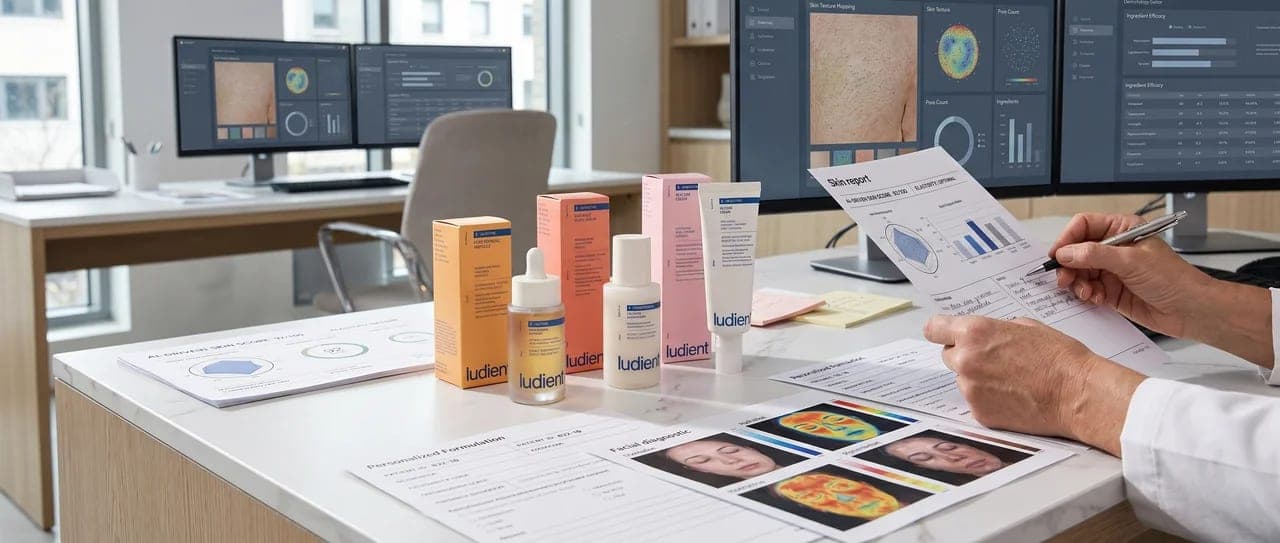
Skin analysis has become one of the most visible applications of AI within beauty.
Earlier systems primarily focused on identifying visible concerns.
Today's platforms are becoming increasingly sophisticated.
AI can evaluate pigmentation patterns, redness, wrinkles, texture irregularities, hydration indicators, and environmental influences.
Some systems can track changes over time, helping consumers monitor progress and adjust routines accordingly.
For clinical skincare brands, diagnostics are no longer simply acquisition tools.
They are becoming central components of ongoing customer relationships.
This creates opportunities for stronger retention and recurring engagement.
Product Development Is Becoming More Dynamic
One of the most significant implications for manufacturers involves product innovation.
Traditional product development often relies on consumer surveys, market research, and clinical testing.
AI-first brands can supplement these inputs with real-world usage data collected continuously.
Patterns emerge more quickly.
Consumer concerns become easier to identify.
Formulation opportunities become more visible.
This creates a more agile innovation process.
Rather than waiting for periodic research cycles, brands can increasingly use live consumer insights to inform decision-making.
For R&D teams, this represents a major shift towards data-driven development.
The Rise of Predictive Skincare
AI's future role may extend beyond diagnosis.
Predictive capabilities are becoming increasingly important.
By analysing environmental conditions, consumer behaviours, seasonal changes, and historical patterns, AI systems may anticipate future skincare needs before visible issues emerge.
For example, algorithms could recommend hydration-focused routines ahead of seasonal changes or suggest barrier-support products during periods of increased environmental stress.
This transforms skincare from reactive treatment to proactive management.
For brands, predictive recommendations create additional opportunities for engagement and product relevance.
What Manufacturers Should Watch Closely
The rise of AI-first skincare creates several strategic considerations.
Structured Product Data Becomes Essential
AI systems depend on detailed information regarding ingredients, claims, benefits, and suitability.
Clinical Evidence Gains Importance
Algorithms perform best when supported by robust efficacy data.
Personalisation Becomes Expected
Consumers increasingly view customised recommendations as a standard feature rather than a premium service.
Digital Ecosystems Matter
Products must integrate effectively into broader AI-enabled consumer journeys.
Cross-Functional Collaboration Is Critical
Successful AI implementation requires alignment between R&D, digital, regulatory, and marketing teams.
Opportunities for Indian Beauty Brands
India's beauty market is particularly well positioned for AI-first innovation.
Digital adoption remains high.
Consumers are increasingly comfortable with mobile-first experiences.
The country's climate diversity and wide range of skin concerns also create strong demand for personalised skincare solutions.
Brands that successfully combine local skin insights with AI-enabled recommendations could create meaningful differentiation.
There is also significant potential to improve access to skincare guidance in markets where dermatologist availability remains limited.
AI can help bridge that gap while supporting more informed purchasing decisions.
The Future Skincare Brand May Look Different
AI-first clinical skincare brands are not simply adopting new technology.
They are redefining how skincare businesses operate.
The traditional model focused on developing products and marketing them to broad audiences.
The emerging model centres on data, diagnostics, personalisation, and continuous engagement.
Products remain important, but they increasingly become part of a larger ecosystem.
For beauty manufacturers and brand leaders, the implications are substantial.
The competitive advantage of the future may not come solely from proprietary formulations or marketing budgets.
It may come from the ability to collect meaningful insights, generate intelligent recommendations, and create personalised experiences at scale.
As AI becomes more deeply embedded across beauty, clinical skincare appears poised to become one of the first categories where this transformation reaches mainstream adoption.