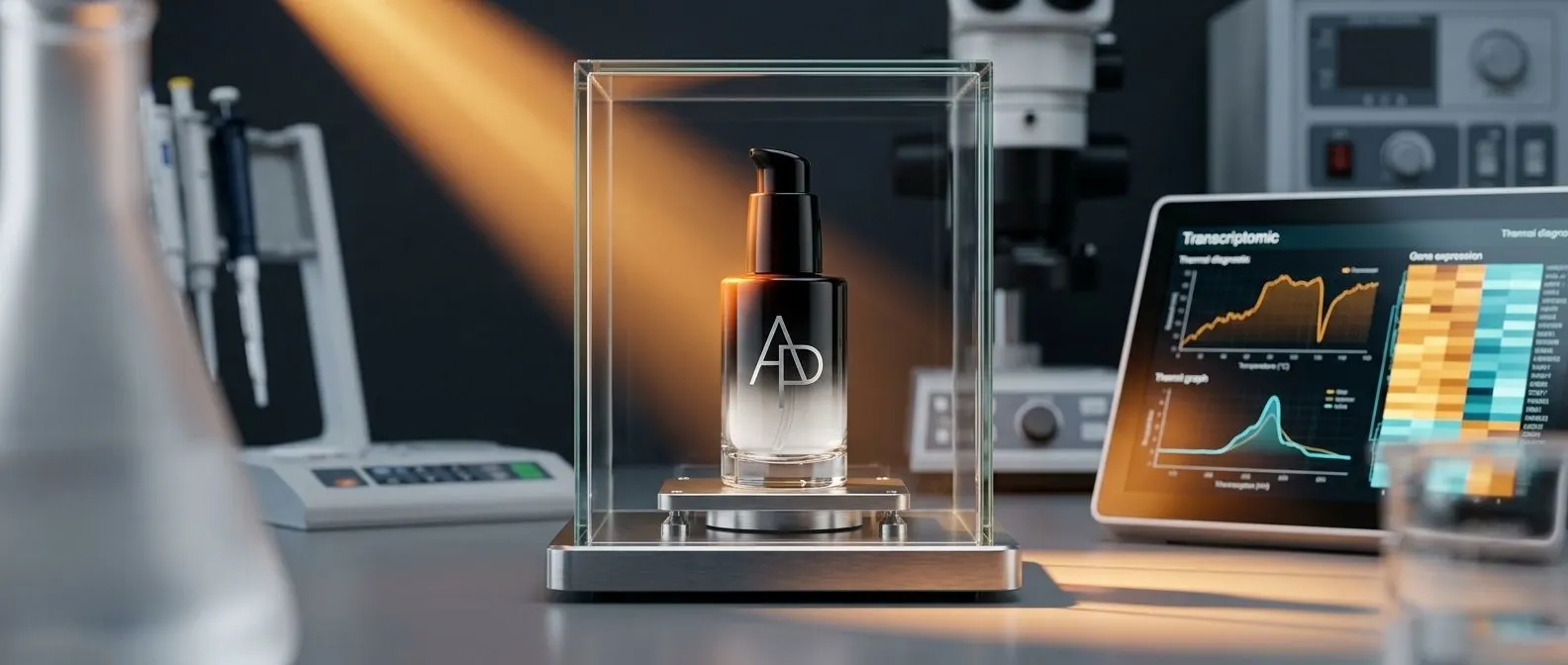
Amorepacific’s unveiling at the IFSCC 2026 Congress shifts thermal skin aging diagnostics from reactive damage repair to pre-emptive gene mapping. Powered by a deep learning-guided transcriptomic AI algorithm, the diagnostic framework analyzes RNA-sequencing (RNA-seq) data to spot heat-induced gene expression shifts long before visible structural breakdown shows up on the skin surface.
For brand owners, R&D directors, and contract development and manufacturing organizations (CDMOs) across South Asia—where ambient heat routinely crosses critical biological thresholds—this technology reframes thermal skincare. It turns climate defense into a proactive, gene-guided longevity strategy that gives early-mover brands a distinct technical edge.
The Molecular Mechanism of Thermal Aging
When ambient heat tops 40°C, it triggers a destructive chain reaction in the human dermis:
TRPV1 Activation: Transient Receptor Potential Vanilloid 1 (TRPV1) ion channels open under thermal stress, flooding cells with intracellular calcium.
Matrix Breakdown: Activated TRPV1 spikes Matrix Metalloproteinases (specifically MMP-1 and MMP-3), which rapidly chop up collagen and elastin fibers.
HSP Exhaustion: Unrelenting heat wears out Heat Shock Proteins (HSP70 and HSP90), crippling cellular repair mechanisms and misfolding structural proteins.
Micro-Inflammation: Sustained heat stress spurs localized micro-inflammation, quietly eroding long-term skin health.
Amorepacific’s AI algorithm charts these transcriptomic RNA-seq shifts to flag early genomic instability. Instead of waiting for visible wrinkle depth or collagen degradation in late-stage clinical trials, formulators can screen active ingredients early in the pipeline based on their ability to normalize gene expression under extreme thermal conditions.
Smart Formulation Strategies and Target Actives
Countering heat-driven biological aging calls for targeted actives that actively stabilize transcriptomic pathways under high temperatures:
TRPV1 Antagonists & Heat-Shock Modulators: Small molecules like Ectoine, along with Acetyl Tetrapeptide-22 and biomimetic heat-shock peptides, shield cellular structures against heat-induced protein denaturation.
Gene-Expression Restorers: Ferulic acid, Niacinamide, and heat-stable adaptogens (like purified Ginsenosides) protect collagen transcription pathways, preserving matrix integrity against thermal degradation.
CDSCO Regulatory Considerations for the Indian Market
Translating transcriptomic AI diagnostics into commercial claims requires careful navigation of India’s Cosmetics Rules, 2020 enforced by the CDSCO. To keep your product firmly in the cosmetic category, swap high-risk claims like "reverses cellular heat damage" or "repairs mutated DNA"—which invite costly drug reclassification under the Drugs & Cosmetics Act—for compliant assertions like "supports skin resiliency under heat stress" or "fortifies cellular longevity defense."
Validating these claims demands robust *in vitro* genomic data alongside standard clinical safety testing. Formulators should also execute comprehensive safety and non-sensitisation trials under IS 4011 standards to verify formula stability in intense tropical heat.
Commercial B2B Opportunities for Manufacturers
Rising ambient temperatures across South Asia are accelerating consumer demand for climate-adaptive skincare and heat-shielding topicals. Contract manufacturers and brand R&D teams can leverage transcriptomic insights to engineer high-margin "Skin Longevity" and "Infrared/Thermal Defense" product lines. By combining AI-validated active complexes with heat-resilient delivery systems, CDMOs can supply prestige brands with clinically substantiated products engineered specifically for high-heat urban markets.