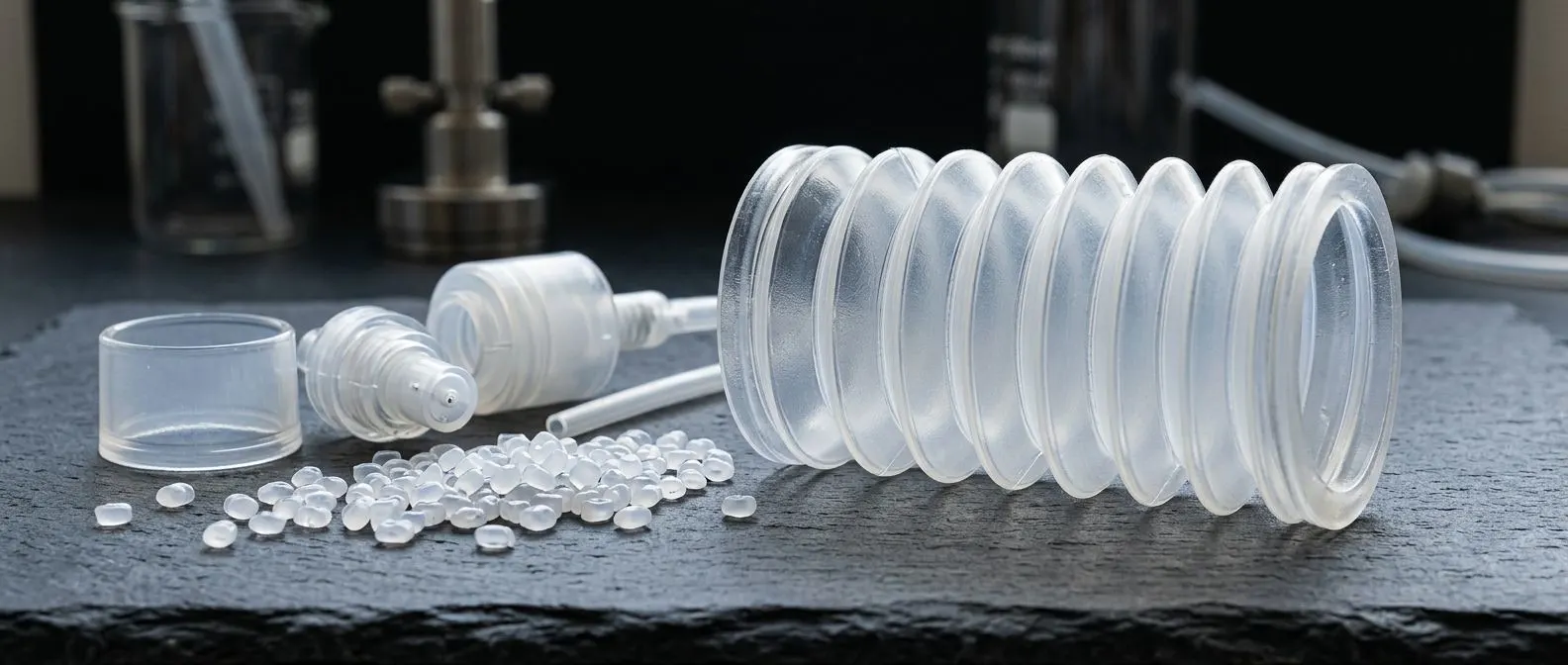
Shifting personal care from linear to circular primary packaging is no longer a branding trick—it is a rigorous engineering discipline. Aptar Beauty’s framework proves that custom packaging engineering can unite monomaterial design with high-speed manufacturing without compromising formula stability or aesthetics. For Indian brand owners, R&D chemists, and contract manufacturers, pulling this off demands practical operational knowledge across polymer science, statutory compliance, and processing mechanics.
Mastering Polymer Science: From Metal Springs to All-Plastic Assemblies
Traditional cosmetic pumps rely on complex mixed-material setups: internal stainless-steel springs, synthetic elastomer valves, and distinct polyolefin housings. Circular engineering rewrites this formula, forcing a shift toward 100% recyclable Polypropylene (PP) or Polyethylene (PE) monomaterial architectures. These designs incorporate between 30% and 100% Post-Consumer Recycled (PCR) resins directly into custom actuators, collars, and closures.
Replacing virgin resin with PCR feeds creates real mechanical hurdles on the factory floor:
Melt Flow Index (MFI) Instability: Thermal history variations in recycled stock shift polymer viscosity during injection molding. Tooling specs must be tightly controlled to prevent sink marks and maintain ultra-tight tolerances.
Lower ESCR Integrity: Recycled plastics often suffer from reduced Environmental Stress Cracking Resistance (ESCR), raising the risk of structural failure when exposed to active surfactants, alcohol bases, or essential oils.
To eliminate metal springs without ruining pump action, modern dispensing architectures use polyolefin elastomeric bellows or engineered all-plastic springs. These components deliver precise volumetric dosing—calibrated between 50 µL and 150 µL per actuation—while maintaining total isolation from metal ions. That zero-metal barrier protects sensitive formulas containing Retinol, L-Ascorbic Acid, or peptide complexes from catalytic oxidation.
Navigating Compliance: Aligning PWM Rules with CDSCO Mandates
In India, primary packaging design sits at the intersection of strict environmental laws and rigid cosmetic safety standards. The Plastic Waste Management (PWM) Amendment Rules enforce aggressive Extended Producer Responsibility (EPR) mandates, placing legal accountability on brand owners to meet recycling targets and minimum PCR ratios in rigid containers.
At the same time, using recycled polymers in primary contact components demands exhaustive material validation to satisfy Central Drugs Standard Control Organisation (CDSCO) standards:
BIS Polymer Standards: Raw and recycled polyolefins must comply strictly with Bureau of Indian Standards codes—specifically IS 10146 for Polyethylene and IS 10151 for Polypropylene.
Extractables and Leachables Profiling: Analytical testing must confirm that volatile organic compounds, trace heavy metals, or degradation byproducts will not migrate into the formula across real-time and accelerated shelf-life trials.
Streamlining Line Speeds and Scaling CDMO Operations
Packaging drives brand identity. Modern brands build defensible IP through custom molded shapes and tactile pump mechanisms, delivering premium user experiences without creating non-recyclable waste.
For Contract Development and Manufacturing Organisations (CDMOs), monomaterial pumps streamline operational logistics across automated filling lines:
High-Speed Line Optimization: Eliminating multi-material assemblies stops mechanical jams during high-speed capping operations, driving down scrap rates and costly line downtime.
Decarbonization Targets: Streamlining the packaging bill of materials (BOM) reduces virgin resin dependency, delivering measurable cuts in Scope 3 greenhouse gas emissions.
By pairing custom structural design with monomaterial engineering, Indian cosmetic brands can secure distinctive shelf presence while meeting tough regulatory targets and operational demands.