The Indian Beauty and Personal Care (BPC) market is witnessing a profound transition from marketing-led customer acquisition to intense scientific differentiation. For years, digital-first brands scaled rapidly by capturing white spaces in online marketplaces, relying primarily on generic white-label formulations and influencer-driven narratives. However, as the ecosystem matures and consumer preferences premiumise, this outsourcing model is hitting a margin and efficacy ceiling. Leading the charge against this legacy approach is the skincare startup Asaya, which is demonstrating that long-term enterprise value in the modern BPC segment is built on proprietary chemical synthesis, targeted consumer research, and dedicated in-house research facilities.
Founded by industry veterans Eeti Sharma, Mandeep Singh Bhatia, and former Paper Boat co-founder Neeraj Biyani, Asaya has recorded an impressive fivefold revenue growth over the past twelve months. The brand’s consumer footprint has expanded past 500,000 active customers. This rapid scaling is fueled by a clear, targeted premise: developing dermatologically validated formulations engineered specifically for melanin-rich skin, an consumer demographic comprising over 98% of the domestic population that has historically been underserved by Eurocentric cosmetic architectures.
The Structural Shift Toward In-House Formulation Ownership
To sustain its rapid growth trajectory, Asaya has consciously broken away from the standard D2C playbook of utilizing third-party contract manufacturing organizations (CMOs) for turn-key product development. While outsourcing allows early-stage brands to launch products within weeks, it severely limits their ability to control raw material purity, maintain batch consistency, and build defensible intellectual property (IP). As competition intensifies across marketplaces like Amazon and Nykaa, true differentiation requires ownership of the lab bench.
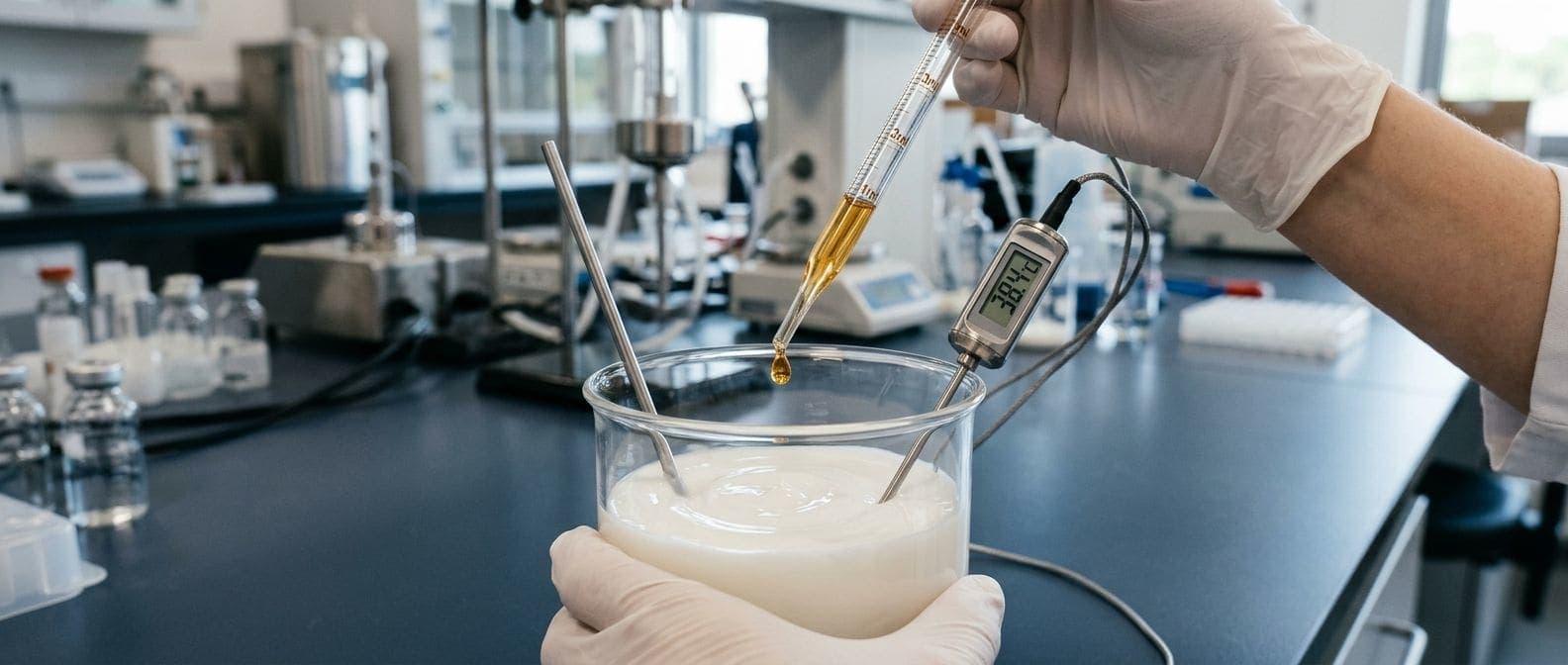
Asaya has directed a significant portion of its cumulative ₹43 crore funding to build internal laboratory facilities and launch a state-of-the-art innovation center. This infrastructure shift allows the brand to conduct independent biochemical research, iterate rapidly on emulsion stabilities, and run long-term clinical trials. The commercial objective is to replace basic hydration and cleansing commodities with high-margin, clinically validated treatments targeting hyperpigmentation, structural barrier repair, and specialized UV protection optimized for higher melanin densities.
To spearhead this scientific agenda, the company recently made high-profile additions to its leadership team, hiring veteran cosmetics scientists. Dr Prasun Bandyopadhyay, former Vice President of Home and Personal Care R&D at Dabur and an alumnus of Unilever, L’Oréal, and Himalaya Wellness, has joined as the Chief Technology and Research Officer (CTRO). Alongside him, Vinitha K, an expert with nearly two decades of product innovation experience across global brands like Dove, Tatcha, and Dermalogica, steps in as the Head of Research and Development. Between them, these executives hold dozens of international patents, signaling that Asaya views its formulation pipeline as a sophisticated biotech operation rather than a conventional fast-moving consumer goods setup.
Deconstructing the MelaMe™ Biochemical Framework
The core competitive advantage derived from this research-first approach is the creation of proprietary active compounds, notably the brand's patented MelaMe™ complex. Hyperpigmentation remains one of the most widespread dermatological concerns among Indian skin types due to the highly reactive nature of melanocytes under UV exposure and hormonal shifts. Standard international treatments frequently deploy aggressive acids or bleaching agents that can induce post-inflammatory hyperpigmentation (PIH) in darker skin tones.
The MelaMe™ molecule was specifically engineered to regulate the tyrosinase pathway safely within melanin-rich skin profiles. Clinical data gathered by the brand demonstrates measurable spot reduction and tone evening within a 14-day window, matching or outperforming multi-billion-dollar international benchmark formulations. By focusing on gentle, highly bioavailable carriers like stabilized niacinamide, targeted peptides, and optimized kojic acid configurations, the brand’s formulation team has built an asset that maintains exceptionally high repeat-purchase rates.
For B2B formulators, this focus underlines a critical industry trend: the future belongs to custom delivery systems. The company is currently investing an additional 1.5 years of dedicated research into a second proprietary molecule aimed at another major, unaddressed skin concern prevalent in the subcontinent. By creating a moat around its raw materials and active complexes, the brand effectively insulates its gross margins from price wars, ensuring long-term retail viability.
Omnichannel Infrastructure and the Quick Commerce Surge
While scientific validation forms the backbone of product development, scaling in India’s current retail environment demands highly agile distribution logistics. Asaya’s sales matrix leverages a balanced hybrid model where its direct-to-consumer website contributes roughly 35% of revenue, with established marketplaces like Amazon and Nykaa serving as critical customer acquisition channels.
However, the most significant shift in the brand’s distribution dynamics is the rapid rise of quick commerce. Platforms like Blinkit now drive approximately 17% of Asaya’s total revenue. This rapid transaction velocity is completely rewriting traditional inventory forecasting models. Skincare products are no longer just planned monthly purchases; they are becoming immediate convenience buys, requiring absolute stock availability across decentralized dark stores in metropolitan hubs.
To complement this digital reach, the enterprise is initiating its transition into brick-and-mortar retail. The strategy involves building an experienced offline distribution team to navigate the complex landscape of multi-brand outlets (MBOs) and modern trade health and beauty stores. Transitioning to an omnichannel retail strategy will allow the brand to establish physical testing stations where consumers can interact with product textures, undergo skin tone analysis, and receive expert validation, bridging the trust gap that purely digital brands often face.
Actionable Blueprints for Cosmetics Manufacturers and Brands
Asaya’s operational roadmap offers several vital strategic takeaways for manufacturers, R&D labs, and B2B professionals navigating the evolving Indian skincare market.
Transition to Specialized Ethno-Cosmetic Formulations
The era of launching universal, non-targeted skincare formulas is rapidly closing. Brands and product developers must invest in ethno-cosmetic research, engineering formulations tailored specifically to the structural layers, sebum production levels, and unique pigmentation patterns of regional populations. Developing products with custom testing protocols on diverse skin profiles is now standard practice for securing premium shelf space.
Re-Engineer Capital Allocation Toward R&D Infrastructure
To protect long-term margins against rising digital ad costs, brand founders must shift capital from pure marketing expenditures to internal R&D capabilities. Setting up dedicated testing labs or partnering with advanced biotechnology centers to secure proprietary ingredient complexes creates long-term value that institutional investors are eager to fund.
Optimize Formulations for Automated Fulfillment Stability
The rapid growth of the quick-commerce delivery vertical requires formulation chemists and packaging engineers to closely coordinate their efforts. Primary and secondary product packaging must be structurally engineered to tolerate immediate mechanical handling, delivery vibrations, and localized storage temperature fluctuations within micro-fulfillment dark stores without causing phase separation or leakage.
The ongoing evolution of the Indian BPC sector demonstrates that pure digital marketing arbitrage is no longer sufficient to build a durable business. Sustainable market share will be won by enterprises that anchor their product portfolios in strict laboratory science, proprietary active ingredient development, and an agile, omnichannel delivery ecosystem.