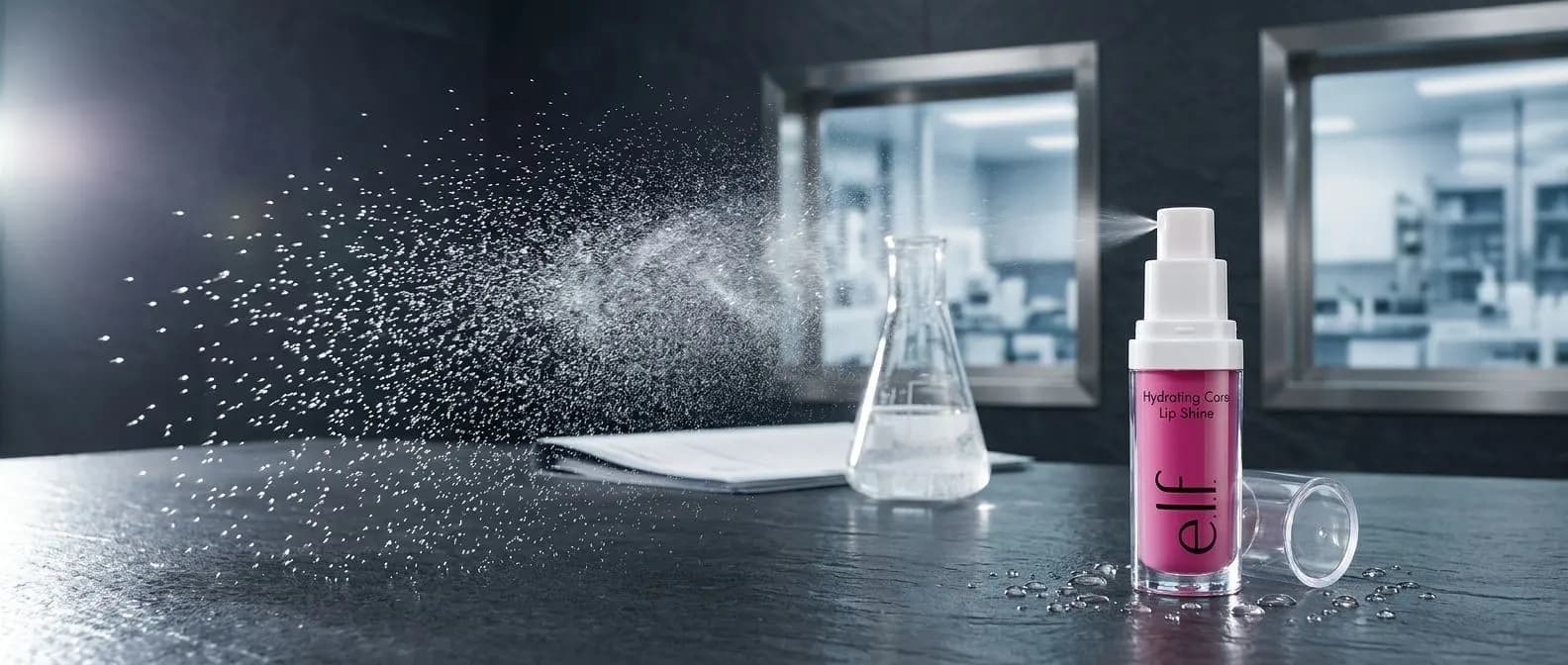
e.l.f. Beauty's dive into fragrance and body care with its new line, e.l.f. POP, shows where mass-market cosmetics are heading. After disrupting color cosmetics and facial skincare with high-performance, accessible products, the brand is targeting the scent-layering craze.
For Indian beauty brand owners, formulation labs, and contract development and manufacturing organisations (CDMOs), this launch signals a clear global shift: the boundary between fine fragrance and active body care is disappearing. To capture this market in India, brands need to master tough formulation mechanics, clear strict CDSCO regulatory hurdles, and upgrade shop-floor operations.
Active Fragrance Hybrids: The R&D Challenge
Shifting from basic, alcohol-heavy body mists to multi-functional "scent-plus-skin" products isn't easy, especially when designing for India’s humid climate.
Stopping Flash-Off and VOC Harshness: To stop top-notes from flashing off too fast in Indian heat, R&D teams are switching to cyclodextrin encapsulation and dipropylene glycol (DPG) solubilisers. These systems trap volatile fragrance molecules and release them gradually through skin warmth and friction, muting that harsh, initial ethanol blast.
Stabilising Micro-Emulsions: Combining barrier lipids like plant squalane, niacinamide, and hyaluronic acid with lipophilic scent oils requires stable oil-in-water micro-emulsion bases. Get the emulsification wrong, and you run into phase separation or nozzle clogging during sub-micron emulsion fills on the packing line.
Handling Humidity: High humidity demands fast-absorbing, non-sticky bases. Swapping heavy oils for branched esters, light silicone alternatives, and biopolymer film-formers lets skin actives penetrate without dulling the scent trail.
The Indian Regulatory Landscape
Bringing active fragrance lines to the Indian market requires clearing specific compliance checkpoints:
IFRA 51st Amendment: Fine fragrance mists fall under IFRA Category 4, while leave-on body lotions sit under Category 5A. R&D teams must strictly limit sensitising raw materials and declare 26+ mandatory allergens like Limonene and Linalool on primary packaging.
BIS Conformance: Body creams and hydrating mists must pass IS 14636 (Skin Creams and Lotions) testing. Safety testing under IS 4011 is mandatory, proving zero microbial contamination and keeping heavy metal limits locked below 20 ppm for Lead and 2 ppm for Arsenic.
CDSCO Licensing & Excise Rules: Domestic manufacturing requires a Form COS-8 licence under the Cosmetics Rules, 2020, backed by full safety data sheets (MSDS) and fragrance toxicity profiles. Plus, procuring and storing high-proof ethanol means dealing with state excise quirks, denaturant mandates, and strict flameproof storage regulations.
CDMO Scale-Up and Factory Capabilities
The surge in consumer demand for affordable, layerable gourmand body mists opens up a massive revenue opportunity for Indian CDMOs. To help brands build products that compete with international drops like e.l.f. POP, local contract manufacturers must upgrade three core plant operations:
Class-A Alcohol Processing: Blending bays need flameproof electrical fittings, explosion-proof mixing vats, and excise-approved bonded storage areas.
High-Shear Homogenisation: Facilities need high-shear mixers capable of pushing particle sizes down to sub-micron levels, preventing active separation in thin, watery mists.
Automated Crimping and Filling: Filling lines must handle precise mist-pump crimping and include inline vacuum leak testing to stop spirit evaporation during shipping across variable Indian climate zones.
As e.l.f. POP raises the bar globally, Indian beauty brands and CDMOs that combine smart R&D with solid factory execution will take the lead in this emerging category.