REACH Annex XVII caught many cosmetics exporters off guard. Phasing out PMMA microspheres and Nylon-12 faster than most formulation labs anticipated, the European Commission effectively forced a rewrite of active delivery systems. For Indian brand owners and Contract Development and Manufacturing Organisations (CDMOs) targeting Western markets, compliance isn't a future milestone—it requires an immediate pivot toward bio-based, microplastic-free encapsulation matrices.
Swapping synthetic polymers for natural carriers sounds simple on paper, but formulation chemistry rarely plays along. Natural biopolymers must match the structural durability and controlled release of legacy synthetics without degrading delicate active payloads.
Microcrystalline Cellulose (MCC) & Modified Starches: Create resilient shells with tunable breakdown rates, ideal for housing oil-soluble actives.
Porous Silica: Delivers high surface area and internal pore volume for heavy-load inorganic active ingredients.
Solid Lipid Nanoparticles (SLNs): Use skin-compatible lipids to provide strong barrier protection and temperature-triggered release profiles.
The catch? Natural carriers are notoriously delicate. Where synthetic polymers tolerate aggressive factory processing, bio-based shells buckle under standard manufacturing conditions.
If you have ever tried running natural microcapsules through a traditional rotor-stator homogeniser, you have likely seen your active payload drop before the batch even hits the filling line. The violent shear forces and localized frictional heat from high-shear mixers shatter fragile bio-shells, causing premature leakage of sensitive ingredients like Retinol, L-Ascorbic Acid, and signal peptides.
This is where Low-Shear Membrane Emulsification (ME) changes the equation on the factory floor. Instead of ripping droplets apart with mechanical turbulence, ME uses gentle micro-extrusion:
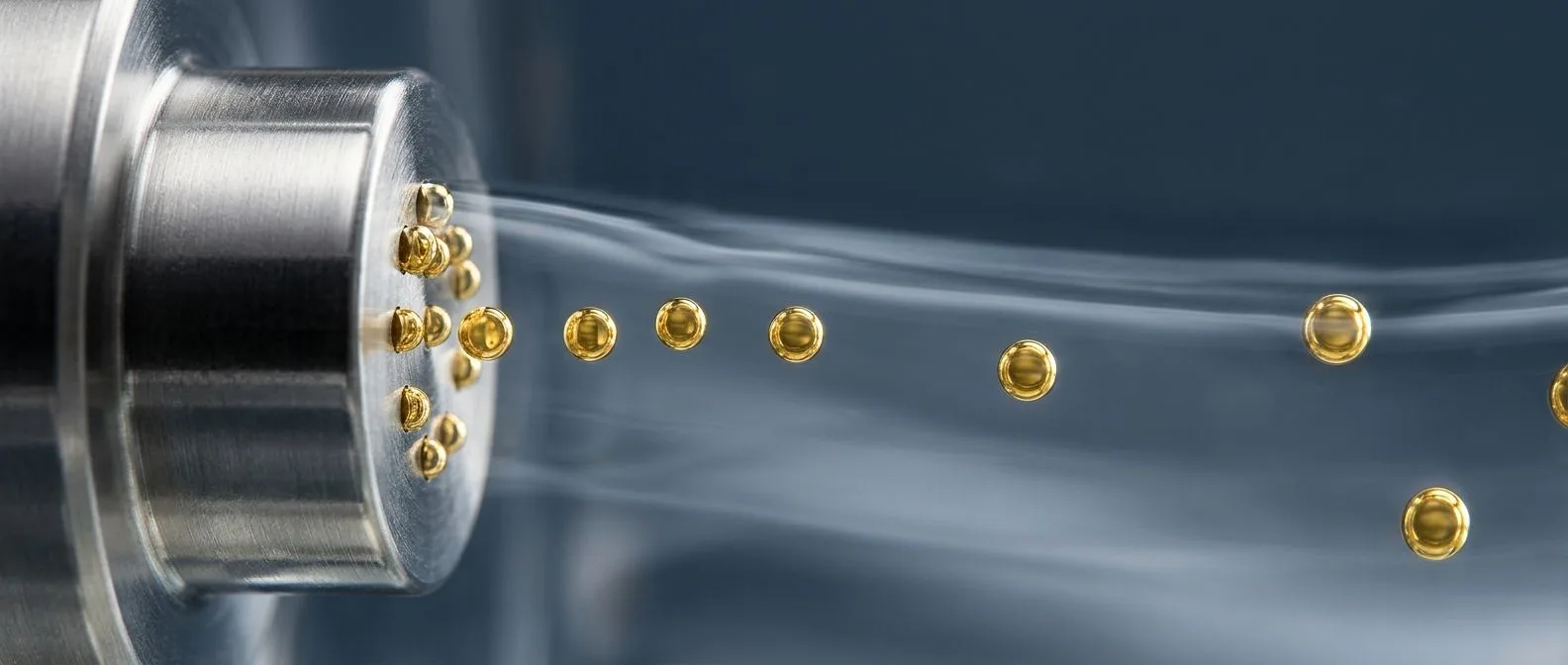
Precision Membrane Extrusion: The dispersed phase containing your active and bio-carrier passes through a uniformly porous membrane directly into a moving continuous phase.
Controlled Droplet Detachment: Micro-droplets form individually at the pore outlets, detaching smoothly under controlled cross-flow shear without thermal spikes.
Engineered Shell Thickness: By adjusting membrane pore sizes and pump flow rates, process engineers lock in tight particle size distribution and exact shell thickness.
The result? Active entrapment efficiencies routinely surpass 90 percent, eliminating active payload waste and protecting expensive raw material investments.
This manufacturing shift is proving vital closer to home as well. While the EU sets the pace on microplastic bans, domestic frameworks are aligning quickly. India’s Central Drugs Standard Control Organisation (CDSCO), operating under the Cosmetics Rules 2020, along with the Bureau of Indian Standards (BIS standard IS 4707), is leaning closer to global clean beauty benchmarks.
For Indian CDMOs, relying on legacy synthetic beads creates severe supply chain bottlenecks and export rejection risks. Furthermore, when natural encapsulated batches fail in 40°C/75% RH stability chambers, the root cause is almost always mechanical shell damage inflicted during high-shear batching.
Upgrading from legacy batch homogenisers to continuous low-shear membrane emulsification solves this operational pain point:
Lower Energy Overhead: Continuous ME units run on a fraction of the power consumed by high-energy rotor-stator rigs.
Reliable Batch Scaling: Eliminating turbulent shear prevents batch-to-batch particle variance, protecting product shelf-life.
Immediate Export Readiness: Bio-encapsulated formulas allow brand clients to guarantee verified "Microplastic-Free" claims on premium export SKUs.
Replacing synthetic microparticles requires more than swapping raw material codes on a bill of materials—it demands matching the carrier matrix to the right processing technology. By pairing bio-based shell materials with low-shear membrane emulsification, Indian cosmetic manufacturers can protect delicate active payloads, satisfy strict global regulators, and secure a dominant position in international clean beauty markets.