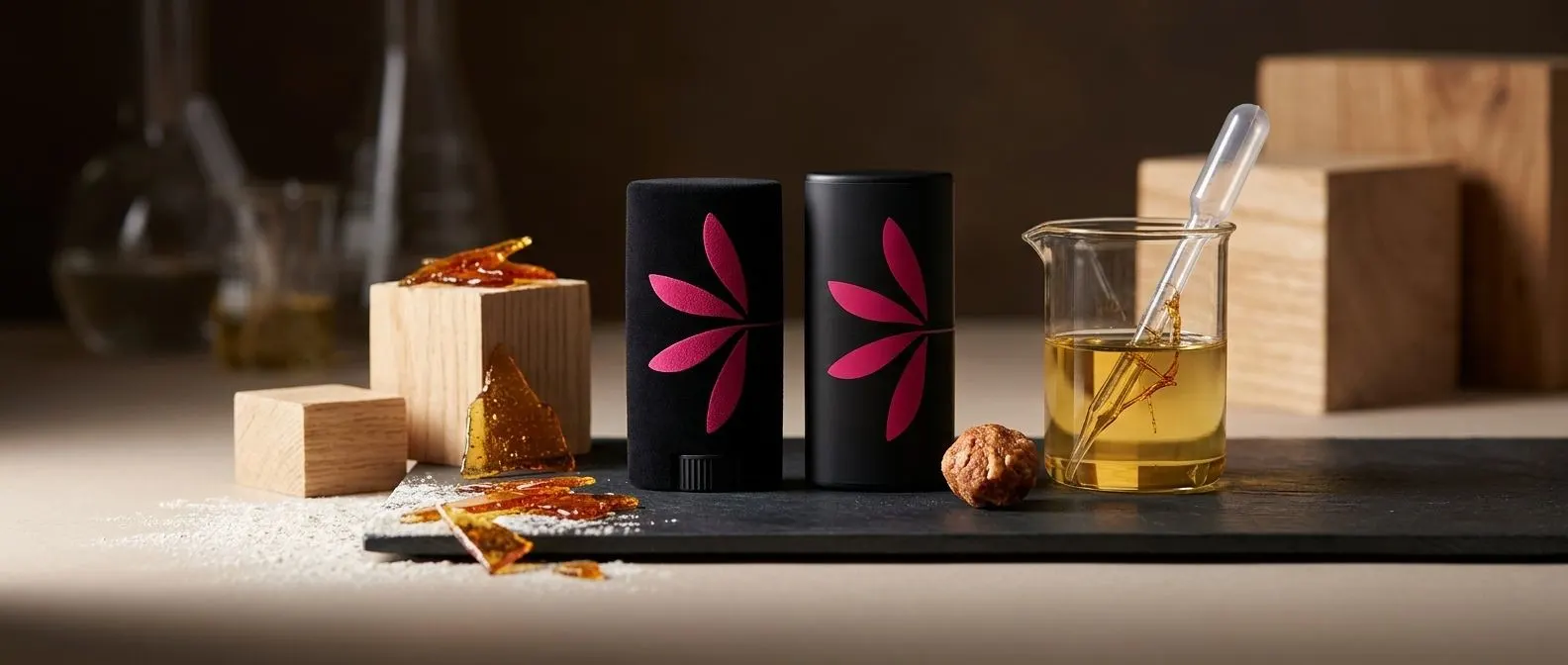
Eurofragance's 'Atelier Nova' concept strips out traditional ethanol bases, replacing them with solid, gel, and powder formats that suit sensitive skin—marking a practical pivot for fine fragrance formulation. By fusing decadent haute-pâtisserie gourmand profiles with alternative delivery systems, the Spanish fragrance house bypasses alcohol entirely. For Indian D2C brands and CDMOs, this format opens up a direct path to capture rising Gen-Z demand for portable, skin-friendly prestige scents.
Advanced Formulation Mechanics: Hybrid Matrices & Bio-Fermentation
Atelier Nova relies on smart rheological engineering to lock in volatile aromatic compounds without dampening scent payoff.
Solid Gel Sticks and Silky Powders
To build gelled jelly sticks, formulators use structured gellan gum networks or dibenzylidene sorbitol (DBS) organogels that trap high-load fragrance micro-emulsions. These matrices melt predictably on contact with skin heat, leaving zero greasy residue behind.
For tactile powders, chemists load a 10% to 20% fragrance oil payload directly onto inert inorganic carriers—using a blend of porous silica, polymethylsilsesquioxane, and modified corn starch (*Aluminum Starch Octenylsuccinate*). This avoids oil bleeding and clumping, yielding a silky, velvet-touch finish.
Bio-Fermented Gourmand Molecules
Crafting authentic haute-pâtisserie profiles—like fresh brioche, roasted praline, and warm lactonic notes—without heavy synthetics requires precision biotechnology. Eurofragance leverages *Saccharomyces cerevisiae* microbial pathways to synthesize bio-derived esters like phenethyl acetate alongside sustainable macrocyclic musks. These bio-fermented ingredients unspool gradually through skin-temperature thermal release, delivering long-lasting olfactive persistence.
CDSCO Compliance and Supply Chain Advantages in India
Bringing these alternative formats to the Indian market demands careful alignment with Central Drugs Standard Control Organisation (CDSCO) rules, but it unlocks massive operational advantages.
Regulatory Safety Standards
Formulations must strictly comply with the Cosmetics Rules, 2020, Indian Standards IS 4707 (Parts 1 & 2), and IFRA 51st Amendment limits. When introducing novel micro-encapsulants or bio-fermented actives, brand owners must validate safety under Form Cos-8, completing heavy metal screens (Lead ≤ 20 ppm, Arsenic ≤ 2 ppm) and microbiological testing.
Slashing Logistical Overhead
Switching to alcohol-free formats cuts through State Excise red tape, eliminating ethanol storage permits and simplifying Class 3 flammable transport compliance. Bypassing hazardous material regulations directly reduces freight insurance premiums and streamlines cross-border warehousing across Indian states.
B2B Impact: CDMO Margins and Gen-Z Market Appeal
For Indian contract manufacturers and CDMOs, alternative delivery formats offer a direct route to higher margins and shorter product development cycles.
Manufacturing Efficiencies
Traditional ethanol perfumery demands explosion-proof blending suites and lengthy maceration cycles. In contrast, solid gel sticks rely on low-thermal or cold-process filling, while powders require basic dry-blending machinery. This cuts factory energy consumption, slashes utility overheads, and accelerates batch turnaround times.
Strategic Market Positioning
Indian D2C and prestige beauty brands are actively chasing novel formats for Gen-Z consumers who prioritize skin barrier health and on-the-go touch-ups. By pairing high-concept haute-pâtisserie accords with functional delivery systems, Indian manufacturers can launch differentiated, higher-margin SKUs that stand out in a crowded market.