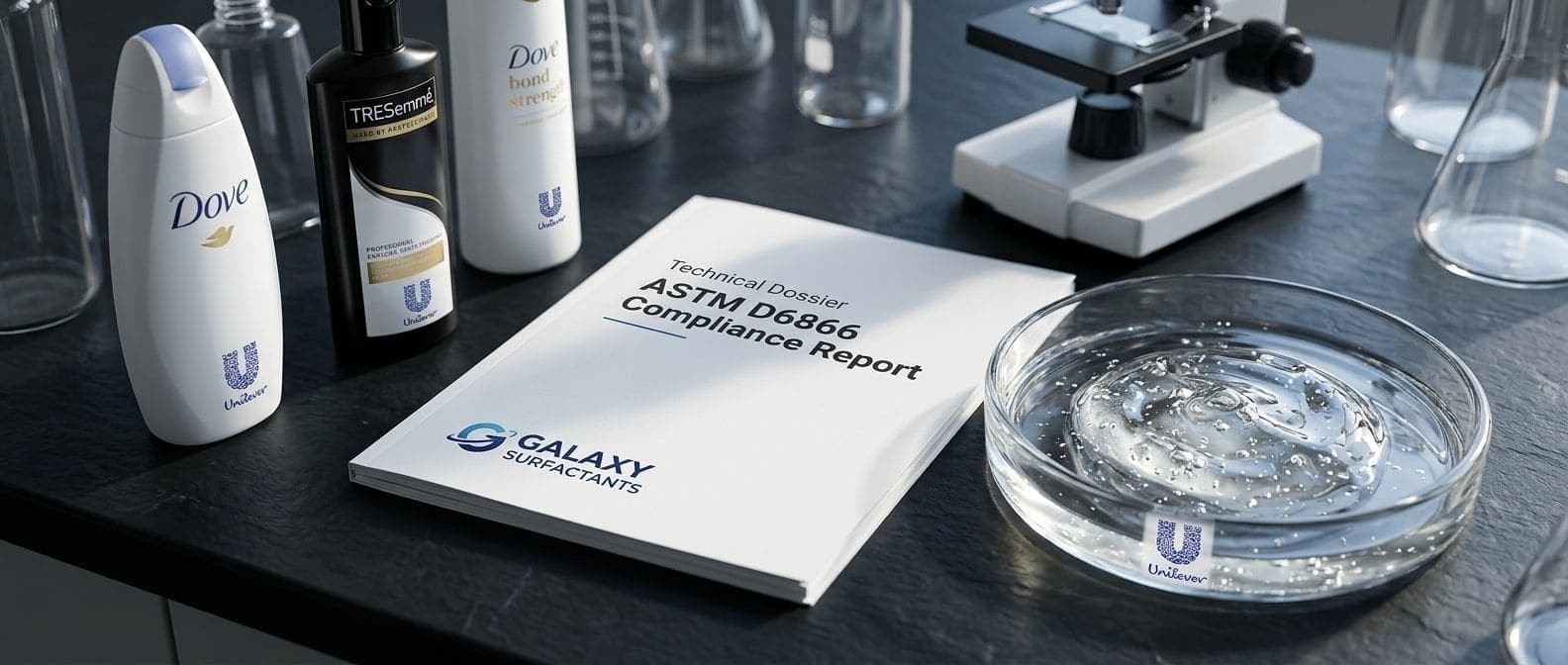
Unilever and Galaxy Surfactants just accelerated the commercial production of next-generation green surfactants. As global beauty conglomerates rush to meet aggressive Scope 3 decarbonization targets, this strategic partnership moves bio-based chemistries out of niche pilot labs and straight into high-volume manufacturing lines.
For Indian personal care brands, contract development and manufacturing organizations (CDMOs), and cosmetic chemists, this alliance provides a pragmatic technical roadmap for reformulating rinse-off products without sacrificing performance or profit margins.
Next-Gen Chemistries: Bypassing Ethoxylation
The charter focuses on industrializing three high-performance sustainable surfactant platforms:
Fermented Biosurfactants: Sophorolipids and rhamnolipids produced via precision microbial fermentation using renewable plant sugars.
Amino Acid Surfactants: High-purity Sodium Cocoyl Glutamate and Sodium Cocoyl Glycinate derived from plant amino acids and coconut fatty acids.
Alkyl Polyglucosides (APGs): Mild, non-ionic surfactants synthesized from plant-derived glucose and fatty alcohols.
Enzymatic catalysis bypasses ethoxylation entirely, eliminating 1,4-dioxane risks at the source. Beyond clearing safety barriers, these molecules operate at a lower Critical Micelle Concentration (CMC) than synthetic alternatives. This allows formulators to build creamy, stable foam at lower active concentrations while protecting stratum corneum proteins and natural skin lipids.
R&D Reality Check: Rheology and Stability
However, swapping out ethoxylated bases demands serious lab adjustments. Standard salt-curve thickening—the backbone of traditional SLES/betaine chassis—fails completely in amino acid systems. Adding sodium chloride to a glutamate base will not build viscosity; instead, chemists must re-engineer systems using secondary amphoterics, hydrophobic gums, or associative polymers to avoid thin, watery products.
Furthermore, switching to bio-based feedstocks introduces distinct shelf-life challenges. Formulators must re-optimize preservative systems to prevent micro-contamination and phase separation over time, particularly under extreme temperature stability testing.
Regulatory Checkpoints: From Lab Bench to Legal Sign-Off
Before pilot batches hit commercial production lines, R&D teams must hand off complete analytical packages to regulatory affairs. With the Central Drugs Standard Control Organisation (CDSCO) and the Advertising Standards Council of India (ASCI) aggressively prosecuting greenwashing claims, raw "eco-friendly" marketing copy no longer holds up. Formulators must validate novel surfactant systems against three strict technical benchmarks:
IS 4011 Safety Testing: Mandatory Indian standard protocols proving primary skin and eye irritation safety profiles.
ASTM D6866 Carbon Quantification: Radiocarbon dating that measures the exact ratio of modern bio-based carbon against petroleum-derived carbon.
ISO 14040/44 LCAs: Standardized Life Cycle Assessments auditing end-to-end environmental impact to substantiate Scope 3 claims.
CDMO Execution and Supply Chain Resilience
For domestic contract manufacturers, localized production resolves long-standing formulation and operational bottlenecks. Combining high-purity APGs with amino acid glutamates allows CDMOs to deliver crystal-clear, premium shampoos and body washes without relying on heavy synthetic polymers.
Economically, domestic manufacturing insulates Indian brand owners from volatile global crude oil markets and international shipping delays. This partnership secures a stable, local supply of green raw materials, turning corporate Scope 3 decarbonization goals into an achievable, cost-effective reality.