The global boom in GLP-1 receptor agonists—like semaglutide and tirzepatide—has sparked a lucrative secondary dermatological market. As patients shed weight rapidly on these metabolic therapies, they experience quick depletion of facial fat pads, structural skin collapse (popularly dubbed "Ozempic Face"), elevated trans-epidermal water loss (TEWL), and acute hair shedding.
French manufacturer Anjac Health & Beauty recently validated this growing market by launching a dedicated B2B platform focused on companion skincare for weight-loss patients. This commercial move offers a clear blueprint for Indian brand owners, R&D labs, and contract development and manufacturing organisations (CDMOs) aiming to build high-margin portfolios in aesthetic dermatology.
Active Ingredient Architecture: Targeting Biological Pathways
To address GLP-1-induced skin and hair changes, formulation teams need to target three core physiological pathways with well-proven active ingredients:
1. Structural Redensification
When weight loss strips away underlying facial volume, skin sags and the dermal matrix degrades. Signal peptides reactivate structural protein production to fill that gap. Copper Tripeptide-1, Acetyl Tetrapeptide-2, and Palmitoyl Tripeptide-38 stimulate Types I, III, and IV collagen, elastin, and endogenous hyaluronic acid to rebuild the extracellular matrix (ECM) and restore firmness to sagging contours.
2. Barrier and EDJ Restoration
Nutritional changes and rapid metabolic shifts compromise barrier integrity, flattening the epidermo-dermal junction (EDJ) and spiking moisture loss. Biomimetic ceramides (NP, AP, EOP), ectoin, and polyglutamic acid reorganize the skin's lipid layers, stem severe TEWL, and maintain cellular hydration while the body adapts to medication.
3. Follicular Support for Telogen Effluvium
Metabolic shock frequently triggers telogen effluvium—a sudden hair-thinning condition that shifts follicles out of their growth cycle, usually three to six months into therapy. Actives like Redensyl, Biotinoyl Tripeptide-1, and caffeine stimulate dermal papilla cells, extend the active anagen growth phase, and noticeably reduce shedding.
CDSCO Compliance: Claim Boundaries for Indian Brands
Bringing companion skincare to market under India’s Cosmetics Rules, 2020 requires sharp claim discipline. Products regulated by the Central Drugs Standard Control Organization (CDSCO) must stay clearly within cosmetic boundaries. Making structural modification or therapeutic claims risks getting reclassified as a drug.
Skip Prohibited Claims: Avoid phrasing such as "reverses lipoatrophy," "cures metabolic alopecia," or "rebuilds lost subcutaneous fat."
Focus on Permitted Cosmetic Claims: Lean into market-friendly messaging like "visibly plumps sagging contours," "densifies skin appearance," "supports moisture barriers during weight loss," and "reduces the appearance of hair shedding."
Formulation teams should validate these claims using *in vitro* dermal synthesis assays and clinical TEWL data without pushing into therapeutic promises.
CDMO Strategy: How to Bundle for Quick Market Entry
Capturing market share in India hinges on speed and distribution alignment:
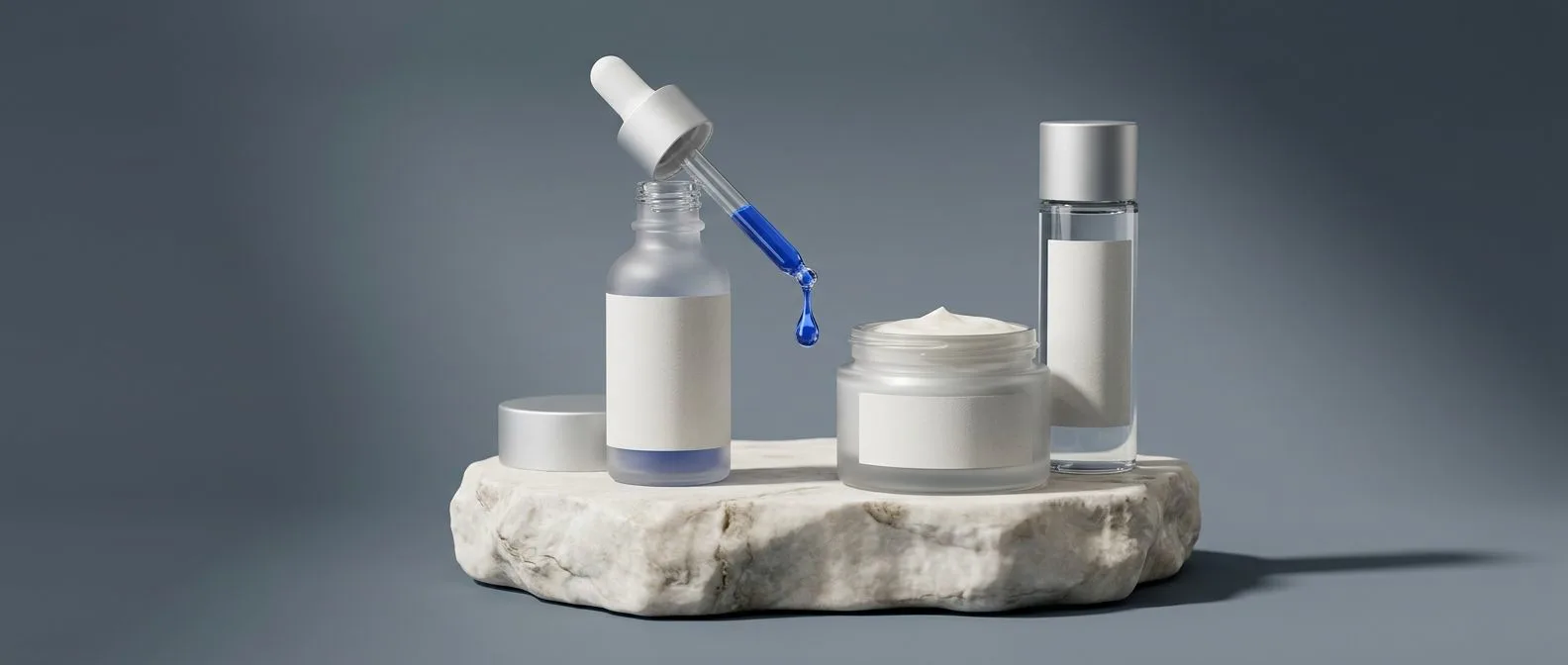
Turnkey Regimen Bundling: Indian CDMOs can accelerate brand launches by offering pre-formulated, three-part systems: a Plumping Signal Peptide Serum, a Micro-Cera Barrier Cream, and a Follicle Activation Scalp Tonic. Ready-to-go systems eliminate long R&D cycles for beauty brands.
Targeting Aesthetic & Wellness Channels: Look beyond standard direct-to-consumer (D2C) channels. Partnering directly with aesthetic dermatology clinics, metabolic health centers, and weight-loss providers puts companion skincare right at the point of prescription, driving patient compliance and higher customer lifetime value.