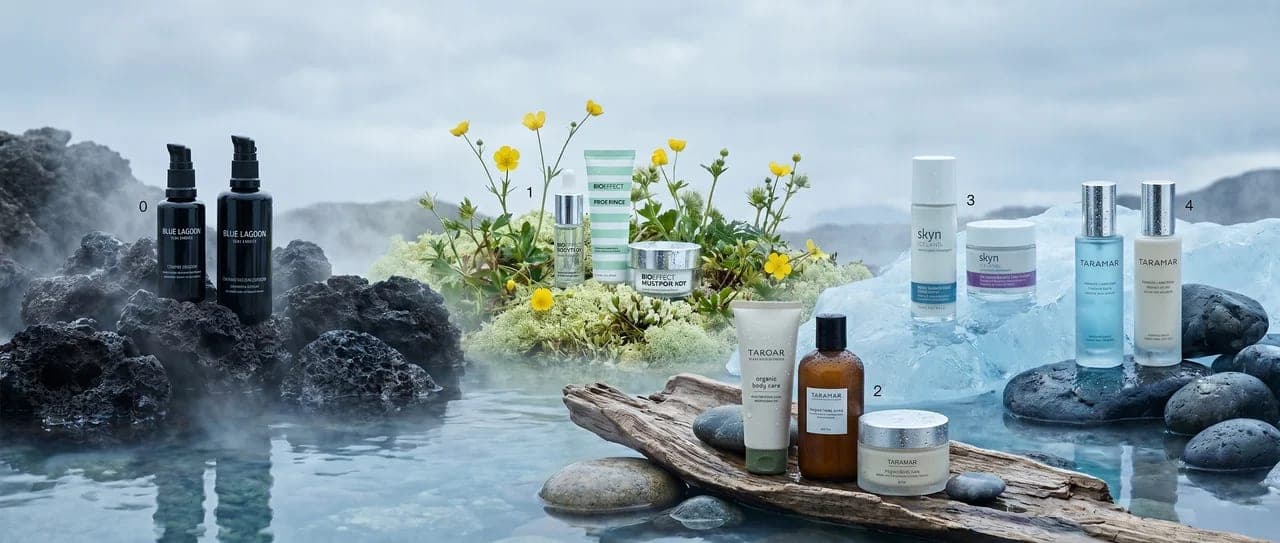
Why Icelandic Beauty Is Capturing Global Attention
The popularity of Icelandic skincare brands may appear surprising at first glance.
Iceland represents a relatively small market with a population of less than 400,000 people. Yet its beauty brands have achieved visibility far beyond their domestic footprint.
From geothermal ingredients and mineral-rich waters to Arctic botanicals and sustainability narratives, Icelandic skincare companies have created highly distinctive market positions.
Lists highlighting the "Top Icelandic Skincare Brands" continue to attract consumer interest across North America, Europe, and Asia.
For beauty executives, however, the story is not really about Iceland.
It is about how brands transform geography, science, and authenticity into commercial advantage.
The lessons extend well beyond skincare.
Turning Geography Into Brand Equity
Most successful beauty brands sell more than products.
They sell stories.
Icelandic skincare companies have been particularly effective at transforming their environment into a powerful brand asset.
Volcanic landscapes, geothermal energy, glacial waters, mineral-rich ecosystems, and Arctic conditions create a unique narrative framework.
Consumers immediately associate Iceland with purity, nature, and environmental stewardship.
Brands leverage these associations to create differentiation.
Importantly, the country itself becomes part of the value proposition.
This approach demonstrates how geographic identity can strengthen brand positioning when connected to authentic product stories.
Nature Alone Is No Longer Enough
Many beauty brands promote natural ingredients.
Icelandic brands often go further by linking natural ingredients to scientific validation.
This combination is increasingly important.
Consumers remain interested in natural beauty products, but they also expect efficacy.
As a result, successful brands increasingly combine ingredient origin stories with evidence-based claims.
Icelandic skincare companies frequently position geothermal minerals, marine extracts, algae, and Arctic botanicals within scientific narratives focused on hydration, barrier support, skin resilience, or anti-ageing benefits.
This creates a more credible value proposition.
For brand managers, the lesson is clear: natural stories perform best when supported by science.
Premiumisation Through Scarcity
One of the most interesting aspects of Icelandic skincare is its premium positioning.
Many brands operate within higher-value segments despite competing against much larger global players.
Part of this strategy relies on scarcity.
Consumers perceive Icelandic ingredients and sourcing environments as unique and difficult to replicate.
Scarcity supports premium pricing.
The approach mirrors strategies used by luxury fragrance brands that emphasise rare raw materials or exclusive sourcing regions.
Beauty brands increasingly recognise that exclusivity can be created through storytelling as effectively as through formulation.
Sustainability Is Embedded Into The Narrative
Sustainability has become a core pillar of modern beauty marketing.
However, many consumers have become sceptical of generic sustainability claims.
Icelandic brands often benefit from stronger credibility because sustainability appears integrated into broader brand narratives rather than positioned as a standalone marketing message.
Renewable energy, environmental stewardship, responsible sourcing, and low-impact production fit naturally within Iceland's global image.
The result is greater authenticity.
For marketers, the takeaway is significant.
Sustainability performs best when embedded into brand identity rather than added as a separate campaign theme.
Ingredient-Led Storytelling Creates Differentiation
Ingredient marketing remains one of the most powerful tools in skincare.
Icelandic brands have consistently leveraged distinctive ingredients to stand apart.
Examples often include:
* Geothermal seawater
* Arctic algae
* Volcanic minerals
* Glacial water
* Marine bioactives
* Nordic botanicals
The specific ingredient matters.
The narrative surrounding it matters even more.
Consumers increasingly seek products that feel unique and discoverable.
Distinctive ingredients create opportunities for richer storytelling and stronger product differentiation.
This strategy is particularly relevant in crowded skincare categories where formulation claims often appear similar.
Building Global Appeal From Local Roots
Perhaps the most impressive achievement of Icelandic skincare brands is their ability to scale internationally without abandoning local identity.
Many beauty companies dilute local heritage when expanding globally.
Icelandic brands often do the opposite.
The more international they become, the more prominently they emphasise their Icelandic origins.
This reinforces authenticity.
For emerging beauty brands, the lesson is valuable.
Global success does not necessarily require globalised branding.
Strong local identities can become international assets when positioned effectively.
What Indian Beauty Brands Can Learn
The rise of Icelandic skincare offers several strategic lessons for Indian beauty companies.
India possesses one of the world's richest beauty ecosystems.
Ayurvedic traditions, biodiversity, botanical resources, regional ingredients, and wellness heritage provide extensive storytelling opportunities.
However, many brands underutilise these assets.
Icelandic companies demonstrate how local heritage can become globally relevant when paired with modern positioning and scientific credibility.
The opportunity is not to imitate Icelandic skincare.
The opportunity is to apply similar strategic principles to India's own beauty strengths.
The Future Belongs To Distinctive Brands
The skincare market continues to become more competitive.
New launches appear daily.
Consumer attention is increasingly fragmented.
In this environment, differentiation matters more than ever.
Icelandic skincare brands succeed because they offer something memorable.
Their products are connected to place, purpose, ingredients, and identity.
The result is stronger emotional engagement and clearer market positioning.
Brands that rely solely on product features often struggle to stand out.
Brands that create compelling narratives build stronger long-term value.
Strategic Priorities For Beauty Leaders
Several lessons emerge from the Icelandic skincare playbook.
Strengthen Origin Stories
Consumers increasingly connect with authentic brand heritage.
Pair Nature With Science
Ingredient narratives should be supported by efficacy evidence.
Build Premium Through Differentiation
Scarcity and uniqueness can support stronger pricing power.
Integrate Sustainability Naturally
Environmental commitments should reinforce brand identity.
Focus On Distinctive Assets
Successful brands amplify what competitors cannot easily replicate.
More Than A Regional Beauty Trend
The growing visibility of Icelandic skincare brands is not simply a regional success story.
It reflects broader shifts in consumer behaviour.
Shoppers increasingly seek authenticity, transparency, efficacy, and emotional connection.
Brands that successfully combine these elements create stronger market positions.
For beauty executives, the real lesson is not about Iceland.
It is about strategic differentiation.
The brands winning global attention are often those that understand their unique strengths and communicate them consistently.
In an increasingly crowded beauty market, that capability may be more valuable than any individual ingredient or formulation trend.