The global architecture of natural ingredient sourcing is undergoing a structural realignment. For decades, Southeast Asian nations have operated primarily as agricultural exporters within the beauty and personal care (BPC) supply chain, shipping raw botanicals to European processing houses for refinement, extraction, and standardisation. However, the Indonesian Ministry of Industry is now aggressively pivoting to disrupt this legacy model.
Through the establishment of the Bali Flavour and Fragrance Centre (Pusat Flavour and Fragrance Bali, or PFF Bali), the government is accelerating the downstreaming of national essential oil commodities. Downstreaming—the economic process of adding domestic value to raw materials prior to export—signals a definitive shift in how raw material procurement will function. Spearheaded by Minister of Industry Agus Gumiwang Kartasasmita and backed by the Directorate General of Agro Industry, this initiative transforms Indonesia from a passive supplier into an active hub for ingredient innovation, advanced extraction, and business incubation.
For R&D formulators, supply chain managers, and regulatory experts within India’s rapidly scaling cosmetics industry, the operationalisation of PFF Bali presents a critical intelligence point. Bypassing traditional Western intermediaries to source directly from an advanced Southeast Asian hub will fundamentally alter cost structures, standardisation protocols, and regulatory compliance workflows.
The Infrastructural Mandate Behind PFF Bali
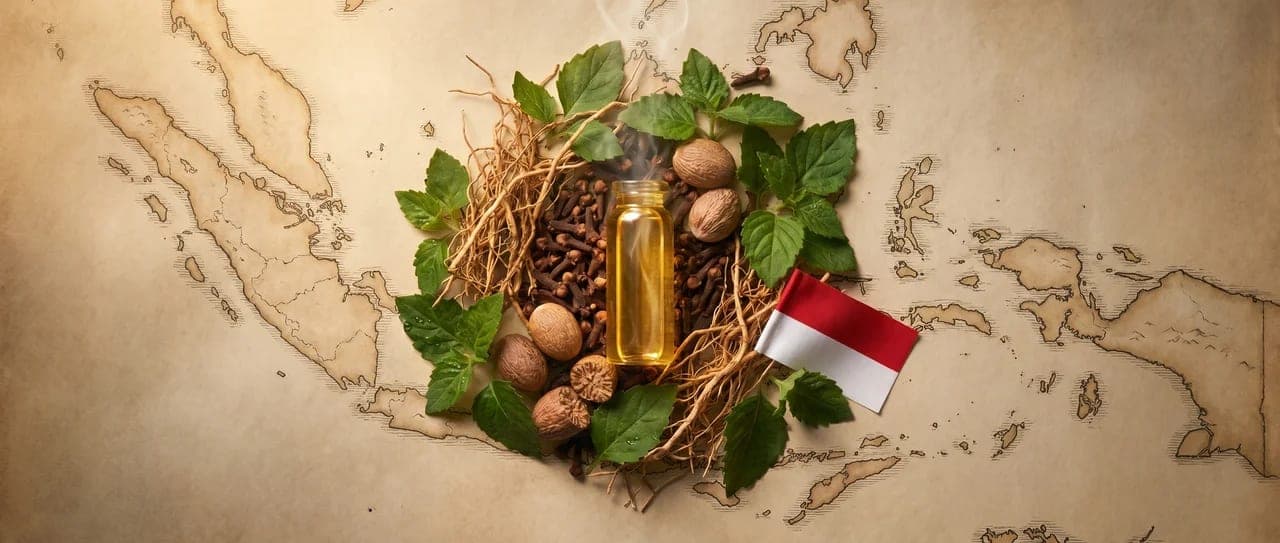
Indonesia commands immense botanical wealth, producing a significant percentage of the world's supply of patchouli, vetiver, clove, and nutmeg oils. Historically, the economic ceiling for local farmers and cooperatives was dictated by the raw yield. PFF Bali is engineered to break this ceiling by serving as a centralised technological facility equipped for high-fidelity processing.
The centre provides state-of-the-art incubation facilities focused strictly on the perfume, aromatherapeutic, and holistic wellness sectors. By concentrating technical expertise and capital equipment—such as supercritical CO2 extractors and molecular distillation units—within a single ecosystem, the Ministry of Industry aims to standardise output. For the Indian market, which is experiencing a surge in demand for premium Ayurvedic, naturals-driven, and "clean" beauty formats, this infrastructure means access to raw materials that have been chemically profiled and stabilised at the source.
Phytochemical Profiling and Batch Standardisation
One of the most persistent challenges for cosmetic chemists working with natural extracts is batch-to-batch inconsistency. Variations in soil pH, rainfall, and harvest timing inevitably alter the phytochemical composition of essential oils. When raw materials are shipped across the globe for processing, maintaining the integrity of volatile terpenes and sensitive phenolic compounds becomes a logistical hurdle.
By localising the extraction and refinement processes at PFF Bali, standardisation occurs immediately post-harvest. This proximity significantly mitigates the degradation of highly volatile top notes. Furthermore, the centre’s focus on R&D incubation implies enhanced access to gas chromatography-mass spectrometry (GC-MS) data directly from the supplier.
For Indian formulators, securing a comprehensive GC-MS profile at the point of origin streamlines the formulation process. It allows chemists to precisely calibrate usage rates to ensure therapeutic efficacy while adhering to strict IFRA guidelines regarding dermal sensitisers. Knowing the exact concentration of known allergens (such as linalool or eugenol) in a direct-sourced Indonesian essential oil allows R&D teams to confidently formulate leave-on skin care, scalp serums, and fine fragrances without over-engineering their stability testing phases.
Extraction Methodology and Yield Optimisation
The technical capabilities of PFF Bali also open the door to bespoke extraction methodologies. Traditional steam distillation, while cost-effective, can degrade thermo-sensitive olfactory molecules. An innovation hub dedicated to downstreaming is highly likely to offer solvent-free, cold-pressed, or CO2-extracted alternatives. These advanced yields provide formulators with richer, more complex scent profiles and higher concentrations of active antioxidant and anti-inflammatory compounds, which are essential for developing high-performance cosmeceuticals.
Navigating CDSCO Compliance with Direct Source Documentation
The regulatory landscape in India is tightening, with the Central Drugs Standard Control Organisation (CDSCO) placing increasing scrutiny on the provenance and safety of botanical extracts. Transparency is no longer a marketing tool; it is a regulatory prerequisite.
Procuring natural ingredients through a fragmented supply chain often convolutes traceability. An essential oil might be harvested in Sumatra, distilled in Java, sold to a broker in Singapore, refined in Grasse, and finally exported to Mumbai. Accurately mapping the Material Safety Data Sheets (MSDS) and Certificates of Analysis (COA) across these nodes is a massive administrative burden for Indian regulatory managers.
The establishment of PFF Bali consolidates this supply chain. Sourcing value-added, downstreamed ingredients directly from a government-backed Indonesian facility ensures an unbroken chain of custody. Indian manufacturers can secure robust, unified documentation directly from the primary processor. This dramatically simplifies CDSCO compliance workflows, expedites the approval process for new product developments (NPD), and provides a verifiable "farm-to-face" narrative that modern consumers demand.
Olfactory Formulation Opportunities for Indian R&D
Beyond supply chain economics, the PFF Bali initiative provides Indian brands with unique olfactive opportunities. The convergence of fragrance and wellness is dominating the current market cycle. Consumers expect their daily skin care and body care routines to offer functional aromatherapeutic benefits—stress reduction, sleep enhancement, and mood elevation.
Indonesian botanicals are distinctly suited for this hybrid category. The deep, grounding profile of Indonesian vetiver, the sophisticated earthiness of Sumatran patchouli, and the uplifting warmth of native ginger and nutmeg provide an excellent palette for neuro-cosmetics.
Formulating for the Premium Wellness Segment
Formulators can leverage these high-fidelity extracts to develop functional fragrances that go beyond mere scenting. By collaborating with the business incubation arm of PFF Bali, Indian brands can potentially secure exclusive, bespoke blends tailored specifically to the subcontinent's climatic conditions. For instance, formulating a stable, non-phototoxic aromatherapy mist suited for high-humidity Indian summers requires essential oils with highly specific terpene profiles—something a localised innovation hub can engineer far more efficiently than a distant European processor.
Strategic Realignment for Manufacturers
The Ministry of Industry’s downstreaming mandate is a clear indicator that the era of cheap, raw botanical exports is sunsetting. For Indian BPC manufacturers and brand owners, relying on the legacy European supply chain for Asian-grown botanicals is becoming a strategic vulnerability.
Actionable steps for industry professionals include immediate audits of current natural ingredient procurement contracts. Supply chain managers should begin establishing dialogue with Indonesian trade representatives and early-stage partners within the PFF Bali ecosystem. R&D teams must simultaneously prepare to integrate these high-potency, source-refined extracts into upcoming formulation pipelines. The brands that secure these direct, traceable, and highly functional supply lines first will possess a distinct competitive advantage in an increasingly crowded natural beauty market