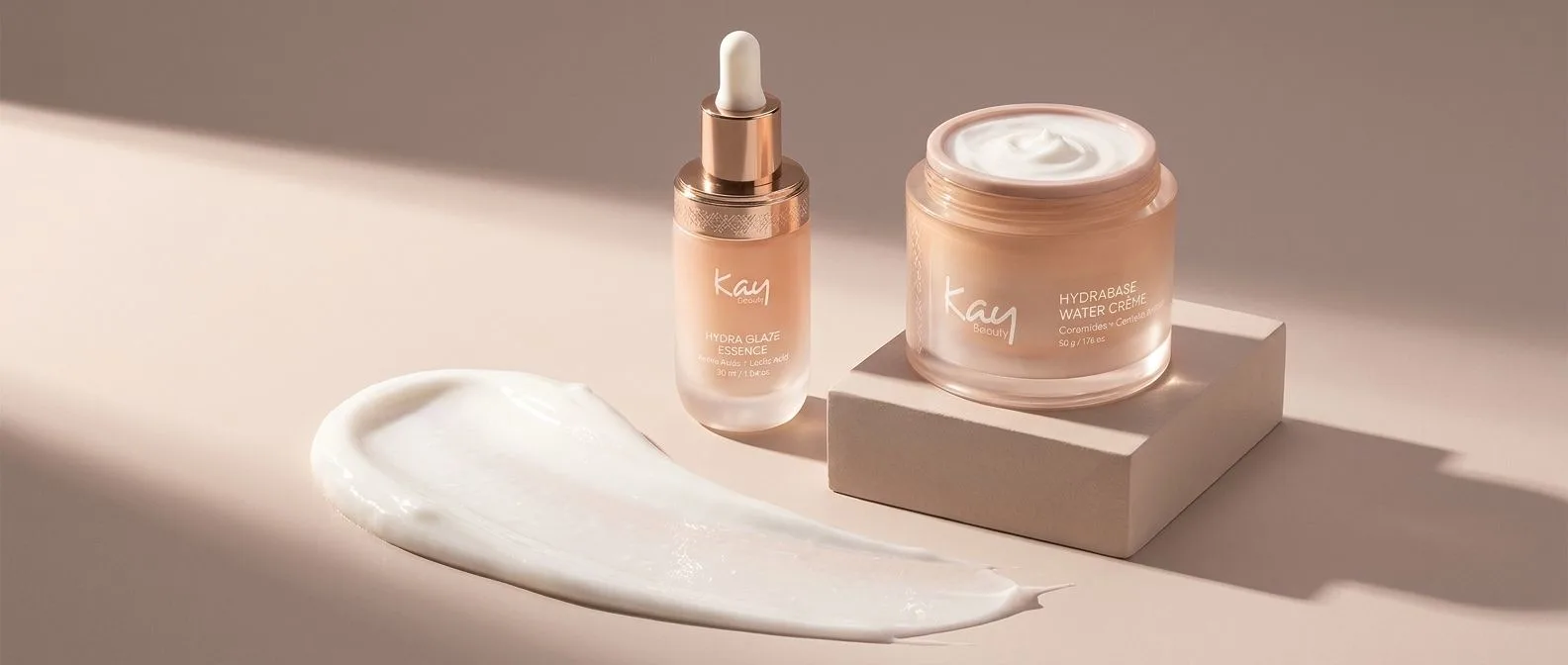
Why Kay Beauty is Swapping Lipsticks for Skin Barrier Chemistry
Colour cosmetics brands eventually hit a hard revenue ceiling. A flagship lipstick or eyeshadow palette builds massive brand heat, but customers only replace them every six to twelve months. Kay Beauty’s move into skin barrier care shows how Indian beauty brands can capture daily routines to build predictable 30-to-60-day repurchase loops.
Moving from color to skincare isn't a quick branding shift—it forces R&D teams to rethink formulation chemistry from scratch. You cannot just slap skincare claims on a jar; you need serious active delivery mechanisms, precise formulation science, and tight regulatory compliance under Indian law.
Inside the Chemistry: Engineering High-Performance Barrier Products
Formulating lipid-replenishing products that feel luxurious without leaving a heavy, clogged-pore residue requires intelligent ingredient architecture. R&D teams must target active ingredients directly at the epidermal layers that need them most.
Take lipid restoration. Rebuilding the intercellular matrix inside the *stratum corneum* demands an exact 3:1:1 molar ratio of Ceramides (specifically NP, AP, and EOP), cholesterol, and free fatty acids. Knock this ratio off balance, and the formula loses its ability to repair damaged lipid bilayers and lower Transepidermal Water Loss (TEWL).
Moisture delivery requires a similar tactical approach. Instead of relying on a single hydration asset, successful formulas build multi-weight Hyaluronic Acid networks. High molecular weight HA sits on the skin’s surface to lock in moisture, while ultra-low molecular weight HA (under 10 kilodaltons) sinks deeper into the epidermis to kickstart internal hydration engines.
To calm inflamed skin, Niacinamide speeds up keratinocyte differentiation and triggers internal lipid synthesis. Pair that with *Centella Asiatica* (Cica) triterpenes—specifically asiaticoside and madecassoside—and the formulation actively downregulates pro-inflammatory cytokines like TNF-α and IL-6.
Walking the Regulatory Wire: CDSCO Compliance
Crossing over from decorative makeup to functional skincare brings intense legal scrutiny under the Cosmetics Rules, 2020 and Indian Standard IS 4707. Regulatory teams must draw a hard line between cosmetic enhancements and medical claims to avoid falling under the heavy hand of the Drugs & Cosmetics Act, 1940.
Marketing copy must stay focused strictly on cosmetic benefits: reinforcing moisture barriers, softening dryness, or maintaining skin texture. As soon as a label promises to "cure" or "treat" eczema, dermatitis, or psoriasis, the CDSCO reclassifies the product as a drug.
Beyond claims, manufacturing teams must clear strict safety metrics—capping heavy metals like Lead at 20 ppm and Arsenic at 2 ppm—while passing rigorous microbiological and real-time stability testing. Commercial production and imports also require approved Form COS-2 and Form COS-8 filings before hitting domestic shelves.
What This Shift Means for Indian CDMOs
Kay Beauty’s expansion highlights a growing demand for specialized Contract Development and Manufacturing Organizations (CDMOs). Producing stable, elegant lipid formulas requires advanced technical transfer and precise processing equipment.
Creating lamellar gel networks—which mirror the natural liquid crystal structures of human skin lipids—demands high-shear homogenization combined with tightly controlled cooling cycles. At the same time, formulators must use non-comedogenic micro-emulsion systems to encapsulate lipophilic ceramides alongside water-soluble active complexes without phase separation or texture compromise.
The Commercial Reality
Kay Beauty’s trajectory proves that scaling past decorative cosmetics demands chemical accuracy just as much as marketing muscle. For Indian beauty brands aiming to capture recurring revenue, combining clinically backed active ratios with fully compliant CDMO partners is the clearest path to long-term market leadership.