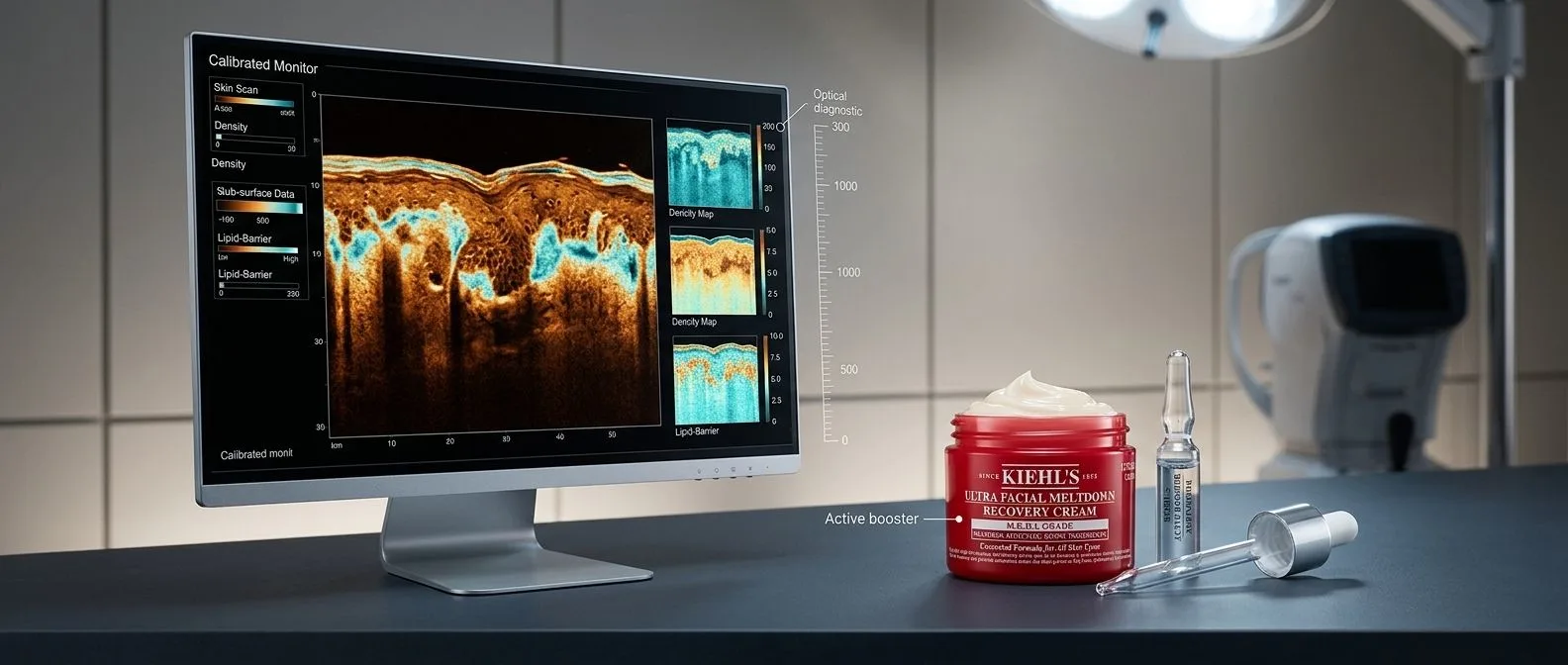
Kiehl’s deployment of its Derma Reader system at its London flagship demonstrates how point-of-sale diagnostics are moving from marketing gimmicks to structured formulation engines. By linking sub-surface biophysical scanning directly to targeted chemical interventions, the brand bridges retail engagement with precision skin health. For Indian cosmetic brand owners, R&D chemists, and contract development and manufacturing organisations (CDMOs), this setup provides a practical reference for hardware-driven personal care.
Multi-Spectral Optical Diagnostics and Algorithmic Active Matching
The Derma Reader uses multi-spectral optical imaging to capture sub-surface parameters well past surface-level visual inspection. The diagnostic unit measures lipid barrier degradation, sub-surface chromophore density (melanin and hemoglobin), and follicular blockage.
Instead of relying on subjective questionnaire surveys, the underlying algorithm maps these optical biomarkers straight to specific active combinations:
Biomimetic Lipid Bilayers and Endogenous Synthesis: Biomimetic squalane and ceramides work alongside niacinamide to rebuild compromised stratum corneum lipids while niacinamide upregulates internal sphingolipid production, controlling transepidermal water loss (TEWL).
Tyrosinase Inhibition and ROS Quenching: High-purity L-ascorbic acid paired with ferulic acid targets sub-surface melanin clusters, inhibiting tyrosinase activity and neutralizing reactive oxygen species before melanocyte activation occurs.
Lipophilic Desquamation and Enzymatic Regulation: Oil-soluble salicylic acid penetrates deep into the pore matrix to accelerate follicular exfoliation, while zinc PCA suppresses 5-alpha-reductase activity to curtail excess sebum production.
Navigating Indian CDSCO Regulatory Frameworks
While diagnostic-led retail drives strong footfall, trying to mix custom products on-site in India creates immediate legal liabilities. Under the Central Drugs Standard Control Organisation (CDSCO) Cosmetics Rules, 2020, blending raw ingredients or modifying finished formulas inside a retail store constitutes unlicensed manufacturing.
To avoid regulatory penalties and safety breaches, Indian brands must adopt a modular, pre-registered system:
Dual-Registration Protocols: Both the neutral carrier base chassis and the concentrated active booster ampoules require independent licensing under Form COS-2 or Form 32 before hitting retail shelves.
Assured Preservative Efficacy: Sealed, pre-measured booster pods protect the product from heavy metal contamination, microbial growth, and preservative breakdown caused by open-air handling.
Closed-Loop Dispensing: In-store execution must use closed-system packaging where consumers click or screw pre-dosed active ampoules directly into the base, eliminating open-atmosphere contamination.
The CDMO Engineering Reality: Solving Modular Rheology
Supporting algorithmic retail requires a practical shift on the CDMO factory floor. Indian D2C brands want manufacturing partners who can back diagnostic software with reliable, modular product systems.
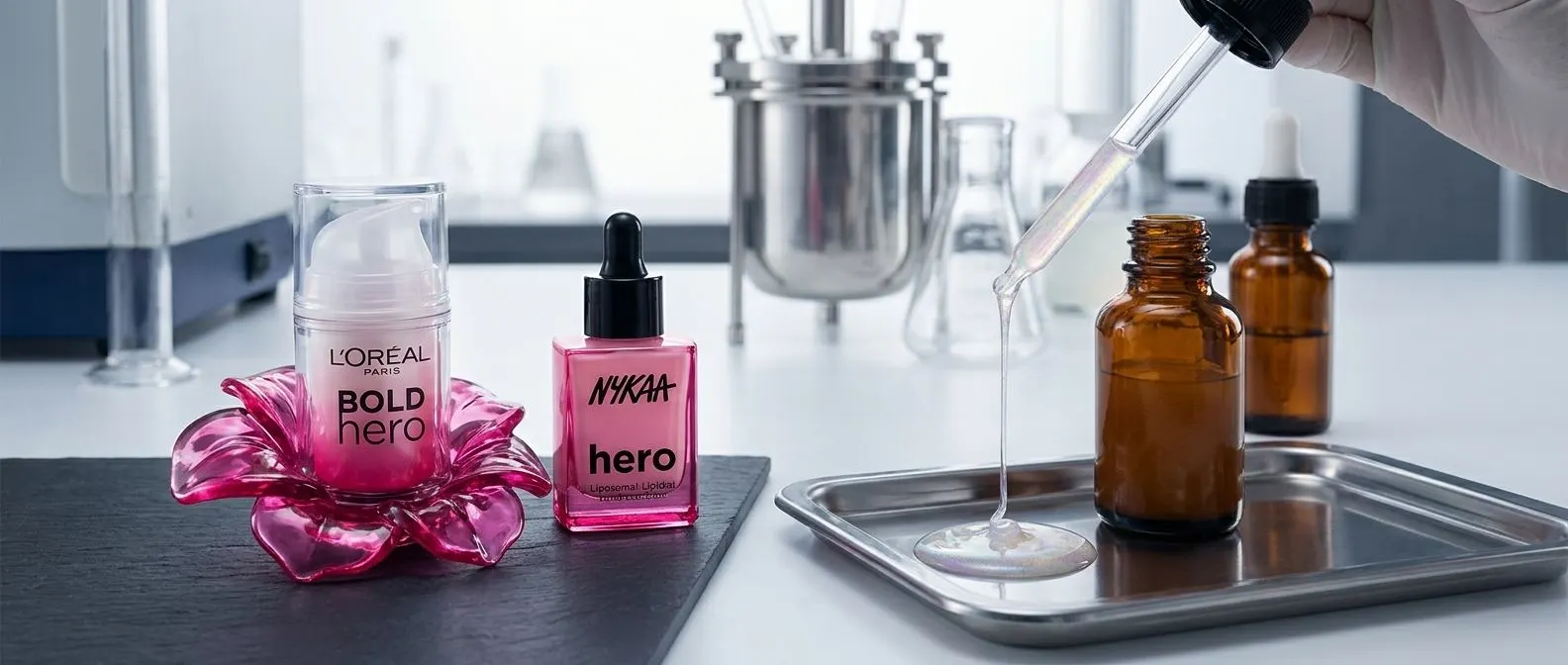
This presents a distinct technical challenge for formulation chemists. Introducing high-concentration active boosters into a neutral carrier base frequently triggers acute rheological failures—most notably emulsion breakdown, micellar disruption, and sudden viscosity drops. When an acidic booster (like L-ascorbic acid) meets an oil-in-water base, sudden pH drops can collapse polymeric thickeners or destabilize charge-sensitive emulsifier networks, causing immediate phase separation.
Indian CDMOs must engineer ultra-resilient chassis formulations that maintain electrolyte tolerance, preserve particle-size distribution, and handle pH fluctuations across varying booster addition ratios. Developing standardized, stress-tested active concentrates with stable rheological profiles lets contract manufacturers move from basic white-label producers to irreplaceable engineering partners for data-driven beauty brands.