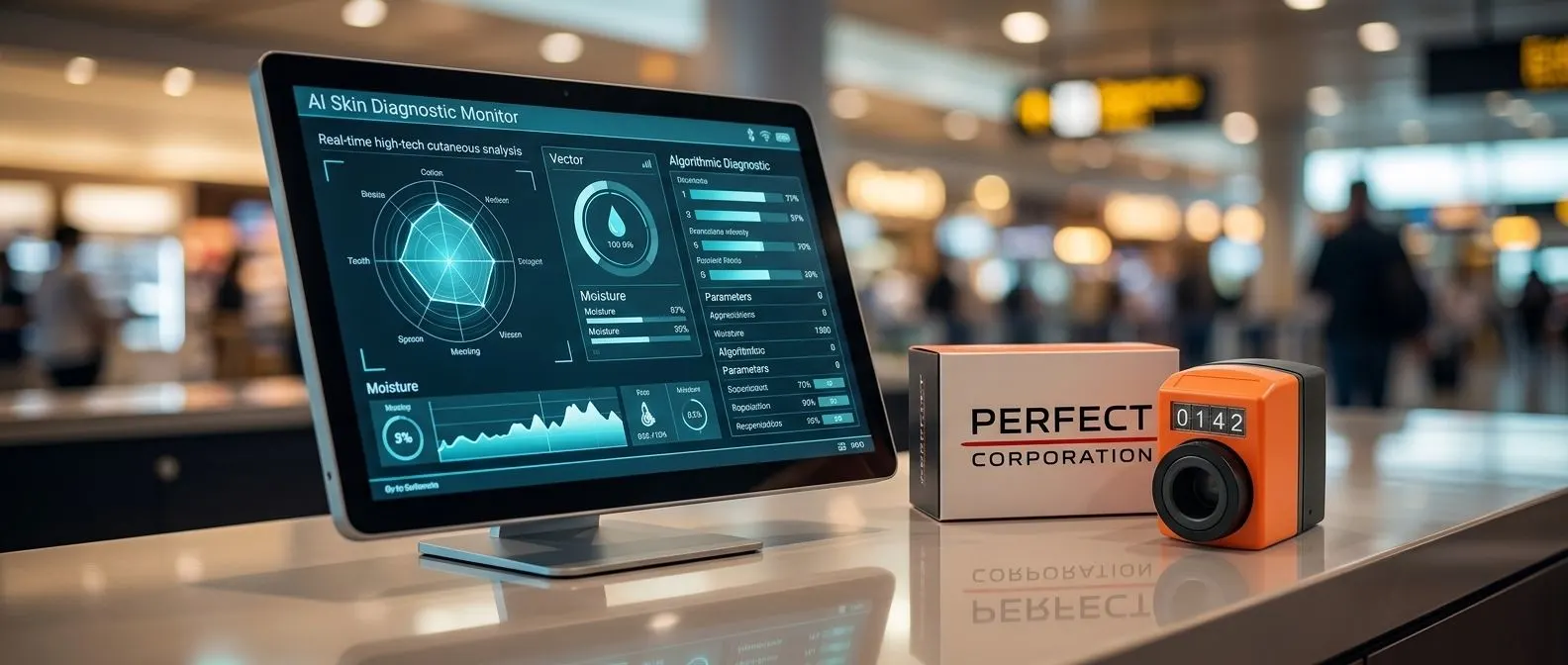
Lagardère Travel Retail just rolled out Perfect Corp.’s Skincare Pro AI Diagnostic Engine across major European airport hubs. The automated system scans passengers’ skin at point-of-sale kiosks, diagnoses instant environmental stress, and pairs them with targeted skincare formulas before they board. For Indian brand owners, R&D chemists, and contract manufacturers (CDMOs), this launch signals a clear shift: travel retail is abandoning static shelf assortments in favor of algorithmically driven, high-velocity rescue SKUs.
Bio-Chemical Mechanisms of Travel-Stressed Skin
Cabin humidity drops below 10% within 20 minutes of takeoff, stripping the stratum corneum and accelerating trans-epidermal water loss (TEWL) before passengers even land. Combined with atmospheric pressure drops, this dry environment destabilizes the intercellular lipid matrix and causes microvascular stasis.
To repair the specific parameter deficiencies flagged by computer vision diagnostics, R&D labs must engineer fast-acting active networks:
Multi-Molecular Weight Hyaluronic Acid: High-molecular-weight cross-polymers lock the surface to halt evaporation, while sub-5000 Dalton hydrolyzed fractions penetrate deep into the stratum corneum to restore internal hydration.
Ectoin: This natural extremolyte counters cabin-induced hyperosmotic shock, shutting down inflammatory cytokines and stabilizing cellular structures under sudden pressure shifts.
Niacinamide: Boosts microcirculation, resolves vascular pooling, and triggers endogenous ceramide synthesis to repair compromised skin barriers.
Ceramide NP/AP/EOP Complexes: Re-stack disrupted intercellular lipid lamellae, restoring moisture flux and structural wall integrity.
Indian CDSCO Regulatory Blueprint for AI Diagnostics
As Indian beauty brands look to integrate similar computer vision engines into airport retail and high-street flagships, navigating the Central Drugs Standard Control Organisation (CDSCO) determines whether your engine operates as a cosmetic tool or gets flagged as a medical device.
SaMD Classification Rules
Under the Medical Devices Rules, 2017, non-invasive diagnostic software offering visual skin evaluations and cosmetic recommendations stays exempt from Software as a Medical Device (SaMD) oversight. To protect this exemption, the AI interface must strictly avoid therapeutic diagnostic claims or medical treatment promises.
Formulation Compliance
Cosmetic SKUs matched by AI engines must comply with the Cosmetics Rules, 2020. Imported finished goods require Form COS-2 registration, while local manufacturing runs require Form COS-8 approvals. Furthermore, recommended products must satisfy Bureau of Indian Standards (BIS) criteria, such as IS 14318 for skin creams, keeping heavy metals strictly under 20 ppm for Lead and 2 ppm for Arsenic.
Factory-Floor Strategy for Indian CDMOs
Deploying AI diagnostics in fast-paced retail environments forces CDMOs to rethink traditional 18-month product development cycles and rigid 5,000-unit minimum batch sizes. Winning travel retail market share requires flexible, pilot-scale compounding units capable of executing small, rapid production runs.
Formulators should develop pre-stabilized base chassis engineered for fast absorption and rapid barrier restoration—including micro-emulsion sprays, bio-cellulose matrices, and low-viscosity serum bases. Factories can then combine these bases with concentrated active booster shots housed in specialized packaging like dual-chamber pumps or multi-phase ampoules. By leveraging pre-tested modular bases and pilot-scale compounding, Indian contract manufacturers can turn real-time diagnostic scans into shelf-ready rescue products in days rather than months.