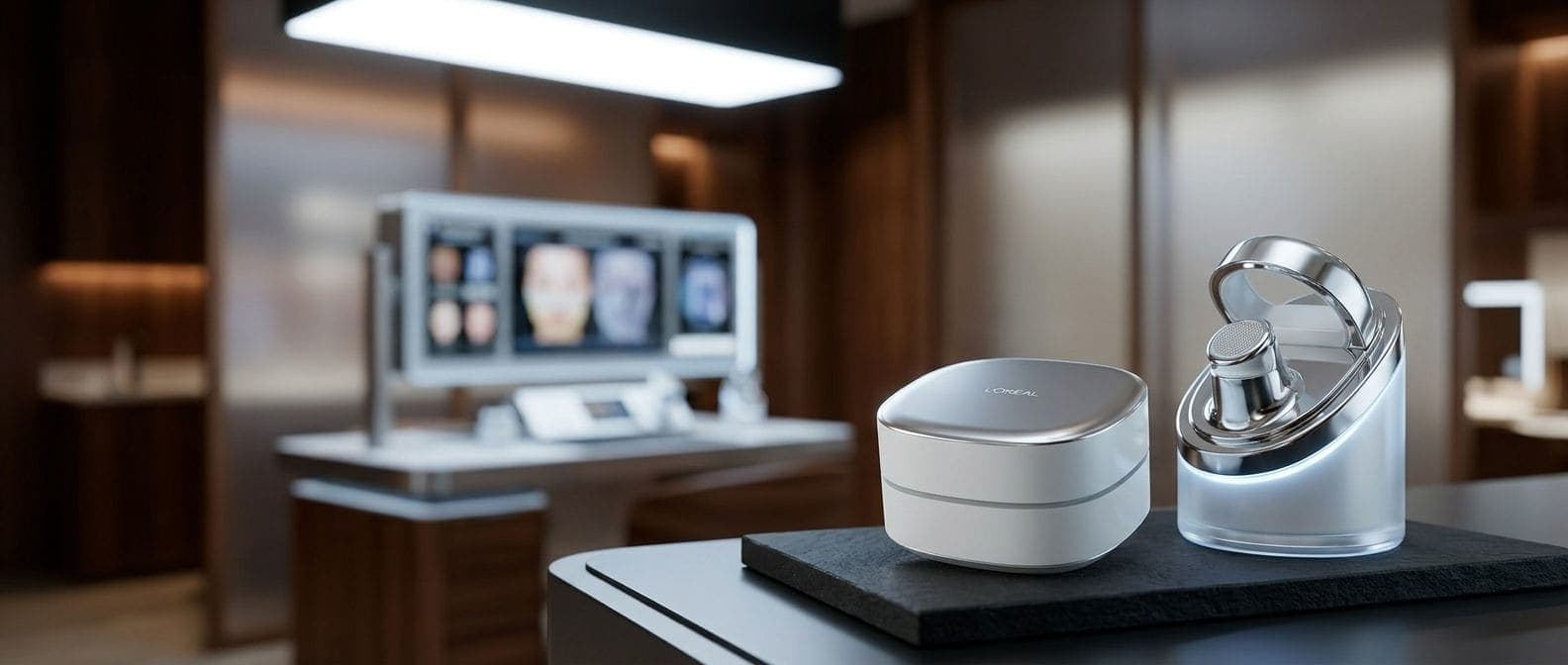
L’Oréal is rolling out its Cell BioPrint and Longevity AI Cloud platforms across key Asian retail markets, bringing point-of-sale skin analysis into a new era. By skipping standard visual cameras, this tech brings non-invasive biomarker profiling directly to retail counters. For Indian brand owners, formulation chemists, and contract development and manufacturing organisations (CDMOs), this move raises the bar for formulation science and regulatory readiness.
Molecular Diagnostics: Beyond Visual Surface Profiling
Rather than relying on visual camera lenses or superficial surface filters, the Cell BioPrint system uses a micro-patch adhesive strip to pull soluble structural and biological proteins directly from the stratum corneum. The hardware targets specific bio-indicators:
Structural Integrity Markers: Measuring Involucrin and Keratin-10 levels to evaluate physical barrier strength and stratum corneum differentiation.
Inflammaging Cytokines: Quantifying Interleukin-1 alpha (IL-1α) to spot sub-surface micro-inflammation long before visible redness appears.
Advanced Glycation End-Products (AGEs): Mapping tissue glycation levels to assess lost dermal elasticity.
The Longevity AI Cloud processes this raw biological data to measure matrix metalloproteinase (MMP) enzymatic breakdown, lipid barrier degradation, and cellular glycation states. It then maps these proteomic profiles straight to specific active delivery systems.
To target these specific biological deficits, counter systems can deploy hyper-targeted active combinations: biomimetic signal peptides like Copper Tripeptide-1 and Palmitoyl Pentapeptide-4 to reboot collagen I and IV synthesis, epigenetic boosters like nicotinamide mononucleotide (NMN) and NAD+ precursors to restore cellular energy, and purified *Centella asiatica* triterpenes (Madecassoside) with Niacinamide to soothe underlying inflammaging pathways.
Navigating CDSCO Frameworks on the Retail Floor
When you move diagnostic hardware onto the Indian retail floor, CDSCO compliance quickly becomes your primary hurdle. Delivering real-time, biomarker-matched formulations requires navigating two distinct statutory tracks:
Hardware and AI Software: Micro-patch samplers and longevity algorithms that assess biological age or tissue biomarkers fall under the Medical Devices Rules (MDR), 2017. These platforms trigger Class A or B In-Vitro Diagnostics (IVD) or Software as a Medical Device (SaMD) classifications, requiring formal import registration via Form MD-14.
Personalised Point-of-Sale Blends: On-site modular mixing must comply strictly with the Cosmetics Rules, 2020 and meet safety thresholds under Indian Standard IS 4707.
Claim Boundaries: Indian brands must manage product messaging carefully under the Drugs and Cosmetics Act. While algorithms can map skin longevity metrics, marketing collateral must avoid therapeutic or structural modification claims that risk triggering a drug reclassification.
Strategic Priorities for Indian CDMOs and Chemical Suppliers
In-store proteomic profiling changes how R&D teams think about product architecture. Indian CDMOs and ingredient suppliers need to adapt their pipelines to support instant customization:
Diagnostic-Ready Base Chassis: Formulators must build stable, high-compatibility base emulsions designed to incorporate concentrated bio-active boosters without breaking the emulsion matrix or reducing active bioavailability.
Concentrated Active Premixes: Raw material suppliers need to engineer high-potency peptide and anti-glycation concentrates that dissolve smoothly into base chassis at the counter.
As L'Oréal scales biological skin testing across Asia, Indian cosmetics manufacturers that invest in diagnostic-ready bases and clear regulatory pathways will dominate the emerging precision longevity market.