Perfect Corp's Latest AI Bet Goes Beyond Virtual Try-Ons
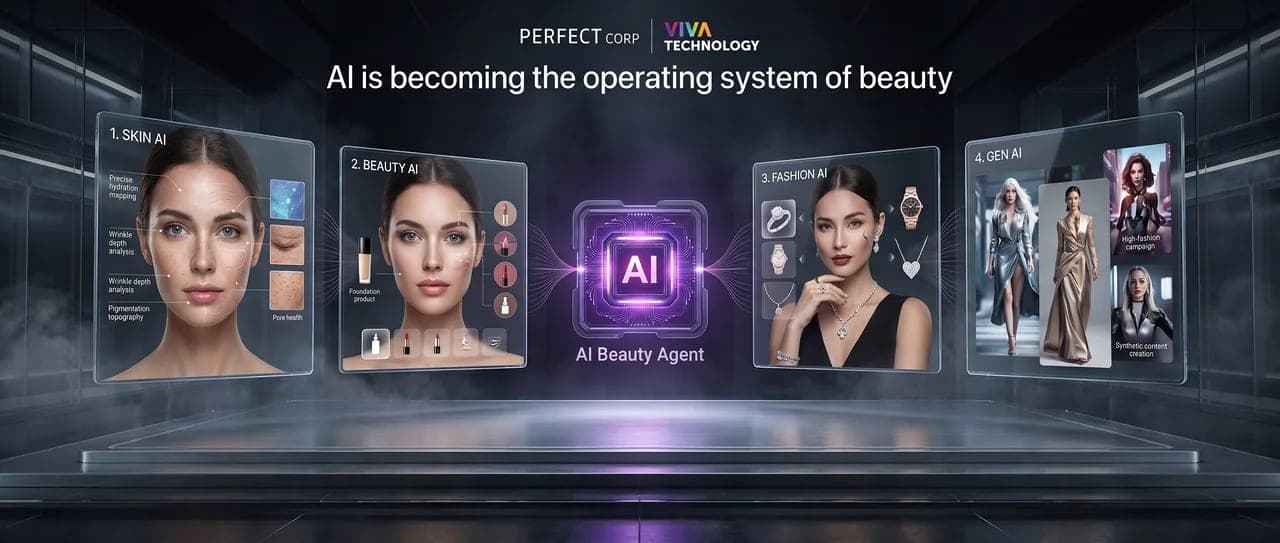
Perfect Corp. has unveiled an Agent-to-Agent compatible AI Beauty Agent at VivaTech 2026, marking an important evolution in beauty technology.
The beauty industry has already embraced virtual try-ons, skin diagnostics, AI consultations, and recommendation engines. However, most of these tools remain isolated experiences designed to perform specific tasks within a single platform.
Perfect Corp's latest initiative introduces a different concept.
Rather than acting as a standalone assistant, the AI Beauty Agent is designed to communicate and collaborate with other AI systems, creating a more connected and autonomous beauty ecosystem.
For beauty brands, manufacturers, and retailers, the implications extend far beyond customer service automation.
This development points towards a future where AI increasingly influences product discovery, consumer education, product recommendations, and purchasing decisions.
The Industry Is Moving From AI Tools to AI Networks
The first generation of beauty AI focused on individual functions.
Virtual try-on technology helped consumers visualise makeup products.
Skin analysis tools assessed concerns such as pigmentation, wrinkles, and hydration.
Recommendation engines suggested products based on predefined criteria.
These tools generated value but operated largely in isolation.
Agent-to-Agent architecture changes that model.
Instead of a single AI completing one task, multiple specialised systems can collaborate to achieve broader objectives.
A beauty agent could analyse a consumer's skin condition, consult a product recommendation engine, verify inventory availability, identify loyalty rewards, and complete a purchase journey without requiring the consumer to switch between multiple interfaces.
This creates a more seamless beauty experience.
Why Agent-to-Agent Compatibility Matters
Much of the current AI conversation focuses on generative interfaces.
The more important development may be interoperability.
As AI systems become increasingly specialised, their ability to exchange information becomes critical.
Agent-to-Agent compatibility enables different systems to work together rather than operating independently.
Within beauty retail, this creates opportunities to connect diagnostics, product databases, ecommerce platforms, customer service functions, loyalty programmes, and inventory management systems.
For consumers, the complexity remains invisible.
For brands, however, it creates a significantly more sophisticated digital commerce environment.
The result is a shift from isolated AI interactions towards coordinated AI ecosystems.
Product Discovery Could Be Transformed
Search remains the dominant method of beauty discovery today.
Consumers search for solutions, compare products, read reviews, watch videos, and evaluate alternatives before making purchasing decisions.
AI Beauty Agents introduce a different model.
Instead of consumers conducting research themselves, AI systems can increasingly perform that research on their behalf.
A consumer seeking a pigmentation serum may receive recommendations generated through analysis of skin concerns, previous purchases, ingredient preferences, climate conditions, and product compatibility.
The recommendation process becomes more contextual.
For beauty brands, this changes how visibility is earned.
Success may depend less on search optimisation and more on how effectively products are understood by AI systems.
Manufacturers Must Think About Machine Readability
The rise of AI-driven beauty discovery creates a new challenge for manufacturers.
Historically, product information was designed primarily for human audiences.
Packaging, claims, marketing assets, and technical documents were all developed with consumers in mind.
AI ecosystems require a second audience.
Machines must be able to interpret product information accurately.
This increases the importance of structured data.
Ingredient functions, efficacy evidence, suitability information, sustainability credentials, and clinical validation become critical inputs for AI recommendation engines.
Products with richer, better-organised data may gain an advantage in AI-powered environments.
For manufacturers, data quality increasingly becomes a commercial asset.
The Value of Claims Substantiation Increases
AI systems rely heavily on evidence.
Unlike traditional marketing channels, recommendation engines are likely to place greater emphasis on verifiable information.
Clinical studies, efficacy testing, ingredient transparency, and safety data may therefore play a larger role in future product visibility.
This is particularly important for skincare.
Consumers increasingly seek solutions for specific concerns such as acne, sensitivity, pigmentation, ageing, and barrier repair.
AI agents can evaluate product suitability based on available evidence.
Brands with stronger substantiation frameworks may therefore perform better within AI-led recommendation ecosystems.
For R&D teams, claims support becomes more strategically valuable than ever.
Personalisation Enters a New Phase
Beauty personalisation has evolved significantly over the past decade.
Many brands currently rely on quizzes, diagnostics, and recommendation tools.
Agent-based systems extend these capabilities.
Multiple data sources can be evaluated simultaneously, creating more dynamic and context-aware recommendations.
Factors such as environment, seasonality, routine compatibility, purchasing history, ingredient preferences, and lifestyle considerations can all influence recommendations.
This creates opportunities for more sophisticated consumer experiences.
It also increases expectations.
Consumers will increasingly expect AI recommendations to feel relevant, accurate, and personalised.
What Brand Teams Should Do Now
The emergence of AI Beauty Agents is not simply a technology story.
It is a business readiness challenge.
Several priorities are already becoming clear.
Audit Product Information
Ensure product attributes, claims, ingredient functions, and efficacy data are structured and accessible.
Strengthen Scientific Evidence
AI recommendation environments are likely to reward substantiated performance claims.
Improve Digital Integration
Future ecosystems will increasingly depend on interoperability between platforms.
Prepare for AI Discovery
Consumers may discover products through AI recommendations rather than traditional search.
Align Technology and Marketing
AI commerce requires collaboration between digital, marketing, regulatory, and product teams.
The Next Beauty Advisor May Not Be Human
Perfect Corp's AI Beauty Agent highlights a broader transition taking place across consumer industries.
AI is moving from supporting decisions to actively shaping them.
The beauty sector has already adopted virtual consultations, diagnostics, and recommendation engines. The next phase involves autonomous systems capable of orchestrating increasingly complex consumer journeys.
For manufacturers, the implications centre on data quality, substantiation, and digital readiness.
For brands, the challenge is ensuring products remain visible and relevant within AI-driven ecosystems.
The future of beauty commerce may not be defined solely by advertising budgets or shelf space.
Increasingly, it may be influenced by how effectively products communicate with the intelligent systems guiding consumer decisions.