Sourcing Shift: Moving Beyond Candeia Harvesting
Sourcing (-)-alpha-bisabolol from wild Brazilian Candeia or German Chamomile puts your formulas at the mercy of volatile crop yields, price spikes, and batch-to-batch variation. Harvesting wild Candeia trees (*Eremanthus erythropappus*) also creates serious deforestation concerns and fluctuating active concentrations that compromise product consistency.
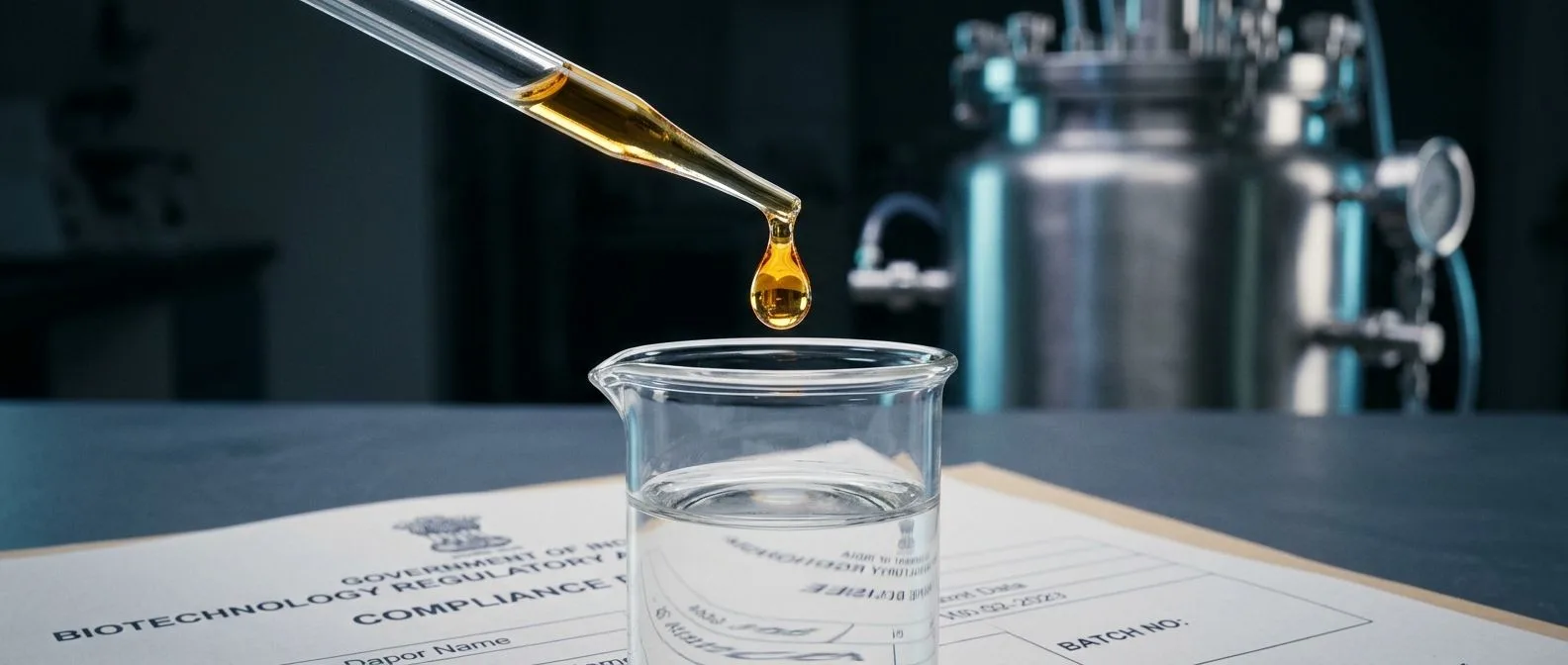
Precision bio-fermentation offers a reliable, scalable alternative. Plantigenix™ Bisabolol gives formulators a biotech-derived active engineered to replace wild botanical extraction in premium sensitive skin lines. It delivers superior stereospecific purity alongside stable supply chains.
Technical Profile and Biochemical Mechanism
Synthetic bisabolol produces a 50:50 racemic mixture of active (-)-alpha and inactive (+)-alpha stereoisomers. Plantigenix™ Bisabolol delivers clean, stereospecific (-)-alpha-bisabolol at over 97% purity. Formulators get full biological activity without dead-weight isomers diluting formula performance.
Molecular Action on Sensitive Skin
NF-kB Pathway Suppression: Blocks nuclear factor kappa B (NF-kB) signaling to directly down-regulate pro-inflammatory cytokines, specifically interleukin-1 alpha (IL-1alpha) and tumor necrosis factor-alpha (TNF-alpha).
Enzymatic Inhibition: Suppresses cyclooxygenase-2 (COX-2) expression, cutting off downstream prostaglandin synthesis to calm localized redness fast.
Barrier Recovery and TEWL Reduction: Accelerates lipid matrix recovery in the stratum corneum, dropping transepidermal water loss (TEWL) and soothing neurogenic inflammation in compromised skin.
Formulation and Processing Advantages
Botanical extractions often bring along troublesome agricultural impurities. Chief among them is farnesol, a restricted fragrance allergen that complicates global regulatory compliance. Precision bio-fermentation isolates the target active molecule, completely eliminating farnesol and secondary terpene allergens from the raw material.
Key Formulation Parameters
Physical State: High-clarity, low-viscosity lipophilic liquid.
Usage Rate: Highly effective at 0.1% to 0.5% w/w.
Phase Integration: Integrates seamlessly into the oil phase of cold or hot emulsion processes, anhydrous serums, and facial oils.
Stability: Superior thermal and oxidative stability compared to natural chamomile extracts, preventing batch discoloration and off-odors over shelf life.
Regulatory Landscape in India
For Indian cosmetic brand owners and contract manufacturers (CDMOs), streamlined active ingredient compliance keeps commercial timelines on schedule.
CDSCO and IS 4707 Compliance
Plantigenix™ Bisabolol fully complies with Indian Standard IS 4707 (Part 2) and the Drugs and Cosmetics Rules, 1945 for topical applications. Standard Certificates of Analysis (CoA) confirm strict residual solvent validation and microbial limits matching ISO 17516 specifications.
NBA and ABS Regulatory Advantage
The real commercial advantage lies in local biological resource laws. Because Plantigenix™ Bisabolol is produced via controlled microbial fermentation rather than harvested from wild flora, it sits safely outside the Access and Benefit Sharing (ABS) mandates under India’s Biological Diversity Act.
This saves months in product launch schedules by bypassing National Biodiversity Authority (NBA) clearance bottlenecks. More importantly, it eliminates unexpected royalty surcharges and biological resource taxes on finished commercial formulations.
Commercial Value for Formulators and CDMOs
Plantigenix™ Bisabolol directly fits high-growth clinical categories, including dermocosmetic post-procedure recovery creams, baby care emulsions, barrier-repair treatments, and active anti-acne gels.
Replacing wild-extracted bisabolol with this bio-fermented active gives Indian brands a clean, verifiable biotech marketing story, reliable batch repeatability, and a lower cost-in-use driven by higher active purity. Precision fermentation ensures high-efficacy sensitive skin products stay sustainable, fully compliant, and profitable.