Quick-commerce has evolved from a 10-minute delivery convenience into a real-time testing ground for Indian D2C beauty brands. Rapid dark store turnover and instant search analytics give founders unfiltered data on high-converting, problem-solution SKUs. But moving a product from an impulse dark-store click to a general trade shelf isn't just about cranking up manufacturing volume. It requires reshaping formulation chemistry, securing strict regulatory sign-offs, and reworking contract manufacturing strategies.
Turning Dark-Store Hits Into Stable Formulations
Dark store analytics tell a clear story about consumer demand. Formulations packed with targeted active ingredients—like 2–5% Niacinamide, Alpha Arbutin, and Centella Asiatica (Cica)—are driving the barrier-repair and brightening categories. Meanwhile, 1–2% Salicylic Acid and Glycolic Acid gels dominate acne care, alongside high-impulse SKUs like anhydrous sunscreen sticks, tinted serum lip oils, and Hyaluronic Acid gel-creams.
However, to take a dark-store hit to general trade, formulators must tweak rheology so emulsions don't break down under regional supply chain conditions. Dark-store warehousing and two-wheeler transit expose products to heavy mechanical vibration and thermal stress. To stop phase separation when ambient temperatures hit 45°C, formulation teams rely on polymeric emulsifiers like *Sodium Acrylate/Sodium Acryloyldimethyl Taurate Copolymer* combined with structured oil phases.
Brands are also using regional q-commerce data to adjust sensory profiles by climate. In humid Tier-1 and Tier-2 markets, replacing heavy silicones with volatile, plant-derived esters like *Isoamyl Laurate* yields the light, non-comedogenic feel that drives repeat purchases.
Clearing CDSCO Hurdles for Physical Retail
While quick-commerce relies on fast inventory turns, traditional brick-and-mortar retail demands extended shelf stability and complete statutory compliance. Moving a trial SKU to physical retail forces brands to comply strictly with Rule 34 of India’s *Cosmetics Rules, 2020*.
Offline trade requires complete secondary packaging disclosures: Manufacturing License numbers, detailed INCI ingredient lists, Batch Numbers, MRP, country of origin, and mandatory Green or Red dot origin symbols.
Physical distributor networks also demand a guaranteed 24- to 36-month shelf life. Formulators must prove product integrity through three months of accelerated stability testing maintained at 40°C ± 2°C and 75% RH ± 5% RH. This stability data forms the foundation for filing Form COS-8 manufacturing endorsements when expanding existing product lines to physical stores.
How CDMOs Must Adapt: From 1,000-Unit Pilots to Scale
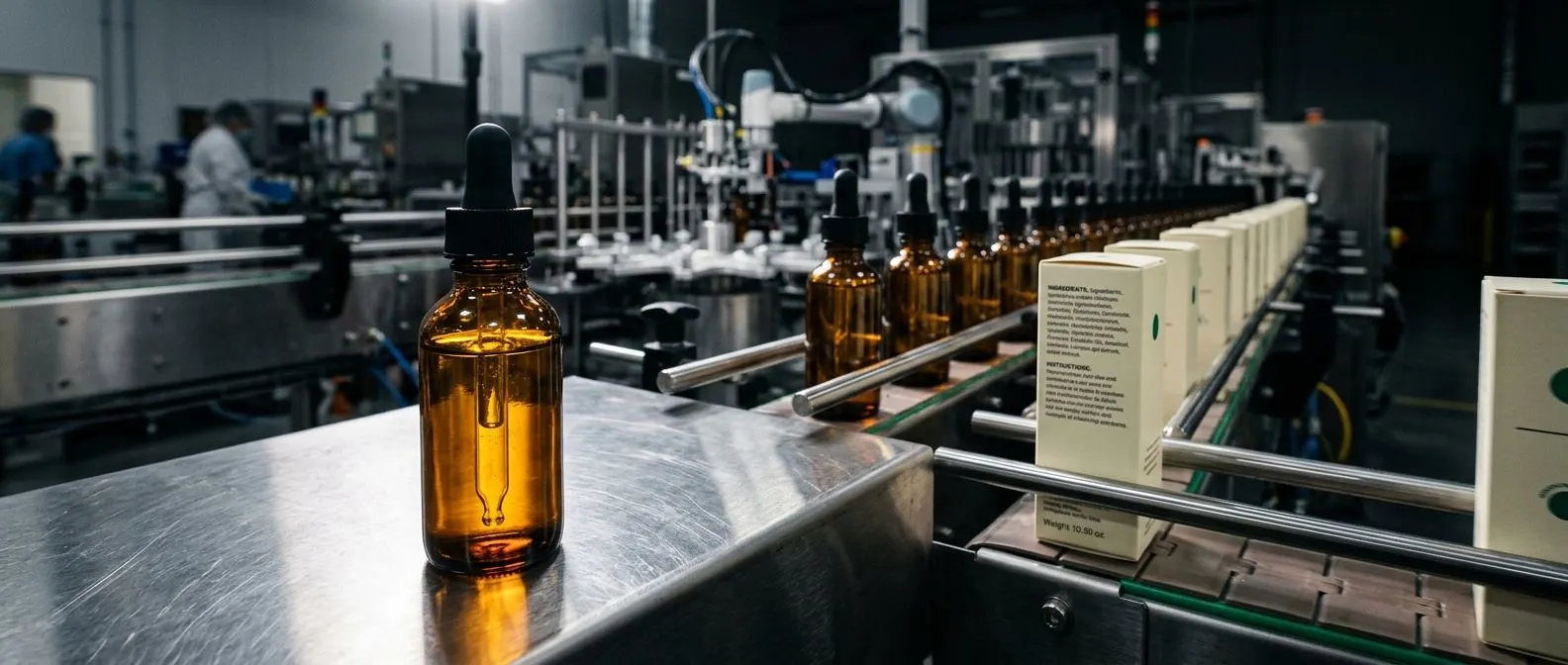
Contract Development and Manufacturing Organisations (CDMOs) are overhauling traditional production models to keep up with this hybrid strategy. Massive minimum order quantities (MOQs) create unacceptable financial risks when brands want to test short-lived micro-trends.
Modern CDMOs now run flexible pilot lines capable of low-MOQ runs—between 1,000 and 3,000 units—specifically for quick-commerce testing. Once dark-store sales confirm demand velocity, factories pivot instantly to scale production to 50,000+ units for multi-region retail placement.
To speed this up, manufacturers use pre-validated modular base formulations. These stable, pre-tested chassis let formulators swap active ingredients without restarting the R&D cycle, bringing dark-store search trends to retail shelves in weeks instead of months.
Winning the Omni-Channel Strategy
Scaling from dark-store impulse buys to physical retail dominance requires syncing chemistry, regulatory compliance, and factory operations. By using real-time quick-commerce demand signals to build CDSCO-compliant products and partnering with agile CDMOs, Indian beauty brands can expansion-proof their portfolios for long-term omni-channel growth.