The Refill Is Becoming the Product Strategy
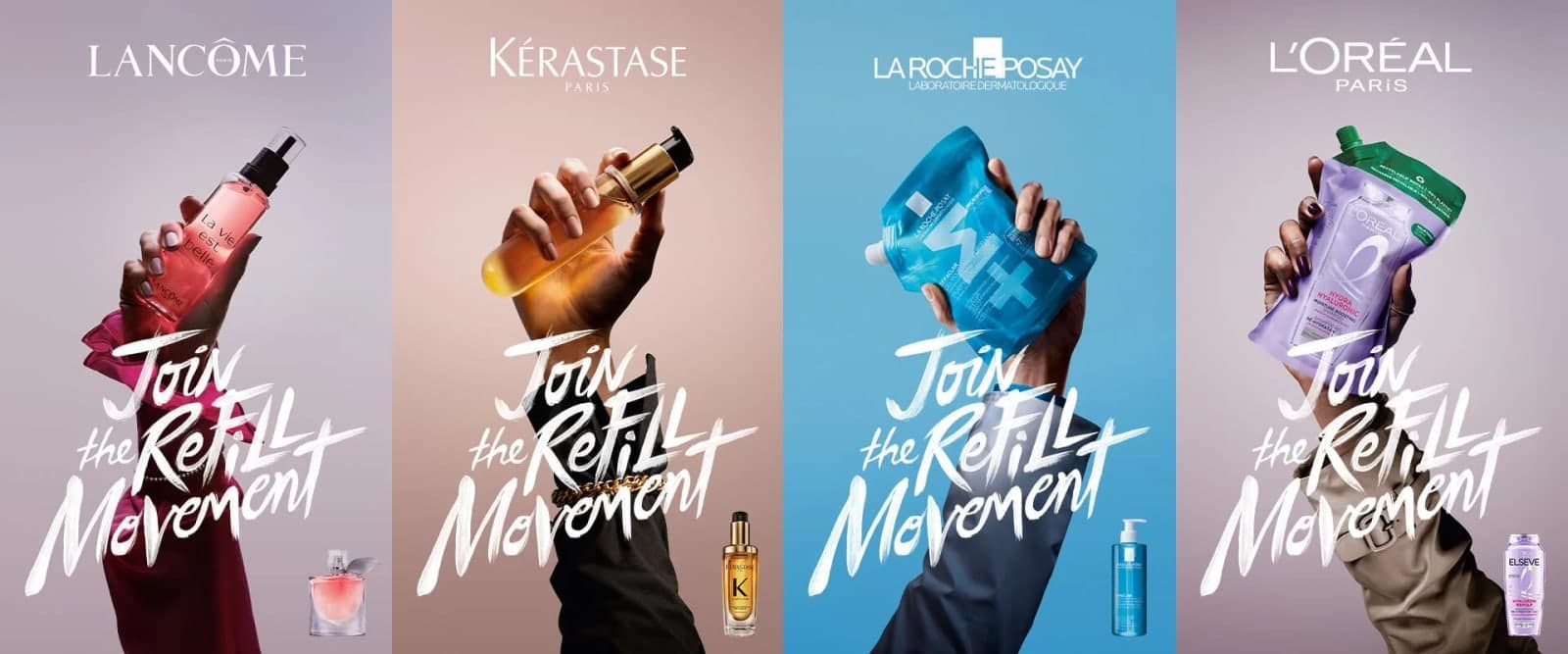
L'Oréal is expanding its refillable beauty initiative with the goal of making refillability a mainstream consumer behaviour rather than a niche sustainability choice.
While refill systems have existed in beauty for years, the latest push reflects a broader industry shift. Refillability is increasingly being integrated into product development strategies rather than being treated as a packaging afterthought.
For innovation teams, the significance extends far beyond sustainability reporting.
Refill systems influence formulation development, packaging engineering, supply chain design, retail execution, and consumer experience. As adoption expands, refillability is becoming a core product development consideration.
Why Refillability Is Gaining Momentum
Several industry forces are converging simultaneously.
Consumers are becoming more aware of packaging waste and increasingly expect brands to demonstrate measurable sustainability progress. Regulators are placing greater emphasis on packaging reduction, circularity, and resource efficiency. Retailers are also seeking solutions that support environmental commitments without compromising convenience.
Refill systems address multiple challenges simultaneously.
They reduce virgin material consumption, decrease packaging waste, and create opportunities for long-term consumer retention. For premium brands, they can also reinforce perceptions of quality and sustainability.
The result is a growing shift from single-use packaging towards reusable packaging ecosystems.
The Packaging Challenge Is Only the Beginning
Many refill discussions focus primarily on packaging materials.
However, successful refill systems require a much broader development framework.
A refillable product must maintain product integrity across multiple usage cycles. The primary pack must withstand repeated handling, cleaning, storage, and refill insertion without compromising performance or aesthetics.
This introduces new technical requirements for packaging engineers.
Materials must demonstrate enhanced durability. Closure systems must maintain consistent performance over time. Dispensing mechanisms must continue functioning effectively across repeated refill cycles.
The packaging therefore becomes a long-term asset rather than a disposable component.
Formulation Stability Becomes More Complex
Refillability also affects formulation science.
Traditional product development assumes that packaging and formulation enter the market as a single integrated unit. Refill systems introduce additional variables.
Products may be exposed to air during refill processes. Consumers may store refill cartridges separately. Primary packs may experience contamination risks through repeated use.
As a result, formulation teams must evaluate stability under a wider range of real-world conditions.
Microbiological robustness, preservative systems, packaging compatibility, and product integrity become increasingly important considerations.
For R&D teams, refillability cannot be addressed solely through packaging innovation. Formulation strategy must evolve alongside it.
Designing for a Circular Consumer Journey
One of the most significant changes involves consumer behaviour.
Traditional beauty packaging follows a linear journey: purchase, use, dispose, repeat.
Refill systems introduce a circular model.
Consumers purchase a durable primary pack and subsequently replenish only the product component. This fundamentally changes how consumers interact with a brand over time.
Product development teams must therefore consider usability, refill convenience, storage requirements, and replenishment frequency.
Even small friction points can reduce adoption rates.
The most successful refill systems often succeed because they simplify the consumer experience rather than complicate it.
Manufacturing Economics Are Changing
The economics of refillability differ significantly from conventional packaging models.
Primary packs typically require more durable materials, more complex engineering, and higher manufacturing costs. Refill components are generally lighter, simpler, and less material-intensive.
This creates a different cost structure.
Initial production costs may increase, but long-term material consumption can decrease substantially.
For manufacturers, the key challenge is balancing these trade-offs while maintaining profitability and consumer acceptance.
The transition requires careful evaluation of production lines, packaging suppliers, and component sourcing strategies.
Supply Chains Must Adapt
Refill systems create new supply chain requirements.
Brands must manage both durable primary packaging and refill inventory. Forecasting becomes more complex because consumer purchasing patterns evolve after initial adoption.
Distribution networks may also require adjustments.
Refill packs often occupy less shelf space and can reduce transportation weight. However, they may require different merchandising approaches and inventory management systems.
Manufacturers that successfully implement refill systems often treat supply chain design as a strategic component of the programme rather than a logistical afterthought.
Why Beauty Brands Are Investing Now
The growing interest in refillability is not driven solely by environmental concerns.
Refill systems can create meaningful commercial advantages.
Consumers who adopt refill programmes often demonstrate stronger brand loyalty. Repeat purchase behaviour can become more predictable. Packaging costs may decline over time as refill volumes increase.
In premium beauty categories, refill systems can also support elevated brand positioning.
Luxury fragrance brands have demonstrated this particularly well, using refillability to combine sustainability with craftsmanship and product longevity.
Other categories are now following a similar path.
What R&D Teams Should Prioritise
As refillability expands, several priorities are emerging for product development teams.
Evaluate Refillability Early
Refill systems are most effective when considered during initial product development rather than added later.
Test Real-World Consumer Usage
Laboratory performance is only part of the equation. Refill systems must perform consistently under actual consumer conditions.
Strengthen Packaging-Formulation Collaboration
Refillability requires closer integration between packaging engineering and formulation development teams.
Quantify Lifecycle Benefits
Brands should develop robust methodologies for measuring material reduction, carbon savings, and waste avoidance.
These metrics increasingly influence retailer relationships, investor expectations, and sustainability reporting.
From Sustainability Initiative to Innovation Platform
L'Oréal's latest refillability expansion reflects a broader transformation taking place across beauty.
Refill systems are evolving from niche sustainability projects into strategic innovation platforms.
For manufacturers and product development teams, the implications extend across formulation science, packaging engineering, consumer behaviour, supply chains, and commercial strategy.
The most important lesson is that refillability is no longer simply about reducing packaging waste.
It is becoming a new framework for product design itself.
The brands that integrate refill thinking into their development processes today will be better positioned as consumers, retailers, and regulators increasingly expect circularity to be built into beauty products from the start.