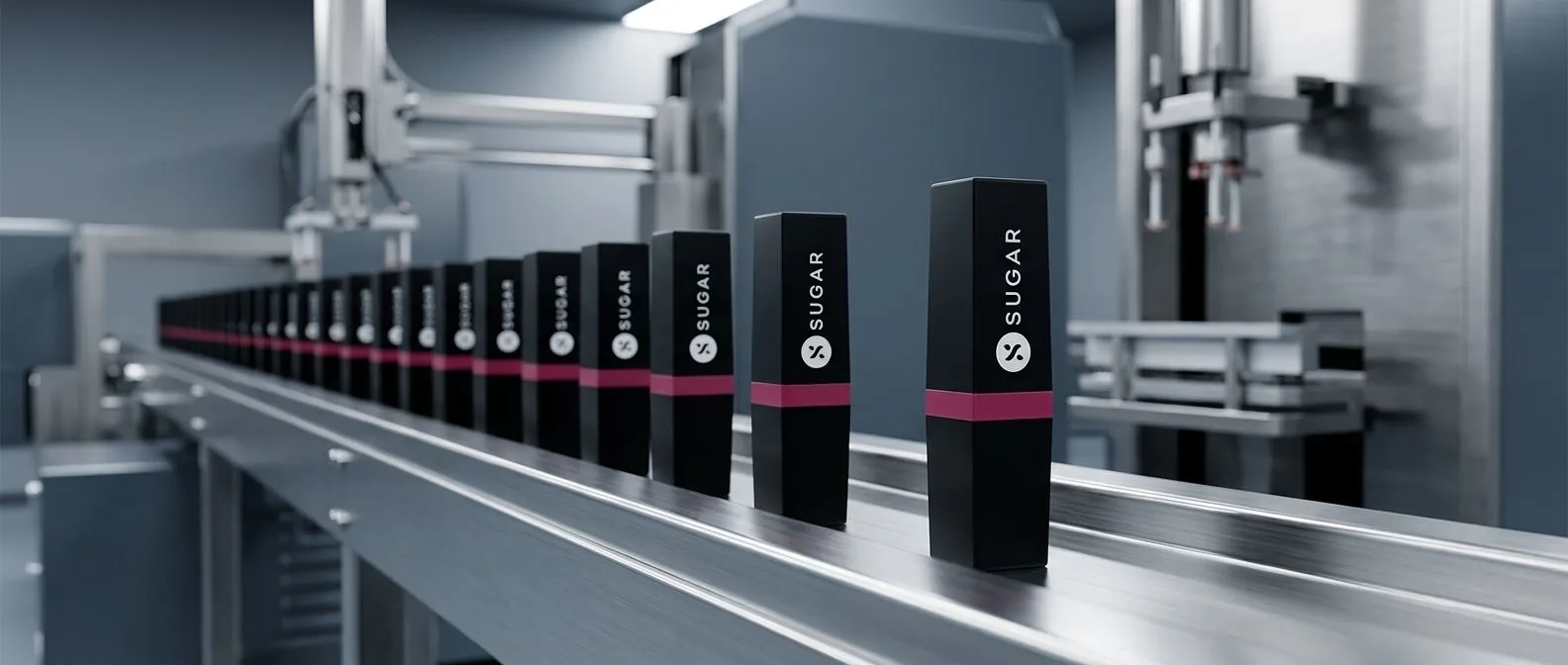
The Indian D2C beauty market just hit a clear turning point. SUGAR Cosmetics’ recent ₹144.5 crore funding round—raised at a slashed valuation—proves that growth at all costs is dead. The venture capital spigot funding wildly inflated customer acquisition costs (CAC) has officially run dry.
If you own a brand, run a lab, or manage a factory, this is your wake-up call. Survival now demands a sharp pivot away from performance-marketing sprees and toward product performance, organic repeat buys, and ruthless Bill of Materials (BOM) optimization.
Ingredient & Formulation Realignment: High Efficacy, Low Cost-Per-Kg
Fixing your unit economics starts at the bench. Exotic, expensive botanicals look great on an Instagram ad, but they ruin your margins without adding real clinical value. Smart formulators are dropping the fairy-dusting and doubling down on proven, cost-effective workhorses:
Niacinamide (3% to 5%): Controls sebum, strengthens the skin barrier, and fades hyperpigmentation. It does the job of expensive synthetic peptides at a fraction of the cost.
Salicylic Acid (1% to 2%): Unclogs pores and cuts through lipid-heavy skin. Reliable, cheap, and effective.
Ceramides (NP, AP, EOP): Restores intercellular lipids in the stratum corneum without breaking the bank.
Multi-Molecular Hyaluronic Acid: Blends high and low molecular weights to deliver immediate skin feel alongside real, long-term hydration.
To squeeze extra cost out of the formula, swap single-use aesthetic texturizers for dual-purpose emulsifiers and natural solubilisers. This drops your cost-per-kilogram without sacrificing sensory quality—creating repeat buyers who don't need a retargeting ad to purchase again.
Regulatory Pathways Without Friction: CDSCO & ASCI Compliance
You cannot afford to lock up capital in regulatory limbo. A delayed product launch eats cash fast. Stay strictly within the Cosmetics Rules, 2020 and IS 4707 (Part 1 & 2). Know your allowed pigment limits and raw material impurity thresholds—keep Lead under 20 ppm and Arsenic under 2 ppm, no exceptions.
And don't waste money running custom clinical trials for standard claims. Regulatory bodies like the CDSCO and ASCI are watching closely. Source pre-validated active complexes from raw material suppliers who already own the clinical dossiers. You get fast claims, zero compliance headaches, and a clear path to market.
B2B & CDMO Strategy: Target-Locked COGS and Supply Chain Agility
If you run a CDMO in India today, your brand partners are handing you non-negotiable target numbers. They need turnkey formulations with Cost of Goods Sold (COGS) locked tight at 12% to 15% of MRP. Anything higher crushes gross margins below the 70% threshold required to survive.
To hit these targets without going broke, contract manufacturers must adopt three operational moves:
Plug-and-Play Chassis Formulations: Keep pre-stabilized, pre-tested base chassis ready. You can customize actives on the fly without wasting 12 weeks on stability testing.
Low MOQs: Offer flexible, smaller batch sizes. Brands can't afford to lock up cash in dead inventory sitting on warehouse shelves.
Domestic Raw Material Sourcing: Ditch imported functional ingredients wherever possible. Local high-purity alternatives protect you from sudden freight spikes and import tariffs.
The Margin-First Beauty Playbook
SUGAR’s downround is a reality check for the entire Indian beauty industry. You can no longer hide sloppy unit economics behind venture-funded ad spend. The brands that win the next decade won't be the ones with the flashiest marketing—they will be the ones that connect formulation chemistry, regulatory speed, and factory-floor efficiency into one margin-first machine.