Authors: Rhea Sugwekar, Neha Kundarap
Introduction
No matter how far we progress as a species, the effect of our appearance remains constant over millennia. How we present ourselves to the world forms an integral part of our social currency. While conventional beauty standards aren’t always explicitly stated, they are, without a doubt, unconsciously followed. The way we look, more often than not, influences the social treatment we receive, and our complexion is no exception.
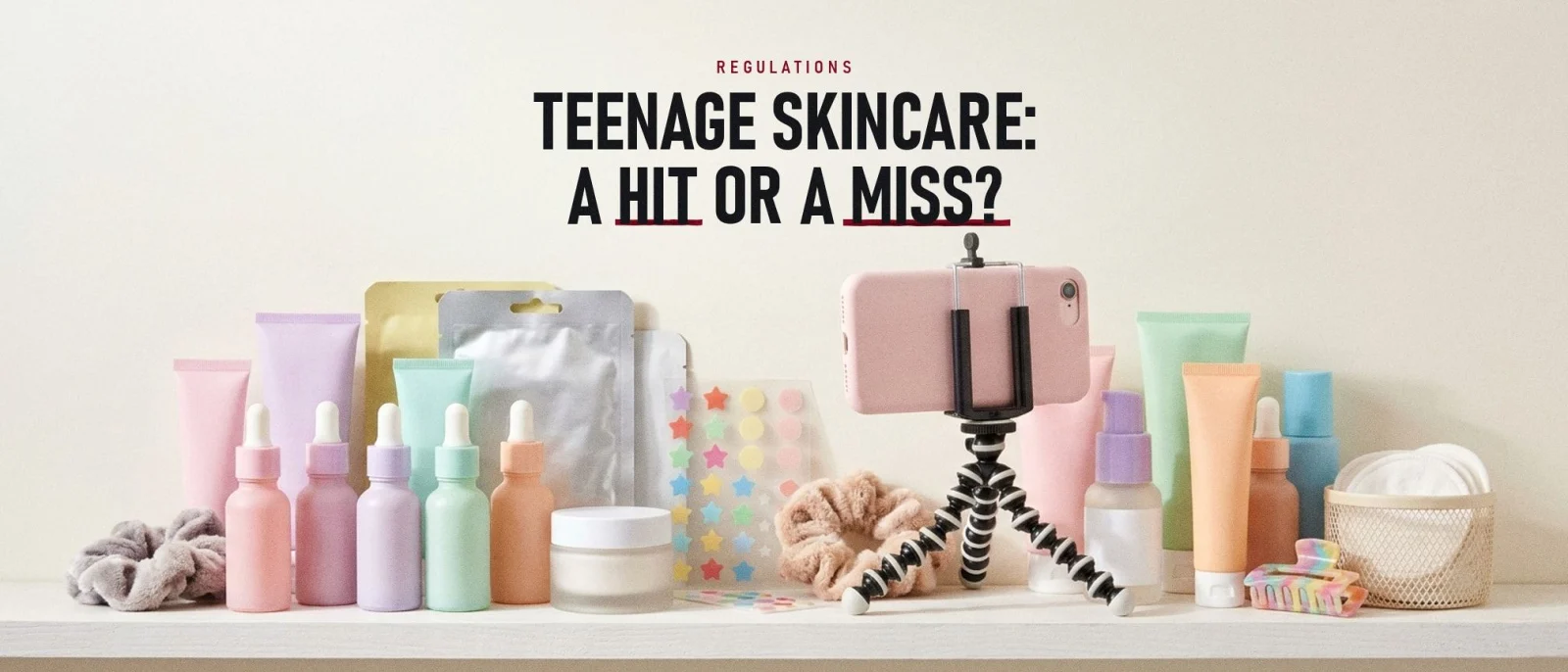
“Flawless skin is the most universally desired feature,” remarked zoologist Desmond Morris in his 1967 book, The Naked Ape (Morris, 1967). People of all ages, genders, and ethnicities look for solutions to improve their skin’s appearance by addressing specific concerns or maintaining the overall integrity of the skin barrier. This desire is what motivates consumers to buy expensive beauty products that may not always deliver on their claims (Rodan et al., 2016). As of 2026, beauty buying has a starkly different face: social media. Gone are the days of shiny new bottles decking the shelves of your local pharmacy or grocery store—TikTok and Instagram are now taking over as the places to be when beauty shopping. Add to this the rise of “tweenfluencers” on social media, opening the floodgates for tweens (children between 9-12 years of age) and teens to indulge in lavishly complicated skincare routines that would make even the strictest of parents break a sweat (UCLA Health, 2024). These impressionable minds consume scores of TikToks/Reels that successfully convince them into believing their skin needs “anti-ageing” measures like collagen treatments, night creams and serums as early as 10-13 years old, with nary a wrinkle in sight (UCLA Health, 2024).
Closer to home, the Indian teenager is no stranger to the allure of glowing skin, either. Acne, dark circles, dry patches and blackheads constitute the most common skin concerns for this demographic. But given their overexposure to the flourishing Indian beauty industry, around 23% of the Indian Gen Z find choosing between a myriad of products and creating a customised skincare routine too difficult (Mintel, 2024). The same study points out that around 33% of Indian Gen Z also focus on lifestyle changes to improve their skin health, hinting at a more holistic approach to achieving that “inner glow” (Mintel, 2024).
What Do We Know About Teen Skin?
There’s a lot that skin goes through when puberty enters the picture. Teenagers experience a rise in adrenal and gonadal hormones, which trigger a surge in sebum secretion (Mathew, 2026). Along with excess oil, pre-teen and teenage skin runs the risk of contracting common yet debilitating skin conditions that may affect the child’s mental health. These include, but aren’t limited to, acne vulgaris, atopic dermatitis, vitiligo, and urticaria, all of which require drug interventions if the conditions become severe (Amadi, Maduagwu & Pepple, 2022). For Indian teenagers, ages 10-13 mark the onset of puberty, causing normal yet drastic changes to the skin’s microbiome (Mathew, 2026).
Menstruation and its cyclic fluctuations begin between the ages of 10 and 12 for girls, which can often aggravate already acne conditions, giving rise to eruptions in eczema, psoriasis and even lupus. Between the ages of 11 and 13, boys experience a sharp uptick in testosterone that increases sweat production from the apocrine glands (Mathew, 2026).
Internal changes aside, children tend to spend most of their time outdoors, welcoming fresh air, play and ample amounts of sunlight that contribute to the overall health of their developing skin barrier. Summers are the metaphorical crucible for a child’s skin: heat, sweat, sun damage and chlorine (if swimming is involved) are common culprits that can irritate their delicate skin, often resulting in unsavoury outcomes like rashes, bumps, and redness (Mountain Pine Dermatology, 2026). Comparatively, adult skin is thicker, more resilient, and more stable than teen skin, but gradually loses moisture over time as cell turnover decreases (The Dermatology Practice, n.d.).
Social Media & Teens
According to pediatric dermatologist Dr Sonal Shah (MD), teenagers are most susceptible to falling for fancy skincare trends on social media. This creates a desire to buy into products that can be costly not just for the parents’ wallets but also for the child’s skin barrier. She explains, “Children’s skin has robust amounts of collagen and elastin fibres, so anti-ageing products are not necessary for younger skin”. Some of the most popular ingredients you can find in a tween or teen’s beauty collection today are:
- Vitamin C
- Niacinamide
- Pimple patches
- Collagen
- Snail mucin
Skincare has now evolved to be perceived as a bona fide “status symbol”, as kids enjoy wearing colourful pimple patches while at school or having eye-catching products in their bathroom cabinets (DeMaio, 2025). Dr Ranella Hirsch, MD, a Boston-based dermatologist, explains that teens aren’t worried about product efficacy per se, as they see beauty products as a tool for bonding with the ‘cool kids’ at school (DeMaio, 2025).
Parents are understandably worried about this cosmetic craze; however, they don’t want to steer their children away from learning the basics of skincare. Most adults toe the line between strict and supportive, as this behaviour taps into one of the most all-pervading, indubitably human aspects of growing up: feeling included (Ayoub, 2024).
The best skincare routine for this age range is the simplest one, a piece of advice widely agreed upon by dermatologists and pediatric skin professionals. Dr Marisa Garshick, MD, FAAD, a certified dermatologist based in New York City, says, “More is not more in this case, and consistency matters more than a 10-step routine.” The ideal skincare regimen for a tween or teenager should be a simple 3-step process:
- Cleansing: with a mild, gentle cleanser
- Moisturising: a fragrance-free moisturiser works best
- Sunscreen: the most important part – a water-resistant, broad-spectrum sunscreen with SPF 30
To tackle acne breakouts or excess sebum, Dr Garshick advises adding a gentle benzoyl peroxide or salicylic acid treatment in the form of spot gels, face washes or toners as needed.
While anti-ageing cosmetics see an immense growth in popularity, the question of whether they create serious problems in the psyches of these impressionable young minds looms in the background.
The Rise of Sephora Kids
In 2024, the beauty giant’s aisles were being taken over by an interesting phenomenon: children as young as 10, phone cameras at the ready, running amok among the labyrinth of glistening beauty products. Employees looked on as the enthusiastic mix of Gen Z and Gen Alpha got their hands on all kinds of serums, creams and toners, primed for their launch as the star cast in a Get Ready With Me (GRWM) TikTok video. The flavour of choice? Anti-ageing solutions, collagen-boosting remedies and other high-end “preventative” measures for a concern that didn’t even exist yet. It wasn’t long before things went awry—in some extreme cases, employees even reported children attempting to steal viral luxury products like the Dior lip gloss, a must-have in the eyes of a teen who simply wanted to align with the status quo (Marriott, 2025).
Fast forward to 2025: a popular American TV actress and influencer, Shay Mitchell, took to Instagram to launch her latest venture—a skincare brand for toddlers aged 2 years and up. ‘Rini’, named after the Korean word for kids, is a “Gen Alpha skincare and play brand” that boasts of all the good things: hypoallergenic? Check. Dermatologist-tested? Check. Fragrance-free? Check. And of course, lest we forget, all made with biodegradable, 100% natural materials. Co-founded with fashion veteran Esther Song, the brand aims to address the apparent need for clinically safe products for children, with a range of face masks, face crayons and aftersun skincare in its portfolio (Werner, 2026). The launch drew swift backlash, with parents taking to the comment section to express their loud disapproval. “Just because they want to 'do what mummy does' doesn't mean they should,” commented one user, while countless others voiced the collective reprimand of most disgruntled parents (Silva, 2025).
Over in the United Kingdom, harsh ingredients like retinoids and AHAs now find a happy home in the skincare collections of enthusiastic kids: 1 in 4 tweens prefer using actives otherwise meant for mature skin, reports Pai Skincare in its one-of-a-kind study (CEW United Kingdom, 2025). Founder Sarah Brown, along with a team of top microbiome researchers, conducted a survey of 1500 UK girls between the ages of 9 and 12, which led to some concerning key statistics. It was discovered that tween skin has a high level of microbial diversity, but lacks the proliferation of Cutibacterium acnes, a key bacterium that contributes to skin resilience, healthy barrier function, and overall resistance to external stressors (Smith, 2025). Some more of their key findings from the survey include:
- 44% of tweens experienced itching, redness, and irritation upon using cosmetics
- 46% of tweens have elaborate weekly skincare routines with 2-3 products
- 55% of tweens don’t check the ingredient list, but in contrast, 81% of parents claim they check product labels and are aware of what goes in their child’s beauty products
- 58% of tweens report receiving most of their skincare as gifts from relatives
- 48.4% of tweens like using skincare products to attain blemish-free, clear skin
But don’t let the numbers alarm you. The #StaySharp campaign by the same brand diverts tweens’ attention to prioritising their delicate skin and making smarter choices with a handy acronym that tells you what to avoid:
S: Sulfates, which can dry and strip the skin of moisture
H: Hydroquinone, a prescription-only drug for hyperpigmentation that could sometimes be within a tween’s reach from their parents’ bathroom cabinets
A: AHAs/BHAs–exfoliants meant for cell turnover that can be too irritating for delicate tween skin
R: Retinoids, strong anti-ageing actives meant for older, mature skin
P: Parfum or fragrances, potential allergens that can often cause irritation
(Smith, 2025).
This study brings attention to the very real problem tweens (especially girls) are faced with in order to fit in, a concern duly recognised by Brown (Smith, 2025).
India isn’t too far behind, either. The teen beauty market in India is burgeoning with a net worth of almost INR 5000 crores as of 2025 (Kumar, 2026). With over 400 million citizens under the age of 18, India has one of the youngest populations in the world looking for that sought-after “youthful” glow, and brands are watching. In the last three years alone, a slew of attention-grabbing brands have already begun to make their mark in the Indian teens’ algorithm: HeyTeen, Elitty Beauty, Whimsy India and Teenilicious, to name a few. What’s the winning formula here? Dermatologically tested claims with affordable price tags and organic discovery through not just peers, but also teen-friendly e-commerce platforms such as Blinkit, Nykaa, Myntra, etc. (Inc24 Media, 2026). While we haven’t yet reached a Sephora Kids level of fanaticism, who’s to say what the future holds?
But Does Teenage Skin…Care?
Zooming out to the bigger picture, it’s evident that with beauty bandwagons come cautionary tales, as dermatologists have reported a surge in young teenagers eager to slap on the latest Drunk Elephant serum while their frazzled parent tries to find a safe middle ground (Marsh, 2024). Speaking to The Guardian, Dr Anjali Mahto, a London-based consultant dermatologist, agrees: “Most have been heavily influenced by social media (TikTok in particular) and influencers who are showing their in-depth routines, most often accompanied by luxury skincare brands. There is often an unhealthy focus on anti-ageing too, despite their young age” (Marsh, 2024).
Speaking of adverse reactions, a 2024 study from Pennsylvania, USA, reports a case of a severe allergy attack brought on by a popular teen skincare product, emphasising the need for regulatory probing and clinical safety assessments around its efficacy on teen skin specifically. A 14-year-old was plagued by two months of constant lip pain and swelling, along with a few other equally severe symptoms. The research team investigated the issue and found the culprit: an immensely popular snail mucin product by the Korean skincare company, COSRX (McCoy et al., 2024). The key differentiator here is the dosage and site of application—instructions clearly mentioned the product should only be applied to facial skin. The problem arose when the teenager applied it regularly to her lips—the drier they got, the more product she applied. The pediatric dermatology team prescribed a 2.5% hydrocortisone ointment to be applied twice daily for 10 days, coupled with white petroleum jelly for occlusivity (McCoy et al., 2024).
Soon after, a landmark 2025 study by the Department of Dermatology at Northwestern University Feinberg School of Medicine analysed 100 TikTok videos by creating secret accounts as 13-year-olds to observe what shows up on their ‘For You’ page. After following relevant content creators and viral videos on the platform, the team assembled a list of popular products and their corresponding active ingredients. One of the many unanimous observations was that these skincare routines were elaborate, with up to 12 products squeezed into a routine at a time, and each with a high concentration of active ingredients that could potentially trigger major skin concerns on delicate teen skin (Hales et al., 2025). Saturation of actives aside, these routines were seemingly marketed to girls between 7 and 18 years old, with overall expenditure going above a whopping $500. Postdoctoral research fellow, board-certified dermatologist and corresponding author of the study, Dr Molly Hales warns about the incredibly high risk of allergic contact dermatitis and similar skin conditions that these routines may cause when “using multiple active ingredients at the same time, such as hydroxy acids, as well as applying the same active ingredient unknowingly over and over again when that active ingredient was found in three, four, five different products” (NBC Chicago, 2025). Amidst the constant barrage of unrealistic beauty standards, the team found that, ironically, only 26% of videos catered to the most important part of a skincare routine, age no bar: sunscreen (NBC Chicago, 2025).
How does young India see beauty?
Our country has the evergreen culture of ‘gharelu nuske’: skin and wellness secrets passed down from generations, often from our grandmothers to our mothers to our daughters. Unfortunately, grandmothers are no match for the juggernaut that is the social media algorithm, with its tantalising GRWM routines that entice kids into vying for the newest beauty product (Siddiqui, 2026). According to Shradha Agarwal, Global CEO of Grapes Worldwide, “[...]the kids’ cosmetic category is very niche in India,” pointing out that the ages between 4 and 7 are still a gap in the beauty market—one that brands are already eyeing (Naskar, 2026).
Luckily, though, some states are already taking steps to address the issue, with Kerala ahead of the curve. Recently in Kollam, a disturbing pattern caught teachers’ attention: kids bringing lipsticks to class and secretly applying them during breaks. Analogous to this worrying behaviour was a study that showed a spike in bowel cancer cases in children in the Kollam, Ernakulam and Kozhikode districts. This study, conducted by the Regional Cancer Centre in Thiruvananthapuram, triggered an official preventative campaign to keep lipstick and other makeup products out of school premises altogether. Organised by the Child Welfare Committee, the campaign plans to conduct social awareness workshops first in schools and then in homes with the parents—once a school completes the workshop, it can be declared a ‘lipstick-free campus’. Secretary of the Kollam District CWC, D Shine Dev, said a report proposing inspections of local shops near schools and an eventual nationwide rollout has already been submitted to the State Commission for Protection of Child Rights (News18 Cities, 2026).
Here’s hoping Indian regulators take cognisance of this movement.
Are The Kids Alright?
Social media, peer pressure and a market that’s ready to pounce on the most vulnerable demographic can make for a heady concoction of cosmetic concerns. Encouraging children to examine every minute detail of their face and letting it determine their self-worth has given birth to a worrying new concept: cosmeticorexia (Wood, 2026).
What Is Cosmeticorexia?
Also called dermorexia, cosmeticorexia was first coined by researchers Alberto Stefana and Giovanni Damiani in March, 2026. According to them, the condition is defined by a chronic obsession with attaining “flawless” skin, an endeavour that leads to “excessive, age-inappropriate or compulsive use” of beauty products and even procedures (Stefana & Damiani, 2026). The most influential socio-cultural categories that drive this condition are:
- Influencer-driven, elaborate multi-step and multi-product routines that are often saturated with high concentrations of potent actives
- Increased hyperfixation on what are perceived as flaws in one's appearance, leading to social isolation and constant comparison with one’s peers, along with anxiety-driven consumption of cosmetics
- High risk of potential harm to the skin by way of barrier dysbiosis, severe irritation or contact dermatitis and other overly compulsive skin-monitoring (Stefana & Damiani, 2026)
While it isn’t an officially recognised diagnosis as yet, experts are working on establishing standardised criteria for research frameworks to validate cosmeticorexia. Notably, all participants in this study also met the criteria for nomophobia, defined as the fear of one’s mobile phone not working (derived from NO MObile PHOne PhoBIA)—furthering the theory that social media is instrumental in driving socio-cultural trends among adolescents (Bhattacharya et al., 2019).
In March 2026, Sephora and Benefit Cosmetics were under fire by the Italian Competition Authority for allegedly promoting anti-ageing creams, face masks and serums to girls around the age of 10. In their press release, the ICA elaborated that these allegations were a direct result of ambiguous communication over important information such as “warnings and precautions for cosmetics not intended for, or tested on, minors” (AGCM, 2026). The regulatory authority also pointed out the use of young, “micro” influencers by these brands to target underage and teenage demographics, furthering the push for buying strong, active-laden anti-ageing products (AGCM, 2026). This pernicious behaviour is precisely the recipe needed to create the domino effect that eventually fuels the rise of conditions like cosmeticorexia (Wood, 2026).
India has taken a more independent approach. The Advertising Standards Council of India is a self-regulating authority that ensures advertisements meet strict compliance standards across industries, cosmetics included. Citing concerning behaviour in its Q1 report for this year, ASCI cracks down on the promotion of skin-lightening products targeted at babies and children, amplifying pre-existing anxieties surrounding tanning and darker skin tones. They state, “...these advertisements extend beyond legitimate summer care and risk reinforcing harmful beauty stereotypes even for babies.” A total of 14 ads were reviewed.
Regarding regulations for the advertising of cosmetics to children across media, Chapter 3 of the ASCI Code has a clear objective. An ASCI representative clarifies, “‘Advertisements addressed to children shall not contain anything, whether in illustration or otherwise, which might result in their physical, mental or moral harm, or which exploits their vulnerability,’ the Chapter states. In addition, product features must not be exaggerated to create unrealistic expectations by taking advantage of children’s inexperience or trust and neither should the advertising promote practices detrimental to children’s health or mental well-being. Lastly, ads cannot imply that not using a product will make a child unpopular or inferior.”
The increasingly undeniable influence of social media on children and their mental health hasn’t gone unnoticed—in 2024, Meta and Instagram introduced a new feature that may limit a child’s exposure to the overload of lifestyle content on the platform, including skincare content. At the very least, this move provides their parent or guardian a degree of control over what the child views and searches for, under supervision (Meta, 2024). A new category of accounts called the Instagram Teen Account has automatic built-in features that protect safety, time management and content searches for teens under 18. New accounts created by kids between 13 and 17 years of age will automatically be private. Parents or guardians have the choice to opt for supervision, which involves linking the child’s account to theirs, giving the parent/guardian insight into what the child searches for, their followers, and their time spent on the app, among other powers. Teens can choose to remove supervision early with consent from both parties, but this feature is automatically turned off once the child turns 18 (Instagram Help Centre, n.d.).
Will this help curb how social media shapes a child’s perception of themselves and their identity? Only time will tell.
Mapping Regulatory Loopholes
The rampant use of undefined and vague claims such as ‘natural’, ‘clean,’ ‘organic’ for beauty products is nothing new to consumers. However, things get murky when this context is applied to children and their use of cosmetics (Brumley & Maguiness, 2025).
The German Environment Agency (UBA) published a report that documented the presence of a reprotoxic phthalate called mono-n-hexyl phthalate (MnHexP) in February, 2026. MnHexP, which is a broken-down derivative of di-n-hexyl phthalate (DnHexP), was found in 92% of the urine samples of the 259 children and adolescents at concentrations that demanded swift inquiry (CHEMTrust, 2026). Experts deduced the participants were likely exposed to the chemical via a UV filter called DHHB, which, in some cases, creates DnHexP as an impurity. It is critical to note the nuance here: not all sunscreens with DHHB produce this phthalate, so there is no cause for alarm when a sunscreen’s ingredient list names the filter (CHEMTrust, 2026). As of 2026, the European Commission is looking to finalise a maximum limit for DnHexP in DHHB, the scrutiny period for which ended on 13th April, 2026 (Scientific Community on Consumer Safety, 2025).
The EU takes the safety of infants under 3 years of age and their exposure to toxins quite seriously. As of 1 May, 2026, the EU released Commission Regulation 2026/78 that tightens restrictions around Hexyl Salicylate (Annex III), Silver and o-Phenylphenol (Annex V). These restrictions form part of a slew of amendments to the EU Cosmetics Regulations that focus on CMR-based changes, jargonised as the ‘Omnibus VIII’ (Euverify, 2026). However, the European Commission hasn’t yet focused on teen-specific labelling, restrictions and/or claims substantiation for ingredient or product safety. The closest we get to some degree of regulatory oversight for teenagers is Point (9) of the Regulation (EC) 1223/2009, which states: “Cosmetic products must be safe under normal or reasonably foreseeable conditions of use.” The key operative phrase here is ‘reasonably foreseeable conditions of use’, which recognises that while manufacturers may print specific instructions for use on the packaging, it’s not necessary that the consumer follow them to a tee in everyday life, a human behaviour commonly seen in tweens and teens (Regulation [EU] 2024/2847, 2024). The cosmetic product is expected to remain safe even under these conditions, including assuming young adults to be part of the consumer base, a gap that regulatory authorities need to critically examine.
In the United States, the recently passed Modernisation of the Cosmetics Regulation Act 2022 (MoCRA) is one of the most extensive updates to cosmetics regulations in the region. Under MoCRA, the scope of regulatory and safety assessments around cosmetics is significantly enhanced with stricter testing requirements, especially for children’s cosmetics. For example, certain ingredients, such as formaldehyde donors, are banned, and restrictions apply to potential irritants, allergens, and other actives at lower thresholds (SGS, 2025). However, there is no specified age range for teenagers, nor are there specific regulations governing products formulated for and marketed to them, a lacuna that needs to be corrected.
Similarly, cosmetics in India are governed by a twofold authority: the Drugs & Cosmetics Act of 1940 and Cosmetics Rules, 2020 under the Central Drugs Standard Control Organisation (CDSCO). While these regulations lay out universal guidelines for the formulation, manufacturing and import of cosmetics in the country, there is no special attention given to pre-teens or teenagers and their relationship with regular cosmetic use. Currently, the onus is on brands to exercise caution when advertising to teenagers—a critical gap in beauty science communication that can have adverse results if not addressed in due time. Regulators can take notes from the Kerala government and its anticipatory action to protect children.
Where Does This Leave Us?
While not necessarily codified (yet), every influencer or beauty content creator has an unsaid social obligation to ensure their target audience remains staunchly 18 and above. Given the rapidly evolving social media landscape that shapes beauty standards in more ways than one, teenagers are most susceptible to the considerable sway that their favourite beauty influencer has on them. The desire to look ‘youthful’ and ‘flawless’ by using strong anti-ageing products may be a sweeping trend among older, adult consumers, but children should decidedly be kept away from this kind of problematic messaging. It would be naive to assume these market trends always have the audience’s best interests at heart, even more so when it comes to children. While parental responsibility plays a huge role, there’s only so much a parent can do when their child faces social repercussions of not using the newest fancy skincare product praised to the heavens by their favourite creator. Older teenagers may have certain decision-making capabilities as compared to their younger counterparts, but that doesn’t mean it will always be utilised optimally (Parikh & Lipner, 2024).
It’s natural for parents to worry about their kids—after all, they are the future—but the commentary surrounding the ‘Sephora Kids’ phenomenon requires two crucial perspectives: that of the regulatory authorities and that of the child. The narrative needs to focus on demanding that regulatory bodies divert their attention to establishing teen-centric toxicological assessments, which will then inform claims and labelling procedures. Given the sharp rise in popularity of their affinity towards beauty products, pre-teens and teenagers need to be recognised as an independent demographic. Lastly, adults can and should practice empathy, encouraging critical thinking practices in their children that can help them make better, more informed decisions once they reach adulthood (Parikh & Lipner, 2024).
Brands & formulators: all is not lost. There are a few ways cosmetics industry professionals can ensure their product(s) match ethical standards when formulating and marketing to tweens and teenagers.
- Age limits: display clear age limits on packaging, possibly at the front of the pack as well as in the usage instructions section. For example: ‘Only for use by children 15 years and above.’
- Testing & efficacy: substantiating claims by testing the finished product on the target demographic, ideally using in vivo methodology.
- Restrictions: restricting certain actives such as retinoids, AHAs/BHAs, etc. in products centred around tween and teen skin.
- Conscious marketing: employing content creators and beauty science communicators known for their ethics, transparency and research skills while promoting branded content. Creating concise briefs that highlight the age limit clearly and regularly in the marketing language can go a long way. Lastly, adopting an empathetic and friendly persona that recognises the effects puberty can have on young minds as they navigate the often tricky world of body image, self-esteem and overall personality development.
To conclude…
The need to have a strong sense of belonging is integral to the human experience, heightened especially during the precarious school and early college years. The obsession with trying to ‘fit in’ and jumping on fun new trends, parental worries be damned, is a phase every younger generation experiences irrespective of the era. Be it the advent of the radio, the telephone, the television or the rise in youth-centric artistic mediums such as exciting new tech like Walkmans and CD players, every new generation adds to the melting pot of culture in their own unique way (White, 2026).
Deriding adolescents for hopping onto the beauty bandwagon may be the easiest thing in the world, but it ignores the very clear direction that societal beauty standards are taking: one that covets youth as the beacon of beauty. This notion positions itself as the ultimate achievement young adults (especially girls) can have, a harmful idea that, if taken root, can have an enduring impact detrimental to a child’s self-perception and self-worth. Older and arguably wiser generations can and should focus on creating a safe space for their child to express themselves. Using skincare or makeup as a creative medium can be rewarding, provided kids are using safe products in limited amounts and understand that their identity does not remain inextricably tied to their skincare collection, at any age.