

Cosmetic Certifications That Define Success in Today’s Market
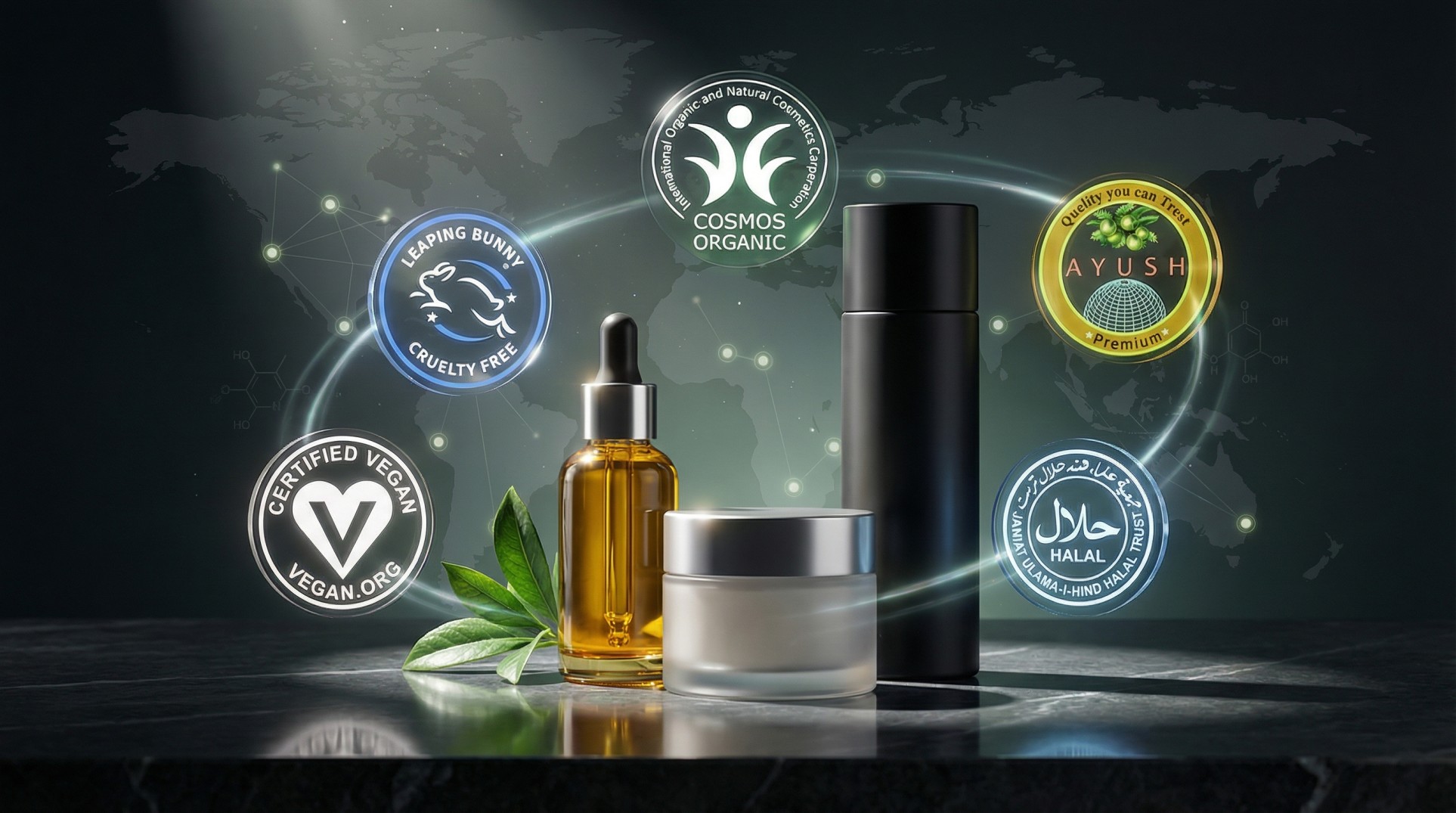
The global cosmetics industry is transforming rapidly, driven by evolving consumer expectations around safety, sustainability, ingredient transparency, and ethical manufacturing. Today’s consumers no longer evaluate products solely on price and performance—they also assess the values behind the brand. Certifications have emerged as powerful tools to reassure buyers that cosmetic products meet certain environmental, ethical, safety, or quality standards.
Cosmetic certifications vary widely in scope—some focus on organic ingredients, others on cruelty-free testing, while some emphasize compliance with international regulations or sustainable sourcing. Understanding these certifications helps manufacturers build trust and provides clarity for consumers navigating an increasingly complex beauty market.
This article explores the most influential cosmetic certifications used worldwide, their criteria, verification processes, and the benefits they bring to brands and consumers alike.
- GMP Certification (Good Manufacturing Practices)
Examples: ISO 22716 (Cosmetic GMP), WHO-GMP, US FDA cGMP (for OTC cosmetics)
GMP certification sets strict guidelines for manufacturing, hygiene, quality control, facility layout, employee training, storage, and documentation.
Benefits:
- Ensures quality and consistency in every batch
- Prevents contamination, production errors, and adulteration
- Required or recommended for exports to Europe, the Middle East, USA, and ASEAN regions
- Boosts credibility with private label buyers and regulatory agencies
GMP is considered the foundational certification for cosmetic manufacturing.
- ISO Certifications
ISO standards improve operational efficiency and credibility at various levels within a cosmetic company.
|
Certification |
Focus & Relevance |
|
ISO 22716 |
I) ISO 22716 is the international standard for Good Manufacturing Practices (GMP) in cosmetics. It provides guidelines for the production, control, storage, and shipment of cosmetic products to ensure quality, safety, and traceability. II) Purpose of ISO 22716- To comply with global regulatory expectations (EU, ASEAN, many Asian markets, etc.) |
|
ISO 9001 (Quality Management) |
Ensures quality control, continuous improvement, and documentation discipline |
|
ISO 14001 (Environmental Management) |
Demonstrates commitment to ecological sustainability |
|
ISO 45001 (Health & Safety) |
Ensures safe working environments for employees |
Benefits:
- Improves workflow efficiency and traceability
- Enhances acceptance in global marketplaces
- Aligns with corporate sustainability and compliance frameworks
- Cruelty-Free Certification
Examples: Leaping Bunny, PETA Beauty Without Bunnies, Choose Cruelty Free
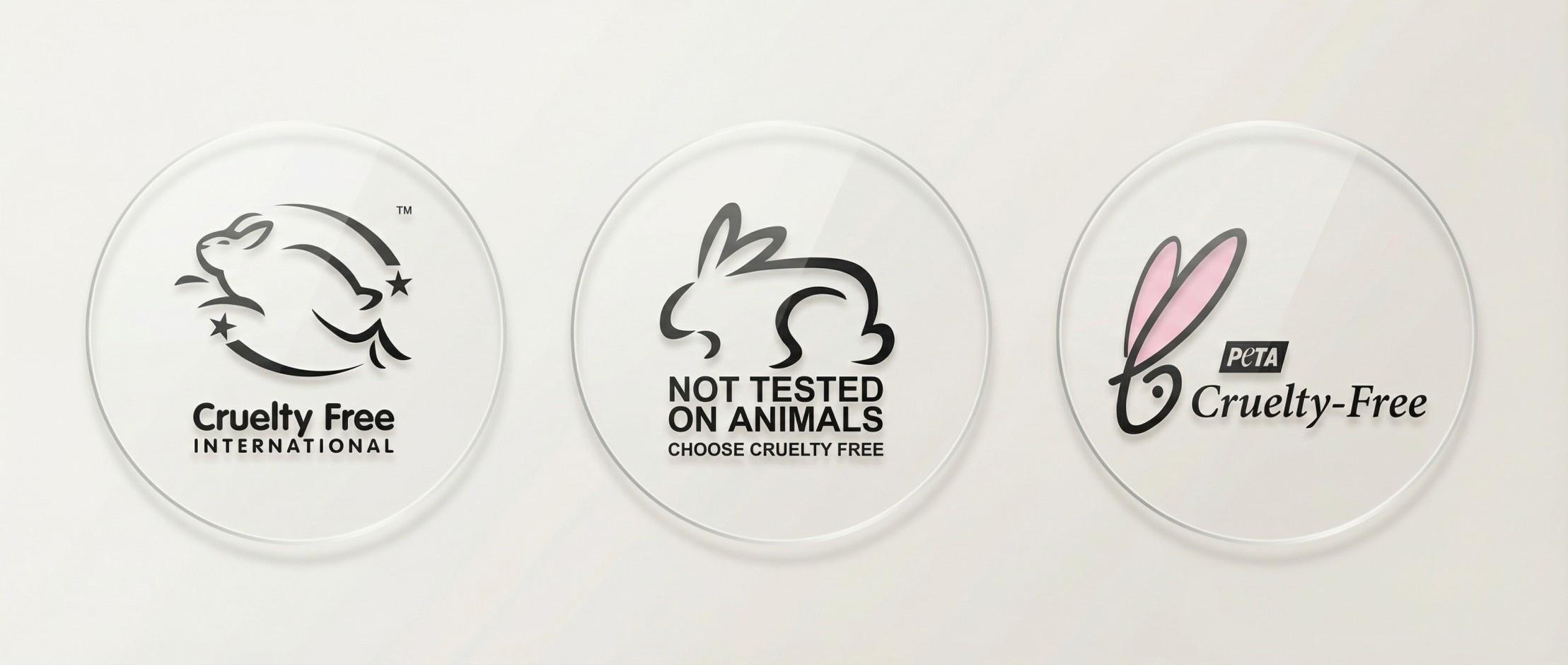
A cruelty-free certification verifies that no animal testing has been carried out at any stage—from ingredient sourcing to product development.
Benefits:
- Essential for ethical and clean beauty brands
- Supports compliance with animal testing bans in the EU, UK, Brazil, and India
- Increases emotional resonance with conscious consumers
- Vegan Certification
Examples: The Vegan Society, Vegan Action, Certified Vegan Seal
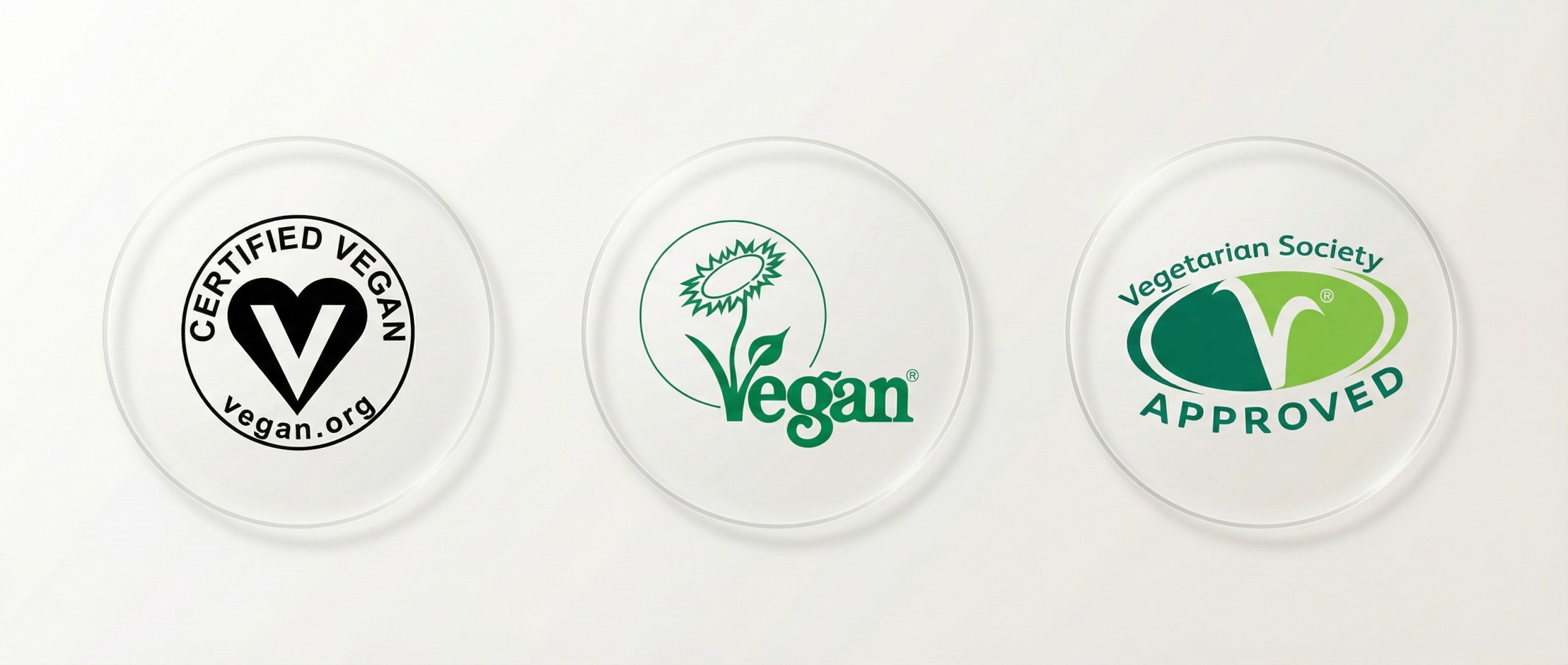
A vegan-certified product contains no ingredient derived from animals—including beeswax, lanolin, collagen, keratin, carmine, or milk protein.
Benefits:
- Differentiates vegan products from cruelty-free (which may still contain animal-derived ingredients)
- Attracts plant-based and ethically driven markets
- Expands access to niche retailers and export markets
Vegan certification is now one of the fastest-growing labels in cosmetics.
- Natural and Organic Certifications
Examples: COSMOS (COSMOS ORGANIC / COSMOS NATURAL), ECOCERT, NATRUE, USDA Organic
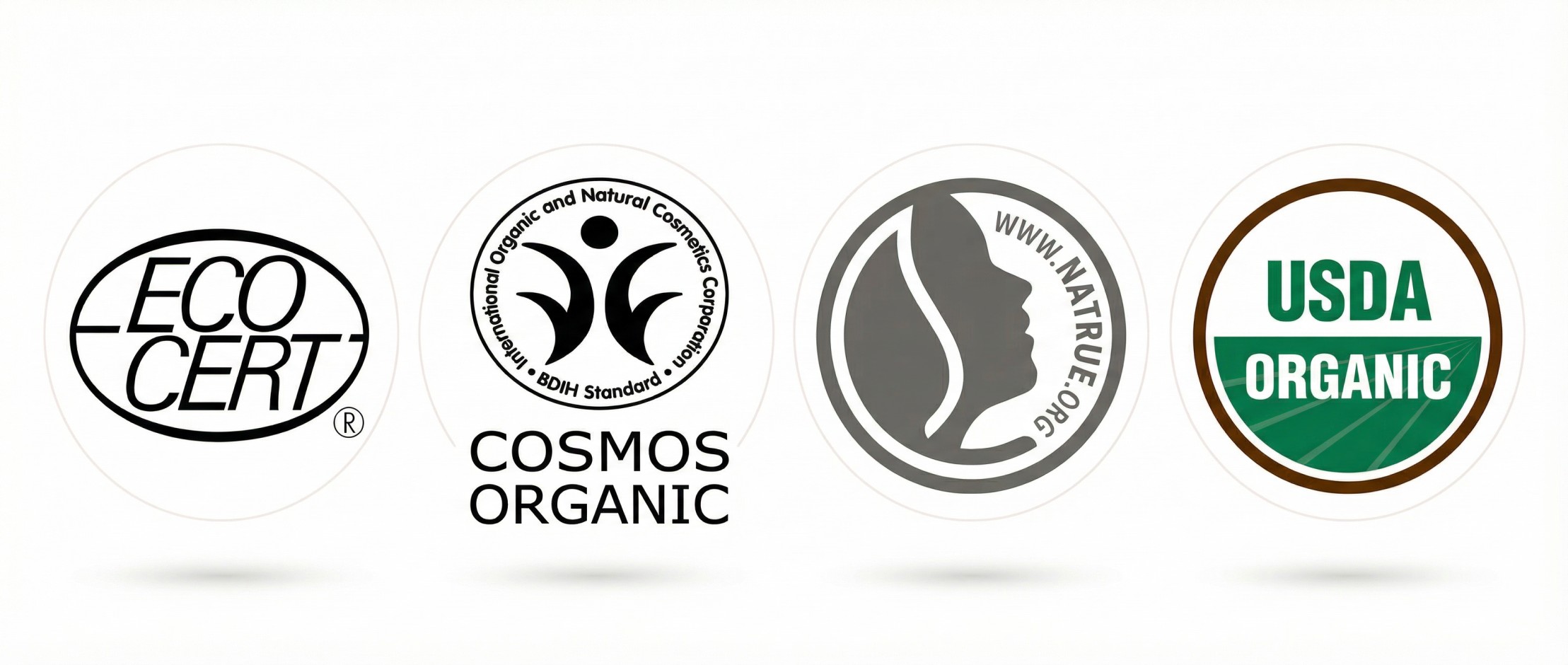
Certification Focus
These programs verify:
- Ingredient sourcing from organic farming
- Limited use of synthetic preservatives and petrochemicals
- Biodegradable and environmentally responsible formulations
- Green chemistry and responsible processing
Benefits
- Supports “clean beauty” positioning
- Justifies premium price positioning
- Provides authenticity for brands using natural or Ayurvedic claims
- Halal Certification
Examples: IFANCA, JAKIM (Malaysia), MUIS (Singapore), Halal India, Jamiat Ulama-i-Hind Halal Trust
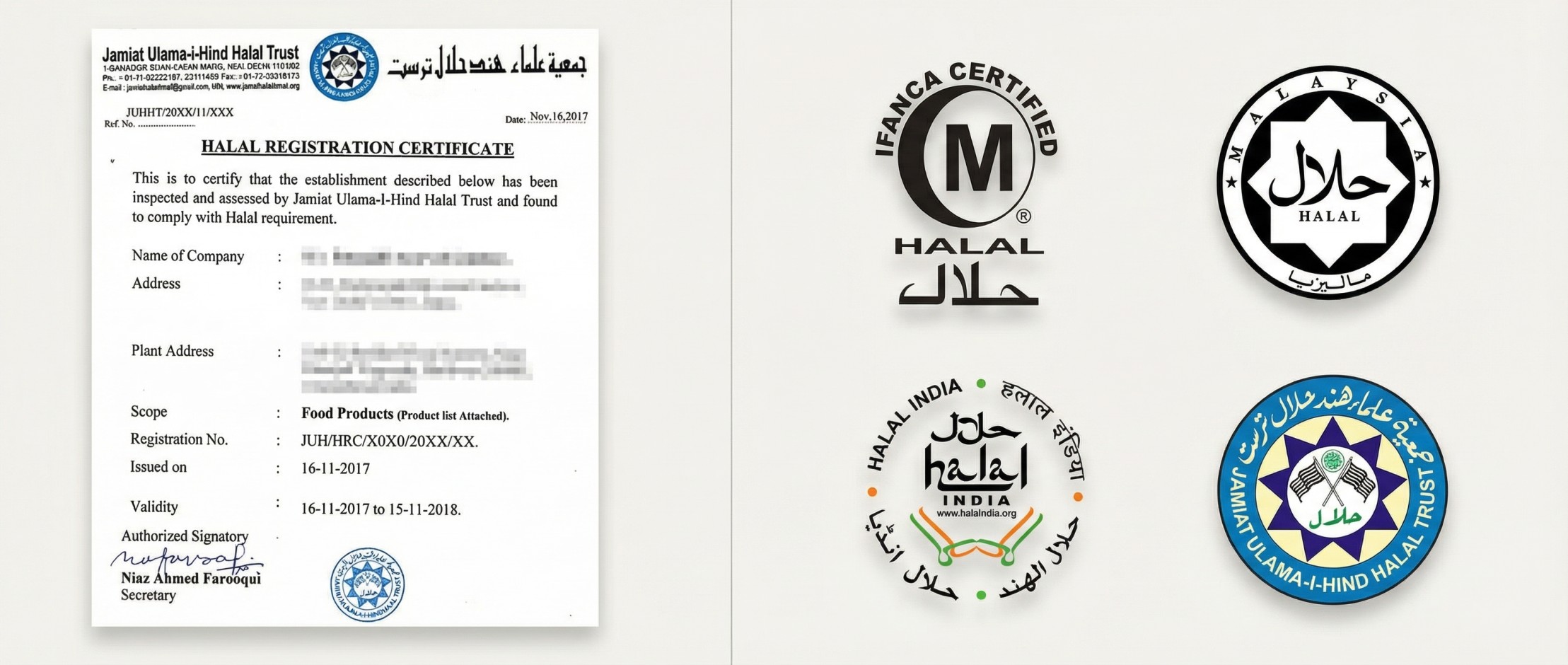
Criteria
- No alcohol or porcine-derived ingredients
- Ethical slaughter requirements for permissible animal-based ingredients
- Strict manufacturing segregation to avoid contamination
The certification evaluates ingredient identity, processing, storage, and logistics.
Benefits
- Mandatory for markets like Indonesia and Malaysia
- Trusted by Muslim consumers globally
- Expands global trade opportunities
- Supports ethical and traceable sourcing
- Ayurvedic / Herbal Compliance (Region-Specific)
Example (India): AYUSH Certification, AYUSH GMP, India Organic (for herbs)
For herbal and Ayurvedic cosmetics, certification ensures authenticity of botanical ingredients and compliance with traditional and regulatory standards.
Benefits:
- Required to validate Ayurveda-based or herb-derived claims
- Strengthens acceptance among herbal and traditional wellness buyers
- Encourages correct sourcing, safety, and formulation practices
- Dermatologically Tested & Clinical-Backed Certifications
These certifications are validated through human clinical trials supervised by dermatologists or medical experts.
Benefits:
- Boosts confidence in products claiming “safe for sensitive skin,” “hypoallergenic,” or “non-comedogenic”
- Reduces adverse reactions and improves consumer satisfaction
- Required by many retail chains before listing dermo-cosmetic brands
- Non-Toxic & Chemical Safety Certifications
Examples: EWG Verified, Made Safe, Allergy Certified, Clean Label Project
These certifications ensure products are free from known harmful substances such as endocrine disruptors, carcinogens, heavy metals, and toxic preservatives.
Benefits:
- Aligns with rising clean beauty and health-conscious trends
- Ideal for baby care, women’s care, and sensitive skin product categories
- Enhances safety credibility and transparency
- Sustainability & Ethical Trade Certifications
Examples: Fair Trade, RSPO (Certified Sustainable Palm Oil), FSC (Responsible Packaging), Carbon Neutral Certification
These certifications ensure sustainable sourcing, ethical labor practices, eco-friendly packaging, and reduced carbon footprint.
Benefits:
- Strengthens brand positioning in premium and global markets
- Appeals to environmentally aware consumers
- Supports compliance with ESG (Environmental, Social & Governance) expectations
Why Certifications Matter Today
|
Advantage |
Impact |
|
Regulatory Compliance |
Supports legal market access and prevents recalls or bans |
|
Consumer Trust |
Offers assurance of product safety and quality |
|
Brand Differentiation |
Creates competitive advantage in saturated markets |
|
Export & Retail Eligibility |
Many international markets and retailers require certification |
|
Ethical and Environmental Commitment |
Appeals to modern conscious buyers |
Conclusion
Cosmetic certifications are no longer optional—they are powerful tools that enhance transparency, build trust, and define a brand’s identity in a rapidly evolving industry. Whether a company focuses on natural beauty, clinical skincare, ethical formulations, or global expansion, certifications provide a measurable standard to validate claims and strengthen market reputation.
As the beauty industry continues shifting toward safer, cleaner, and more responsible practices, certifications will remain central to shaping the future of cosmetics—and the brands who embrace them will lead with credibility, confidence, and consumer loyalty.

Author : Souvik Roy
He can be reached at : 9804862116 / souvik619@gmail.com
The author Souvik Roy works with McNROE Consumer Products Pvt Ltd as the Manager Technology Transfer.
Subscribe to our free newsletter to read the latest news and articles before they are published.








Subscribe To Our Newsletter
Join our mailing list to receive the latest news and updates from The Cosmetics industry
You have Successfully Subscribed!