

Disrupting Animal Testing
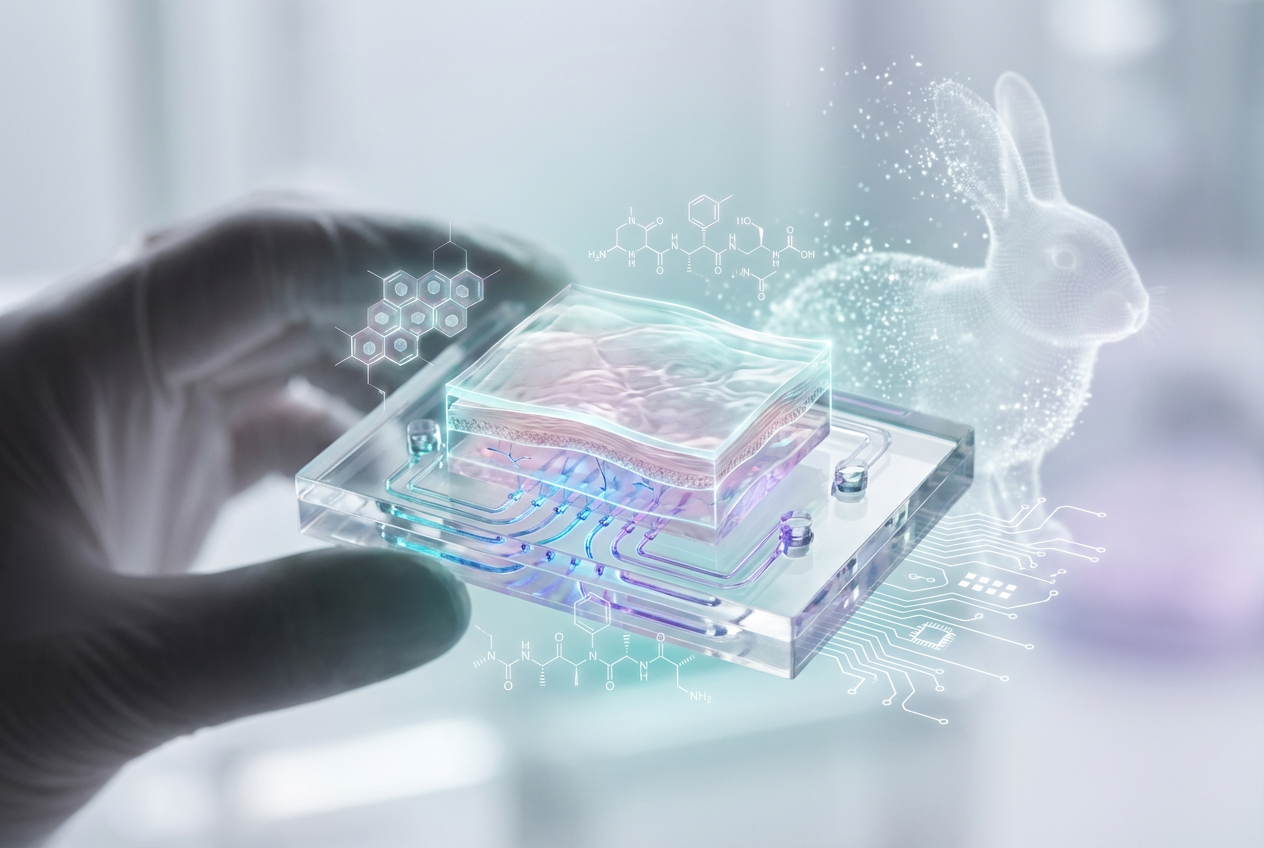
Skin-on-chip technology could significantly reduce—and eventually replace—animal testing in beauty by offering faster, more ethical, and human-relevant safety and efficacy data.
What Is Skin-on-Chip?
Skin-on-chip (SoC) platforms are microfluidic devices that simulate human skin’s structure and function using real human cells. These chips replicate key features like the epidermis, dermis, and even vascularization, allowing researchers to test cosmetic ingredients and formulations in a controlled, human-relevant environment.
Key Advantages
– Human-Relevant Results: Unlike animal models, SoC platforms use human skin cells, offering more accurate predictions of irritation, absorption, and efficacy.
– Ethical & Regulatory Alignment: With bans on cosmetic animal testing in regions like the EU and UK, SoC offers a compliant alternative that aligns with cruelty-free mandates.
– Speed & Efficiency: SoC systems can deliver faster results than traditional animal or even in vitro testing, accelerating product development timelines.
– Multi-Endpoint Testing: These chips can assess toxicity, barrier function, inflammation, and microbiome interactions—all in one platform.
– Scalability & Cost Reduction: Though initial setup is costly, SoC platforms reduce long-term expenses by minimizing animal housing, care, and variability.
Global Policy Shifts
– The UK’s £75 million investment in alternatives like organ-on-chip and 3D bio-printed tissues signals a major push toward animal-free testing by 2026.
– The EU and US FDA are exploring SoC for drug and cosmetic safety, with expectations to phase out animal testing for skin irritants and Botox strength by 2027.
– Studies published by the Royal Society of Chemistry show SoC’s ability to detect adulterants and contaminants in personal care products—faster and more ethically than animal models.
Challenges & Future Outlook
– Standardization: Regulatory bodies still require harmonized protocols and validation for SoC data.
– Complexity: Simulating full skin physiology—including immune response and long-term exposure—is still evolving.
– Integration with AI: Combining SoC with AI-driven analysis could unlock predictive modeling and personalized testing.
Cosmetech’s Takeaway
Skin-on-chip isn’t just a lab novelty—it’s a strategic disruptor poised to reshape safety testing in beauty. For formulators, it offers a path to faster innovation, ethical compliance, and deeper biological insights. For brands, it’s a storytelling asset that aligns with consumer values and regulatory evolution.
Subscribe to our free newsletter to read the latest news and articles before they are published.













Subscribe To Our Newsletter
Join our mailing list to receive the latest news and updates from The Cosmetics industry
You have Successfully Subscribed!