

India’s D2C BPC Sector in FY25: Growth, Losses, and a Wave of Consolidation
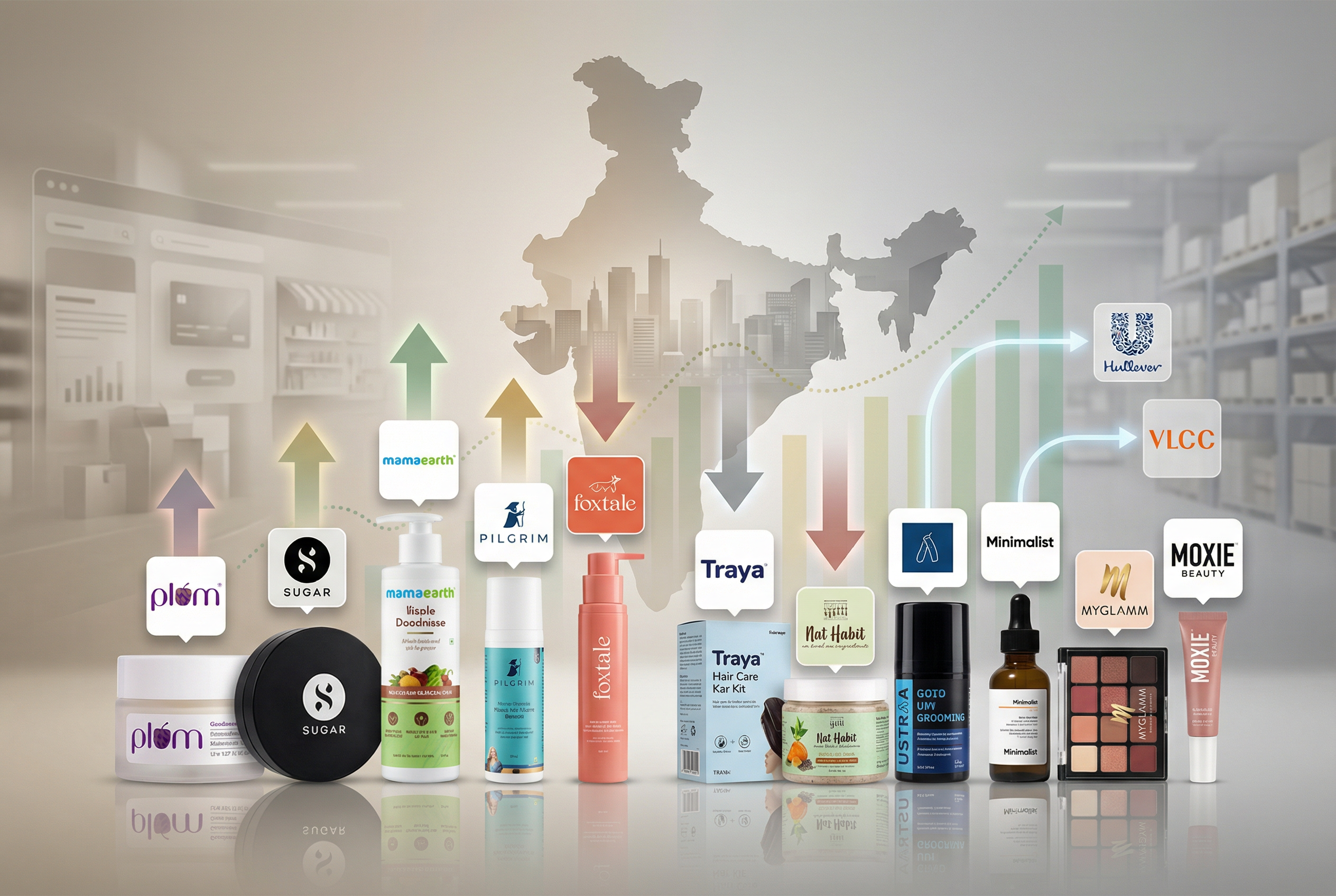
India’s direct-to-consumer (D2C) beauty and personal care industry in FY25 was a tale of soaring revenues, deepening losses, and strategic realignments. While consumer demand remained robust, the sector grappled with profitability pressures, prompting a wave of acquisitions and operational pivots.
Financial Outcomes: Growth vs Profitability
|
Brand |
FY25 Revenue (Rs) |
YoY Change |
Profit/Loss Status |
Notes |
|
Plum Goodness |
402 |
↑ 23.3% |
₹25 Cr PAT (vs ₹84 Cr loss in FY24) |
First major D2C brand to turn profitable |
|
Sugar Cosmetics |
415 |
↓ 17.8% |
EBITDA loss ₹108 Cr, margin –26% |
Faced slowdown despite scale | |
|
MamaEarth |
2,067 Cr |
↑ 8% |
Net loss ₹19 Cr in H1 |
Inventory correction hit margins |
|
Pilgrim |
408 |
↑ 105% |
Net loss ₹68.7 Cr (2.6x wider) |
Rapid growth, rising costs |
|
Foxtale |
199 |
↑ 2.4x |
Losses up 38% YoY |
Skincare-focused, aggressive marketing |
|
Traya |
338 |
↑ 43% |
Loss ₹23 Cr (vs ₹8.6 Cr profit in FY24 |
Personalized haircare model |
|
Nat Habit |
106 cr |
↑ 61% |
Losses widened 61% |
Fresh beauty positioning |
|
Ustraa |
73 |
↓ 22% |
Losses cut 72% |
Cost discipline post-acquisition |
|
Moxie Beauty |
N/A |
N/A |
Raised $15M Series A |
AI-powered personalization, backed by Bessemer
|
|
My Glamm ( Good Glamm Group) |
N/A |
N/A |
Consolidated losses, restructuring underway |
| Focus on content-commerce integration |
Mergers & Acquisitions: A Year of Consolidation
FY25 marked a turning point as acquisitions outpaced new brand launches. According to industry trackers:
– HUL acquired Minimalist for ₹2,955 crore, the largest D2C beauty deal in India’s history. Despite Minimalist’s lack of profitability, HUL paid 8.5x revenue, signalling confidence in premium skincare.
– VLCC acquired Ustraa, retaining founders to lead its D2C push.
In total, D2C acquisitions surged 60% to 45 deals worth $1.2 billion, while new launches dipped 25%.
Sector Challenges
Despite strong consumer interest, start-ups faced mounting headwinds:
– Profitability pressures: High marketing spends and logistics costs eroded margins.
– Inventory disruptions: Mamaearth’s Project Neev led to a ₹64 crore correction, impacting revenue.
– Funding caution: Investors favoured proven models (like Plum) or tech-led innovation (like Moxie), while loss-heavy brands struggled to raise capital.
– Operational strain: Rapid offline expansion and workforce scaling added to cost burdens.
Strategic Shifts & Outlook
– Plum’s profitability is a beacon for the sector, showing that disciplined growth is possible.
– Moxie Beauty’s tech-led model reflects the future of personalized beauty.
– Mamaearth and Sugar are recalibrating strategies to regain profitability.
– MyGlamm’s content-commerce pivot may redefine consumer engagement.
Looking ahead to FY26, the sector is expected to focus on:
– Operational efficiency
– Omnichannel expansion
– Sustainable product innovation
India’s D2C beauty boom is maturing. FY25 was the year it grew up—where scale met scrutiny, and growth demanded discipline. The winners will be those who can blend consumer love with financial logic.
Subscribe to our free newsletter to read the latest news and articles before they are published.












Subscribe To Our Newsletter
Join our mailing list to receive the latest news and updates from The Cosmetics industry
You have Successfully Subscribed!