The Beauty Industry Is Becoming More Sensory
Beauty marketing is undergoing a subtle but important transformation.
For years, brands relied heavily on functional claims, ingredient lists, and efficacy messaging to differentiate themselves. While these factors remain important, consumers increasingly expect beauty products to deliver emotional and sensory experiences alongside measurable performance.
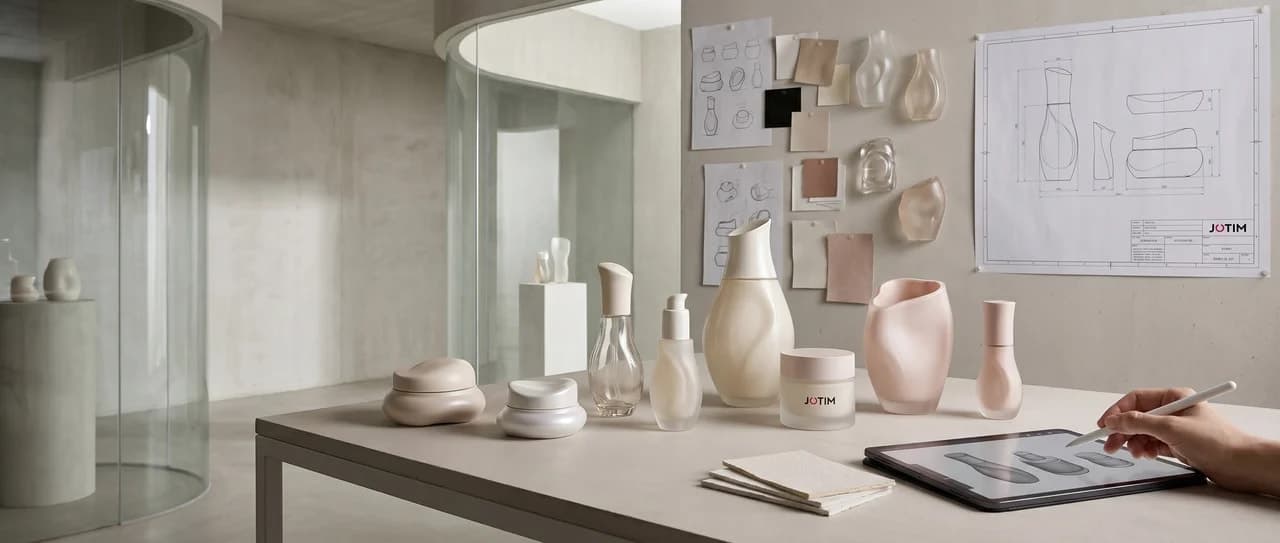
This shift is evident in emerging design narratives such as Jotim's "Spiral Unfolds, Light in Motion", which explores fluidity, movement, texture, and transformation as visual and emotional expressions of beauty.
At first glance, the concept appears rooted in aesthetics.
However, for CMOs, brand strategists, and marketing leaders, it reflects a larger evolution in how beauty products are positioned, communicated, and experienced.
The future of beauty branding may depend less on what products contain and more on how consumers feel when interacting with them.
Fluidity Is Becoming a Brand Asset
Beauty products are inherently sensory.
Consumers see them, touch them, smell them, apply them, and increasingly share them through visual content.
Historically, much of beauty communication focused on outcomes.
Consumers were promised brighter skin, smoother texture, stronger hair, or longer-lasting makeup.
Today's premium beauty brands are expanding that narrative.
They are increasingly emphasising product movement, texture transformation, sensory pleasure, and ritual-based experiences.
Fluid design language fits naturally within this trend.
Motion communicates softness, elegance, flexibility, and luxury in ways that static product claims often cannot.
This helps explain why fluid visual systems are becoming increasingly prominent across premium skincare, fragrance, and cosmetics categories.
Why Consumers Respond to Movement
The appeal of fluidity is not purely aesthetic.
It connects directly to consumer psychology.
Research across luxury, fashion, and beauty suggests that movement is often associated with sophistication, premium quality, and emotional engagement.
Consumers frequently interpret flowing forms as natural, organic, and less mechanical.
This perception aligns closely with broader beauty trends.
Consumers increasingly seek products that feel intuitive, personalised, and harmonious with their lifestyles.
Fluid visual identities help reinforce these expectations.
For marketers, this creates an opportunity to communicate product benefits through design rather than relying solely on verbal messaging.
The Shift From Product Features to Product Experiences
One of the most important lessons from Jotim's creative direction is that beauty categories are becoming increasingly experience-driven.
Consumers rarely purchase skincare, makeup, or fragrance based on technical specifications alone.
They purchase confidence.
They purchase self-expression.
They purchase aspiration.
Modern beauty brands are therefore investing heavily in creating immersive experiences that begin long before product application.
Packaging, visual identity, content creation, retail design, and digital storytelling all contribute to this experience ecosystem.
The strongest brands ensure every touchpoint communicates a consistent emotional narrative.
Fluid design principles provide a powerful framework for achieving that consistency.
Texture Is Becoming Marketing
Beauty has always relied on texture as a product attribute.
What's changing is the role texture plays in marketing strategy.
Consumers now discover products through social media demonstrations, close-up videos, creator reviews, and digital experiences that showcase texture visually.
Serums cascading across glass surfaces.
Creams melting into skin.
Liquid foundations flowing seamlessly.
These visuals have become central to beauty communication.
The rise of fluid design reflects this reality.
Brands increasingly use movement and texture to signal product performance before consumers ever read a claim or ingredient list.
In many cases, texture has become one of the most persuasive marketing assets available.
Premiumisation Through Design
The beauty industry continues to experience strong premiumisation trends.
Consumers are increasingly willing to invest in products that feel differentiated, luxurious, and emotionally rewarding.
Design plays a critical role in creating that perception.
Jotim's focus on spirals, light interaction, and fluid motion reflects broader premium branding principles.
Rather than communicating abundance through complexity, premium brands increasingly communicate value through refinement.
Minimalism, fluidity, craftsmanship, and sensory sophistication are becoming more important than visual excess.
For marketing leaders, this suggests that premium positioning increasingly depends on experience architecture rather than product claims alone.
The Social Media Advantage
Fluid design is particularly effective within digital environments.
Platforms such as Instagram, TikTok, and YouTube reward movement-based content.
Visuals featuring flowing textures, dynamic lighting, and sensory interactions often generate stronger engagement than static imagery.
Beauty brands understand this intuitively.
Many product launches now prioritise motion-first content creation strategies.
Packaging is designed with video capture in mind.
Textures are developed to photograph and film effectively.
Campaigns increasingly focus on movement rather than traditional advertising formats.
Jotim's creative direction reflects these changing content economics.
What Brand Leaders Should Learn
Several strategic lessons emerge from this evolving design language.
Design Beyond Function
Packaging and visual systems should communicate emotional benefits alongside practical ones.
Build Sensory Consistency
Consumers should experience the same brand narrative across product, packaging, content, and retail environments.
Prioritise Motion-Friendly Assets
Modern beauty discovery increasingly occurs through video and short-form content.
Translate Texture Into Storytelling
Product textures should become part of the communication strategy rather than remaining purely formulation attributes.
Create Emotional Differentiation
Functional advantages can be copied. Emotional associations are often more difficult to replicate.
The Future of Beauty Communication
Jotim's "Spiral Unfolds, Light in Motion" concept highlights an important reality.
Beauty is becoming increasingly experiential.
Consumers still care about efficacy, ingredients, and performance. However, these factors alone rarely create lasting differentiation.
The brands generating the strongest engagement today combine scientific credibility with emotional resonance.
Fluidity, movement, texture, and sensory storytelling provide powerful tools for achieving that balance.
For CMOs and marketing leaders, the opportunity is clear.
Future beauty success may depend not only on what products do, but on how effectively brands translate those benefits into memorable sensory experiences.
In a crowded marketplace, the most compelling story is often the one consumers can feel before they even use the product.