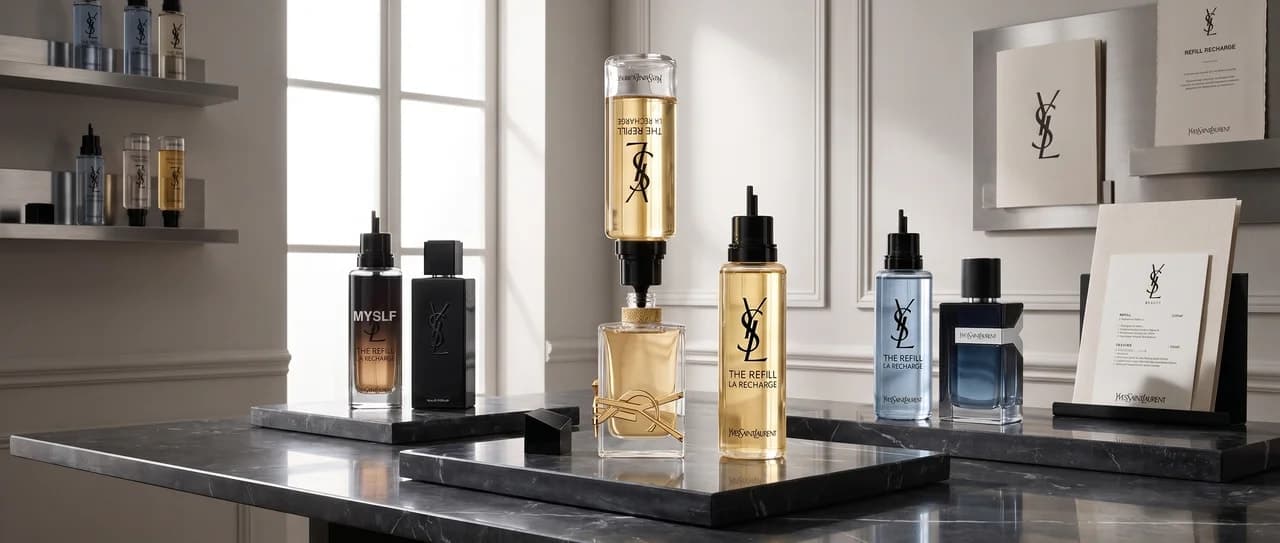
YSL Beauty's Refill Ambition Reflects a Bigger Industry Shift
When YSL Beauty positions refillable products as the future of luxury beauty, the conversation extends beyond packaging innovation.
The initiative highlights one of the most significant transformations occurring across the global beauty industry: the shift from single-use packaging towards circular consumption models.
For years, refill systems were primarily associated with niche sustainability brands. Today, premium beauty players are increasingly integrating refillability into core product portfolios.
YSL Beauty's efforts suggest that refill systems are no longer being viewed as alternative packaging formats.
Instead, they are becoming a strategic business model.
For cosmetics manufacturers, packaging suppliers, compliance teams, and brand owners, this development carries implications that reach far beyond environmental messaging.
Sustainability Is Moving From Marketing to Infrastructure
The beauty industry has spent much of the past decade promoting sustainability commitments.
Packaging reduction, recycled materials, responsible sourcing, and carbon reduction targets have become common corporate objectives.
However, refill systems address a different challenge.
Rather than simply improving packaging materials, they aim to reduce packaging consumption altogether.
This distinction is important.
Refill models can reduce the volume of packaging entering waste streams while extending the useful life of primary packaging components.
As regulatory pressure increases globally, many brands are exploring refillability as a practical pathway towards long-term sustainability targets.
Luxury brands are increasingly joining that movement.
Why Luxury Brands Are Embracing Refills
Historically, luxury beauty relied heavily on premium packaging experiences.
Weight, decoration, finishes, and presentation often played central roles in brand differentiation.
Refillability initially appeared incompatible with this model.
Consumers purchasing prestige fragrances or premium cosmetics often expected entirely new packaging with every purchase.
That perception is changing.
Luxury consumers increasingly value sustainability alongside aesthetics.
Refill systems now allow brands to maintain premium design while reducing material consumption.
In many cases, the primary package becomes a long-term luxury object, while refill components provide ongoing product replenishment.
This approach supports both brand equity and sustainability objectives.
Regulatory Pressures Are Accelerating Adoption
Although refillability is often presented as a consumer-driven trend, regulatory developments are playing an equally important role.
Governments worldwide are implementing policies designed to reduce packaging waste and encourage circular economy practices.
Extended Producer Responsibility (EPR) frameworks continue to expand across numerous markets.
Packaging reduction targets are becoming increasingly common.
Recyclability requirements are becoming more stringent.
In this environment, refill systems offer a practical mechanism for reducing packaging footprints.
For multinational beauty companies, refillability increasingly aligns with both sustainability commitments and regulatory preparedness.
The trend is therefore being driven by compliance considerations as much as consumer demand.
What This Means for Indian Beauty Companies
India's beauty and personal care market is experiencing rapid growth.
At the same time, packaging sustainability is becoming a more important business issue.
The implementation of EPR obligations and growing discussions around circular packaging models are encouraging companies to reassess packaging strategies.
While refill systems remain relatively limited across many beauty categories in India, interest is growing.
Fragrances, skincare products, body care formats, and premium cosmetics are emerging as potential candidates for refill adoption.
YSL Beauty's approach offers valuable lessons.
The transition towards refillability requires long-term planning rather than short-term packaging changes.
Companies must evaluate operational, commercial, and regulatory implications simultaneously.
Packaging Engineering Becomes More Complex
Refill systems introduce new technical requirements.
Primary packaging must withstand multiple usage cycles.
Closure systems must remain reliable.
Refill formats must preserve product integrity and consumer safety.
Manufacturers also need to consider transportation efficiency, shelf presentation, and consumer usability.
This creates new opportunities for packaging suppliers and engineering teams.
The challenge is no longer simply creating attractive packaging.
It is designing systems that balance durability, functionality, sustainability, and luxury positioning.
The technical complexity of refill systems is often underestimated.
Supply Chains Must Adapt
Refillable products require changes throughout the supply chain.
Procurement teams may need to source new packaging formats.
Manufacturing facilities may need to accommodate additional filling configurations.
Inventory management processes become more sophisticated.
Forecasting also becomes more complex because brands must manage demand for both primary products and refill units.
These operational considerations explain why many companies are adopting refillability gradually rather than across entire portfolios.
Successful implementation requires cross-functional coordination.
The Economics of Refill Systems
Refillability is frequently discussed through a sustainability lens.
Economic considerations are equally important.
Consumers often expect refill products to offer cost advantages compared with full-pack purchases.
Brands therefore need pricing strategies that maintain profitability while encouraging adoption.
Packaging investments can also be substantial during initial implementation.
However, long-term benefits may include stronger customer retention, increased purchase frequency, and reduced packaging material consumption.
The business case depends on effective execution.
Refillability must deliver both environmental and commercial value.
What Brands Should Do Now
The shift towards refill systems is accelerating, even if adoption rates vary across categories.
Several actions are worth considering.
Evaluate Product Suitability
Not all beauty categories are equally suited to refill formats.
Review Packaging Architecture
Future packaging systems should be designed with circularity in mind.
Align Sustainability and Compliance Teams
Refillability increasingly intersects with regulatory obligations and EPR strategies.
Engage Packaging Suppliers Early
Successful refill systems require close collaboration across the value chain.
Educate Consumers
Consumer adoption remains essential to long-term success.
Luxury's Next Competitive Advantage
YSL Beauty's refill initiative reflects a broader evolution occurring across premium beauty.
Luxury is no longer defined solely by aesthetics, exclusivity, or craftsmanship.
Increasingly, it is also being shaped by sustainability performance.
For beauty brands, refillability is becoming more than an environmental initiative.
It is emerging as a strategic response to changing consumer expectations, regulatory pressures, and packaging economics.
Whether refill systems become the dominant luxury format remains to be seen.
What is becoming increasingly clear, however, is that refillability is moving from experimental programmes into mainstream beauty strategy.
For manufacturers, packaging suppliers, and brand owners, the time to evaluate that future is now.