FDA's First Sunscreen Filter Update in Two Decades
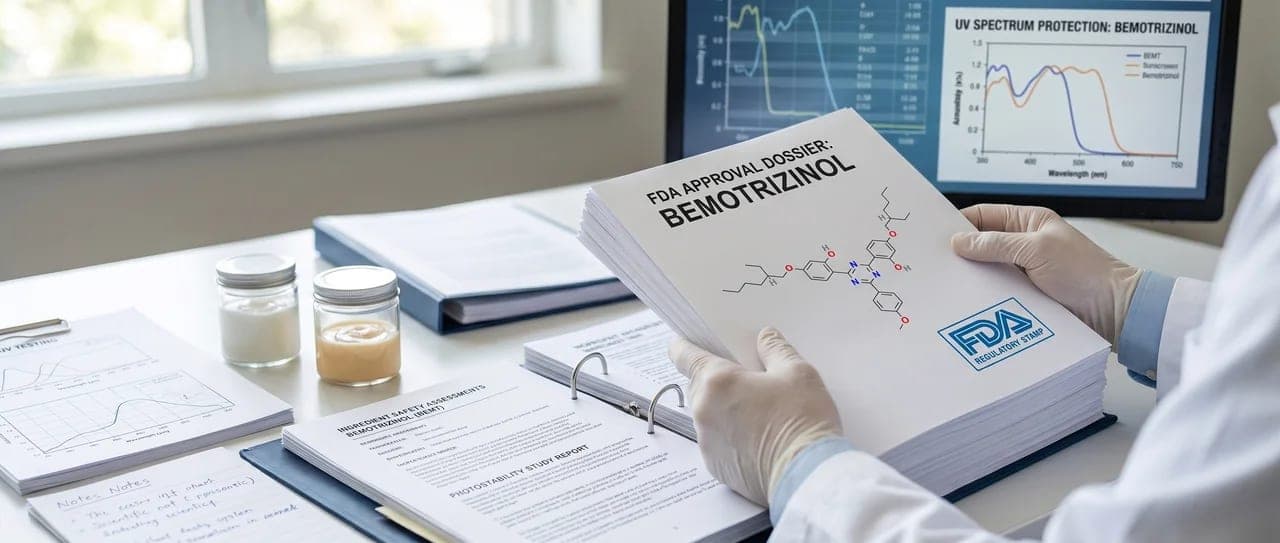
The US Food and Drug Administration (FDA) has added bemotrizinol to its list of permitted sunscreen active ingredients, representing the agency's first major sunscreen filter approval in approximately 20 years.
For regulatory professionals, formulators, manufacturers, and brand owners, this development is far more significant than a routine ingredient approval.
The decision addresses a long-standing gap between the US sunscreen market and many international markets, where bemotrizinol has been available for years.
It also signals a potential shift in how sunscreen innovation may evolve within one of the world's largest sun care markets.
For companies exporting to the United States or developing globally harmonised sunscreen portfolios, the update warrants close attention.
Understanding Bemotrizinol's Industry Importance
Bemotrizinol, commonly known by the trade name Tinosorb S, is a broad-spectrum UV filter widely used in numerous international sunscreen formulations.
The ingredient is valued because it provides protection across both UVA and UVB wavelengths while demonstrating strong photostability.
Photostability is particularly important in sunscreen formulation.
Some UV filters degrade when exposed to sunlight, reducing protection over time. Bemotrizinol helps maintain sunscreen performance and can also improve the stability of other UV filters within a formulation.
These characteristics have contributed to its widespread adoption across Europe, Asia, Australia, and other markets.
Until now, however, formulators targeting the US market faced regulatory limitations regarding its use.
Why This Approval Matters
The FDA's sunscreen monograph has historically evolved much more slowly than regulations in many other regions.
As a result, sunscreen formulators operating globally often faced challenges when attempting to develop harmonised products.
Different markets required different ingredient combinations.
Different claims strategies were necessary.
Different regulatory pathways had to be managed.
The approval of bemotrizinol helps narrow that gap.
Brands may now gain access to formulation approaches that have already been used successfully in other major markets.
For multinational companies, this could simplify certain aspects of product development and portfolio management.
Implications for Sunscreen Formulation
From a formulation perspective, the approval creates several opportunities.
Broad-spectrum protection remains a key consumer expectation.
Consumers increasingly understand the importance of UVA protection in addition to traditional SPF ratings associated with UVB protection.
Bemotrizinol offers formulators additional flexibility when designing broad-spectrum systems.
Its photostability profile can also improve formulation robustness.
For product development teams, this may enable optimisation of sunscreen performance while balancing aesthetics, stability, and regulatory requirements.
The approval therefore expands the formulation toolbox available to companies operating within the US market.
What It Means for Compliance Teams
Regulatory teams should view the approval as both an opportunity and a responsibility.
Ingredient approval alone does not eliminate compliance obligations.
Companies must still ensure that formulations, labelling, claims, testing protocols, and supporting documentation align with applicable regulatory requirements.
Compliance managers should review:
* Ingredient specifications
* Product dossiers
* Safety documentation
* Stability testing programmes
* Label compliance requirements
* Marketing claims frameworks
For organisations planning new product launches, early regulatory assessment remains essential.
The approval creates possibilities, but successful commercialisation still requires careful compliance execution.
Opportunities for Indian Manufacturers
The development is particularly relevant for Indian manufacturers serving international markets.
Many Indian cosmetic and sunscreen manufacturers increasingly operate as contract manufacturers, exporters, and formulation partners for global brands.
Access to a broader range of globally recognised UV filters can strengthen export competitiveness.
Manufacturers developing products for the US market may now have additional flexibility when creating sunscreen portfolios.
The update also highlights the importance of maintaining awareness of evolving international regulations.
Regulatory intelligence is becoming a competitive advantage in an increasingly global beauty industry.
Companies that anticipate regulatory changes often gain faster access to emerging opportunities.
The Impact on Ingredient Supply Chains
Ingredient approvals inevitably influence sourcing strategies.
As demand for bemotrizinol potentially increases within the United States, procurement teams may need to reassess supplier relationships and sourcing plans.
Several considerations become important:
* Supplier qualification
* Regulatory documentation
* Quality assurance programmes
* Capacity planning
* Inventory management
Companies entering the market early may benefit from securing supply arrangements before demand increases significantly.
Supply chain readiness therefore becomes an important component of commercial planning.
Competitive Implications for Brands
The approval is also likely to influence competitive dynamics within the sunscreen category.
Consumers increasingly seek high-performance sunscreens offering broad-spectrum protection, pleasant sensory characteristics, and strong stability profiles.
Brands capable of leveraging new formulation options may gain opportunities to enhance product performance.
However, ingredient access alone will not guarantee success.
Differentiation will still depend on efficacy, consumer experience, claims substantiation, packaging, and brand positioning.
The approval should therefore be viewed as an enabler rather than a competitive advantage in itself.
What Companies Should Do Now
Several immediate actions are worth considering.
Review Current Sunscreen Portfolios
Assess whether bemotrizinol could enhance existing formulations.
Evaluate Regulatory Pathways
Confirm compliance requirements for intended markets and product categories.
Engage Ingredient Suppliers
Discuss availability, documentation, and sourcing strategies.
Strengthen Claims Support
Ensure performance claims remain supported by appropriate testing.
Monitor Future Regulatory Developments
The approval may encourage further discussion regarding sunscreen innovation and additional UV filter evaluations.
A Significant Regulatory Milestone
The FDA's approval of bemotrizinol represents one of the most important sunscreen regulatory developments in recent years.
Beyond the ingredient itself, the decision signals renewed movement within a category that has seen limited regulatory change over the past two decades.
For formulators, it expands technical possibilities.
For compliance professionals, it introduces new planning considerations.
For manufacturers and brand owners, it creates opportunities to strengthen sunscreen portfolios for the US market.
The long-term significance will depend on how quickly industry stakeholders adapt.
What is clear, however, is that sunscreen innovation in the United States now has access to a tool that much of the global market has been using for years.