Beauty's Next Growth Engine Is Personalisation
For years, personalisation has been discussed as one of beauty's most promising opportunities.
Brands experimented with customised skincare regimens, AI-powered recommendations, skin diagnostics, and made-to-order formulations. While many of these initiatives generated interest, scalability often remained a challenge.
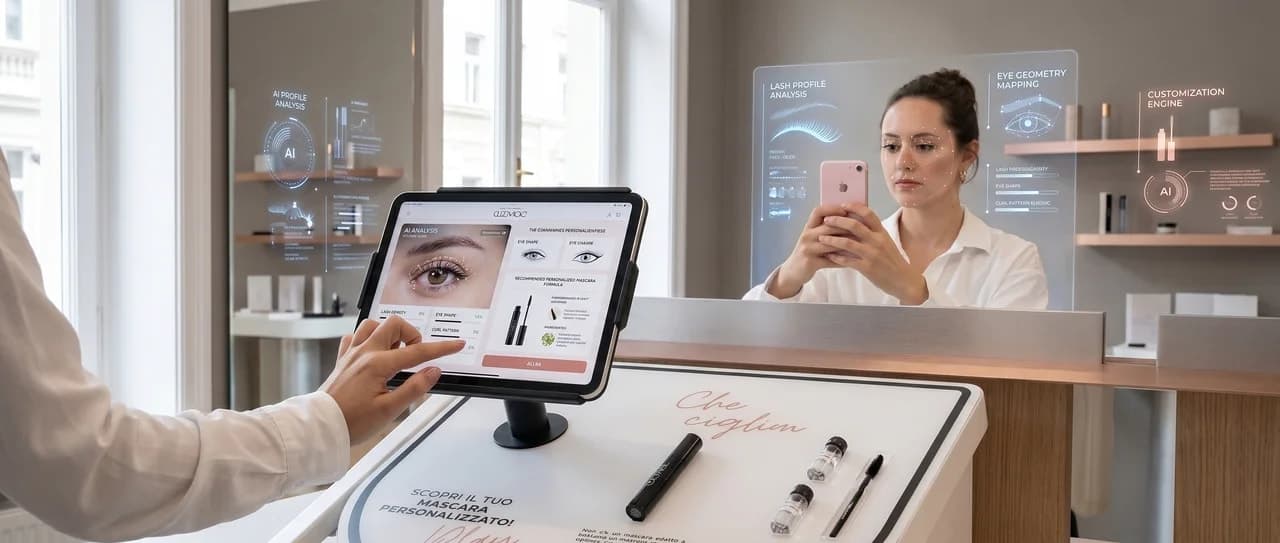
Now, companies such as Essentia are exploring how personalisation can move into one of beauty's most established product categories: mascara.
The concept may appear simple at first glance.
However, the broader implications are significant. If personalisation can be successfully industrialised within a mass-market category like mascara, it could reshape how brands approach product development, consumer engagement, and category growth.
For marketing leaders, the story is less about mascara itself and more about what it reveals regarding the future direction of beauty.
One Product Rarely Fits Every Consumer
Mascara illustrates a fundamental challenge within beauty.
Consumers may purchase the same product category for entirely different reasons.
Some want lengthening performance. Others prioritise volume, curl retention, lash separation, colour intensity, smudge resistance, or sensitivity compatibility.
Traditional beauty products attempt to satisfy multiple needs through a single formulation.
This approach inevitably creates compromise.
Personalisation seeks to eliminate that compromise by matching product performance more closely to individual expectations.
The growing interest in customised mascara reflects a broader recognition that beauty consumers increasingly expect products designed around their specific preferences rather than broad demographic assumptions.
The Shift from Mass Beauty to Precision Beauty
Historically, beauty growth was built around scale.
Brands developed products for the largest possible consumer audience and relied on marketing to drive adoption.
Today's consumers increasingly value relevance over universality.
They expect recommendations, experiences, and products tailored to their unique needs.
This shift mirrors developments already seen in entertainment, retail, fitness, and healthcare.
Beauty is now following a similar trajectory.
The emergence of personalised mascara suggests that precision beauty may gradually move from premium niche offerings towards mainstream accessibility.
That transition creates opportunities and challenges for brand leaders alike.
Data Is Becoming a Beauty Ingredient
One of the most important lessons from personalisation initiatives is that product development increasingly depends on data.
Customisation requires understanding consumer preferences at a far deeper level than traditional segmentation models allow.
Questions relating to lash type, makeup habits, lifestyle, climate, wear duration, and aesthetic preferences can all influence product recommendations.
As brands collect and analyse this information, consumer data becomes a strategic asset.
The most successful personalisation programmes are often powered not only by formulations but by insight generation.
For marketers, this creates a powerful feedback loop.
Every interaction generates information that can improve future product recommendations and innovation decisions.
Why Consumers Are Responding
The appeal of personalised beauty extends beyond functionality.
Personalisation creates emotional engagement.
Consumers often perceive customised products as more valuable, more premium, and more relevant than standard offerings.
This perception can strengthen brand affinity and increase loyalty.
Importantly, personalisation also helps consumers navigate increasingly crowded product assortments.
Beauty shelves and online marketplaces are filled with near-identical choices.
Personalised recommendations simplify decision-making.
For consumers overwhelmed by choice, simplicity itself becomes a benefit.
The Economics of Customisation Are Improving
Personalisation has traditionally been associated with high operational complexity.
Manufacturing flexibility, inventory management, fulfilment challenges, and cost structures often limited scalability.
Technological advances are changing this equation.
Digital diagnostics, AI-driven recommendation systems, modular product architectures, and flexible production capabilities are making personalisation more commercially viable.
This is one reason why interest in customised beauty continues to grow.
Companies are discovering ways to deliver individualisation without sacrificing operational efficiency.
For brand leaders, the critical question is no longer whether personalisation is possible.
The question is whether competitors can execute it more effectively.
The Marketing Advantage Goes Beyond Product Performance
One of the most overlooked aspects of personalisation is its marketing potential.
Traditional beauty marketing often relies on broad messaging designed to appeal to large audiences.
Personalisation enables more targeted communication.
Brands can tailor messaging based on specific consumer needs, preferences, and behaviours.
This creates stronger relevance.
Consumers increasingly respond to brands that appear to understand their individual challenges rather than speaking to a generic audience.
As personalisation capabilities improve, marketing effectiveness may become as important as product customisation itself.
What Brand Leaders Should Learn
The emergence of personalised mascara offers several strategic lessons.
Build Around Consumer Problems
Consumers rarely purchase products because they are personalised.
They purchase products because personalisation helps solve specific problems more effectively.
Invest in Data Infrastructure
The value of personalisation often depends on the quality of underlying consumer insights.
Simplify the Experience
Successful personalisation programmes reduce complexity for consumers rather than adding to it.
Treat Personalisation as a System
Customisation affects product development, digital platforms, manufacturing, customer service, and marketing simultaneously.
Start Small, Scale Strategically
Not every category requires complete product customisation. Incremental personalisation can often deliver meaningful value.
The Competitive Landscape Is Changing
The rise of personalised mascara reflects a broader evolution taking place across beauty.
Consumers increasingly expect products that adapt to their needs rather than forcing them to adapt to standardised offerings.
This shift is creating opportunities for challenger brands willing to rethink traditional category structures.
At the same time, it raises expectations for established players.
As personalisation becomes more accessible, differentiation will depend less on offering customisation and more on delivering meaningful outcomes through it.
Beyond Mascara
Essentia's vision ultimately points towards a larger industry transformation.
Mascara may be the entry point, but the underlying principle extends across beauty categories.
Consumers are moving towards precision experiences, data-driven recommendations, and products designed around individual needs.
For marketing leaders, the lesson is clear.
The future of beauty may not be defined by who develops the most products.
It may be defined by who understands consumers deeply enough to create the right product for each individual.