A $4.3 Billion Divestiture That Reshapes IFF's Identity
International Flavors & Fragrances (IFF) has agreed to sell its Food Ingredients business to private markets manager CVC Capital Partners, sharpening the ingredient supplier's focus on scent, health, and biosciences. The deal values the unit at approximately US$4.3 billion, an enterprise value-to-EBITDA multiple of around 10 times.
IFF's Food Ingredients unit is known for texturants, emulsifiers, plant-based solutions and other specialty ingredients for multinational food and beverage companies. The business generated nearly $3.1 billion in sales and about $430 million of EBITDA in 2025. It is a substantial, profitable operation — and IFF is selling it not because it is struggling but because the parent company's strategic logic has changed.
For cosmetic formulators and procurement teams in India sourcing from IFF's fragrance, health, and biosciences divisions, this transaction requires attention. A company that divests a $4.3 billion business unit is signalling where it intends to invest next — and that directional signal has direct implications for what IFF will offer, prioritise, and develop for the BPC industry.
What IFF Is Keeping — and Why It Matters for Cosmetic Formulators
The deal is part of IFF's efforts to transform its portfolio and will leave it focused on its "innovation driven" units, which include taste, scent, and health and biosciences.
For BPC procurement and formulation teams, three of these retained divisions are directly relevant.
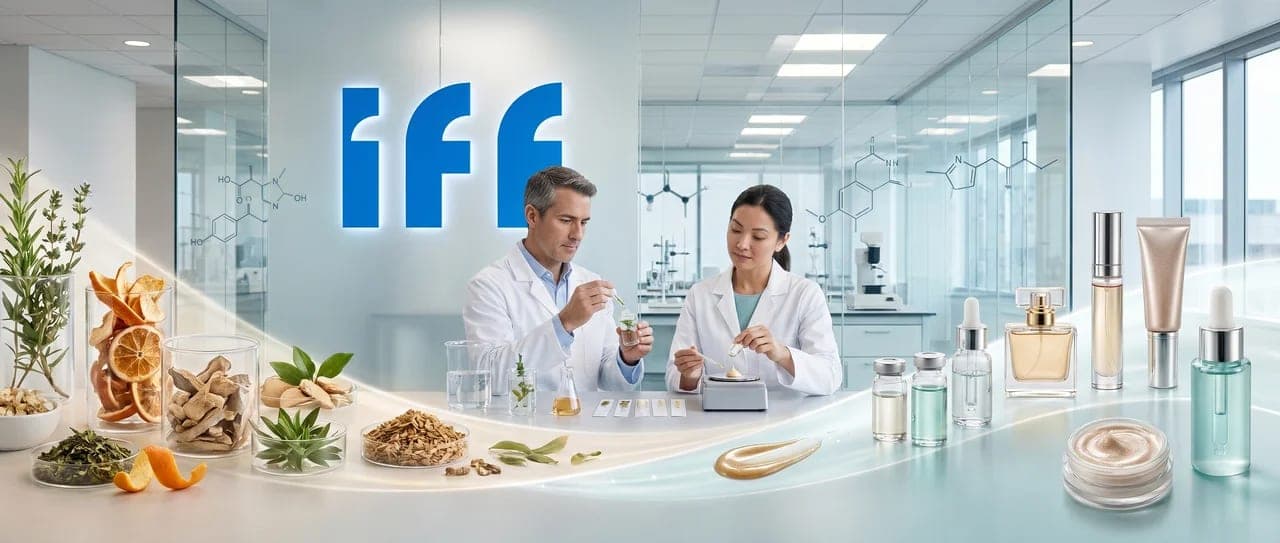
IFF Scent — the fragrance division — is one of the world's most capable fragrance ingredient suppliers, maintaining a deep portfolio of both captive synthetic molecules and access to natural materials. The scent division creates fragrances for fine fragrance, consumer products, and cosmetics customers globally, and carries a significant roster of proprietary materials. Indian fragrance brands and personal care formulators working with IFF Scent should expect the retained division to receive increased R&D and commercial investment as food ingredients exits the portfolio.
IFF Health & Biosciences — containing the probiotics, enzymes, cultures, and bioactive ingredient businesses — is directly relevant for cosmetic formulators working in microbiome-positioned skincare, probiotic personal care, and fermentation-derived actives. This division's technology platform intersects with the longevity and skin-biome directions identified by Euromonitor as high-growth vectors for 2026 and beyond. Increased IFF investment in this division should accelerate the availability and diversity of biotech-derived cosmetic actives.
The biotechnology and naturals integration referenced by IFF CEO Erik Fyrwald is particularly noteworthy. Fyrwald said: "By simplifying our portfolio to where we can create the greatest value, IFF will accelerate innovation, drive investment in R&D, and further integrate our biotechnology and naturals capabilities more effectively across our global platform." For formulators, this signals a more coherent, better-funded pipeline of biotechnology-derived naturals — biosynthetic and fermentation-produced aroma chemicals, bioactive skin ingredients, and sustainable natural alternatives — arriving through IFF's commercial portfolio.
The Structural Context: A Decade of IFF Portfolio Transformation
The Food Ingredients sale is not a one-off transaction. IFF noted that it has "taken decisive action" over the last several years to simplify its portfolio. Including the Food Ingredients transaction, the company has divested 13 non-core businesses, generating nearly $10 billion in proceeds.
The sequence is instructive for understanding where IFF is positioning: fruit preparation (2021), savoury solutions (2022), Flavour Specialty Ingredients (2023), Pharma Solutions — sold to Roquette, notably (2024), lecithin and soy protein (2025), and now Food Ingredients (2026). Every divestiture has moved IFF away from commodity-adjacent and food-sector ingredients and toward higher-margin, innovation-led, and more defensible specialty chemistry.
The result of this decade-long transformation will be an IFF whose commercial and R&D identity is organised around fragrance, biotechnology, and health biosciences — a much more coherent and focused company than the sprawling diversified ingredients group it was five years ago.
The IFF-CVC Structure and What It Means for Ingredient Continuity
IFF will retain a 10% stake in the Food Ingredients business, partly to ensure continued cooperation between the company and the food-ingredients business. This retained stake is significant for formulators who use ingredients that sit at the boundary between food and cosmetic applications — texturants, emulsifiers, certain plant-based actives — that were previously supplied through the Food Ingredients division.
The practical implication is that a clean commercial separation is not guaranteed, at least in the near term. CVC Capital Partners will operate the food ingredients business with a focus on its core food and beverage customers, but the retained IFF stake provides a mechanism for ongoing technical cooperation where ingredient categories overlap.
For Indian formulators sourcing ingredients that have both food and cosmetic applications — hydrocolloids, emulsifiers, certain plant protein derivatives — the prudent action is to clarify with IFF India and its authorised distributors which business unit will handle these materials post-transaction, and to maintain alternative supplier relationships as a contingency.
The India Sourcing and Procurement Implications
IFF has an established commercial presence in India through its regional operations, and Indian cosmetic and FMCG companies are among the beneficiaries of its fragrance, health, and biosciences portfolio. Several practical procurement considerations arise from the divestiture.
Clarify the commercial relationship for cross-category ingredients. Any ingredient that was previously handled through the Food Ingredients division — particularly emulsifiers, hydrocolloids, and plant-based texturants used in cosmetic applications — needs commercial re-mapping following the sale. Procurement teams should initiate this conversation with their IFF India contacts now, before the transaction closes in H1 2027.
Engage proactively with IFF Scent and Health & Biosciences on NPD. The divestiture frees up significant capital and R&D resource within IFF's retained divisions. This is a commercially important moment to deepen supplier relationships in these areas — particularly in fragrance captive materials and biotech-derived skin actives — before increased demand post-divestiture tightens access.
Build alternative supply paths for food-ingredient-adjacent cosmetic actives. The transition of the Food Ingredients business to CVC ownership will produce some degree of commercial and operational disruption. For formulators with critical dependency on any specific IFF Food Ingredients-sourced material, a secondary supply validation should be run now, not after the transaction closes.
What This Means for the Wider Ingredients Industry
The IFF divestiture is one data point in a broader trend of fragrance and speciality chemistry companies refocusing on biotech and premium-margin chemistry. DSM-Firmenich, BASF's personal care division, Givaudan, and Symrise have all been making similar portfolio moves — deepening biotech capabilities, divesting non-core assets, and concentrating R&D in areas where proprietary chemistry creates defensible margin.
The outcome for the cosmetic formulation community over the next 3-5 years will be a supplier landscape that is simultaneously more specialised and more innovative in fragrance and biotech actives — but potentially thinner in the commodity-adjacent emulsifier and texturant categories as these migrate to food-focused suppliers.
Indian formulators and procurement teams that understand this structural shift now will make better sourcing decisions than those who respond to supply changes reactively.