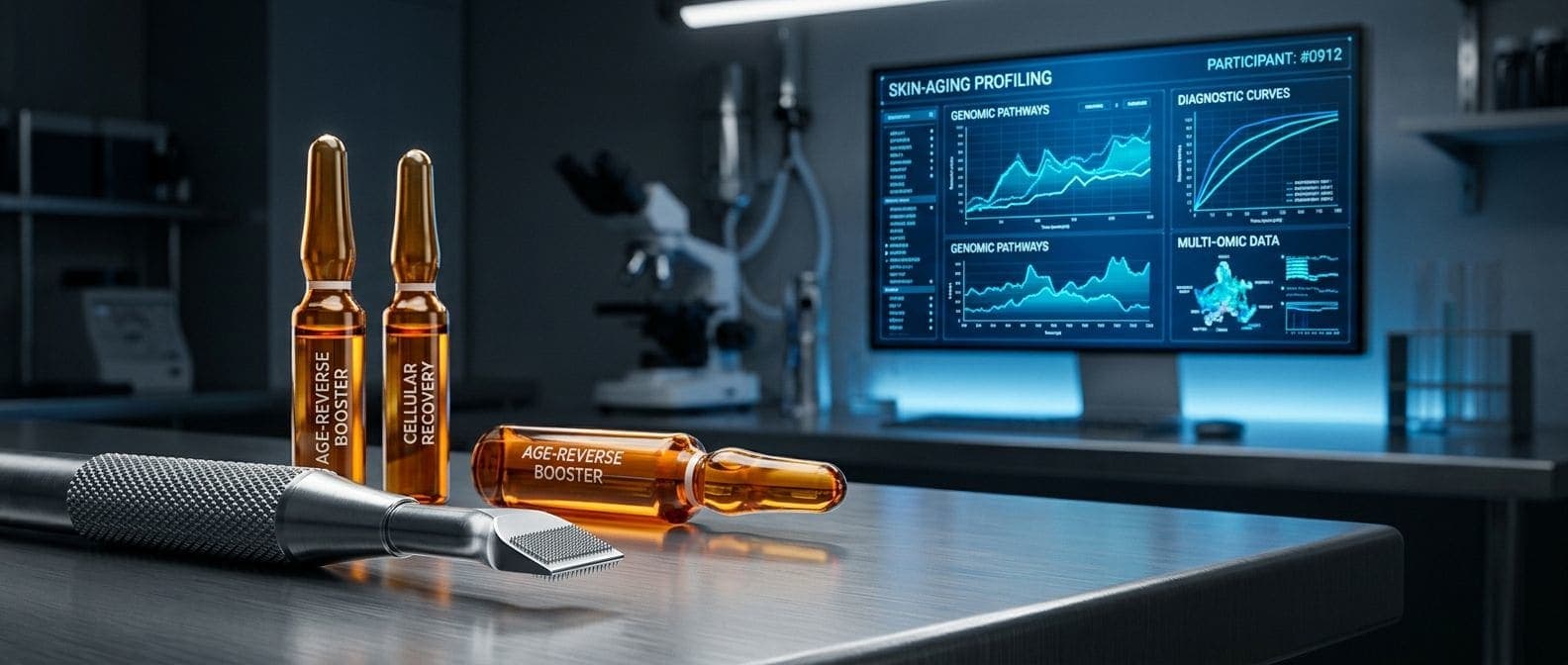
A newly published translational diagnostic framework for skin ageing biomarkers shifts aesthetic dermatology from subjective visual estimation to hard cellular data. By linking high-throughput multi-omics research directly with AI diagnostic platforms, the framework gives formulators a concrete blueprint for cellular longevity. For Indian cosmetic brand owners, raw material suppliers, and CDMOs, anti-ageing formulation is no longer about vague marketing claims. It is now about precision, bio-targeted interventions backed by quantifiable biological endpoints.
Molecular Mechanisms and Biomarker Targets
This diagnostic framework connects specific multi-omic markers directly to high-performance cosmetic actives, giving formulators clear biochemical targets:
Senolytics and NAD+ Bioenergetics: Cellular senescence markers p16INK4a and p21 respond directly to targeted senolytic compounds and NAD+ boosters like nicotinamide mononucleotide (NMN), quercetin, and fisetin. These actives restore mitochondrial bioenergetics through SIRT1 and SIRT3 longevity pathways, suppressing the senescence-associated secretory phenotype (SASP) that drives visible ageing.
Biomarker-Guided Peptides: Peptides such as GHK-Cu and Palmitoyl Tripeptide-5 offer precise control over extracellular matrix degradation. At the transcriptomic level, they upregulate COL1A1 and COL3A1 gene expression while suppressing matrix metalloproteinases MMP-1 and MMP-3.
Epigenetic Modulators: Specific microalgae extracts and Acetyl Hexapeptide-51 Amide correct age-induced microRNA degradation and attenuate abnormal DNA methylation patterns identified by algorithmic profiling.
Navigating Indian CDSCO Regulatory Compliance
Deploying AI-driven longevity systems in India means navigating a dual regulatory structure managed by the Central Drugs Standard Control Organisation (CDSCO). Brands must manage hardware and topical formulations under two distinct frameworks:
Hardware and Sampling Arrays: Minimally invasive microneedle sampling tools used to capture biomarker data fall under the Medical Devices Rules, 2017. Depending on tissue penetration, these devices are categorised as Class B or Class C. Manufacturers must secure proper registration, complete clinical evaluations, and establish compliant quality management systems before commercial launch.
Topical Formulations: Skincare products paired with diagnostic outputs fall under the Cosmetics Rules, 2020. Formulators should maintain clear separation between the diagnostic device filing and the topical cosmetic registration.
Managing Claim Boundaries: Marketing AI-backed "gene-targeted" or "epigenetic" products requires robust clinical efficacy dossiers. Explicitly claiming that a topical product permanently alters cellular structure will trigger CDSCO to reclassify the product as a drug, dragging the brand into a far more complex approval pipeline.
B2B Manufacturing and Modular Opportunities
As diagnostic longevity algorithms move into clinical aesthetics and premium direct-to-consumer (D2C) channels, contract development and manufacturing organisations (CDMOs) across India face immediate growth opportunities:
Modular Product Architecture: Brand demand is rising for customisable base formulations paired with high-potency booster concentrates. This modular approach lets brands mix specific active concentrates into pre-stabilised vehicles based on a customer's individual diagnostic readout.
Pre-Validated Active Complexes: Raw material suppliers must back their active complexes with hard transcriptomic and enzymatic modulation data. When ingredients come with verified biomarker efficacy, AI platforms can seamlessly incorporate them into automated subscription recommendations.
Indian CDMOs and formulators that master this transition—turning complex biomarker data into compliant, shelf-ready cosmetic systems—will capture the leading edge of the aesthetic longevity market.