Typsy Beauty’s fresh ₹20 Cr capital injection signals a broader industry pivot across the Indian colour cosmetics landscape. With performance marketing costs climbing across digital channels, direct-to-consumer (D2C) brands are moving aggressively into physical retail and Modern Trade B2B distribution. Moving from an online storefront to a high-traffic retail display isn't just a sales challenge—it's a formulation challenge. Products must be re-engineered from the ground up for shelf longevity, climate durability, and high-impact consumer swatching.
In physical retail, instantaneous visual and sensory feedback drives sales. Colour formulations must withstand ambient Indian microclimates—characterised by extreme heat and shifting humidity—while delivering immediate, intense pay-off on counter testers without breaking down. On the bench, chemists are leaning into targeted hybrid chemistries to make formulas store-ready:
Build flexible film-forming networks: Combine Trimethylsiloxysilicate and Acrylates Copolymer to construct hydrophobic, transfer-proof matrices. These polymers anchor pigments in place, preventing smudging and thermal breakdown under bright store spotlights.
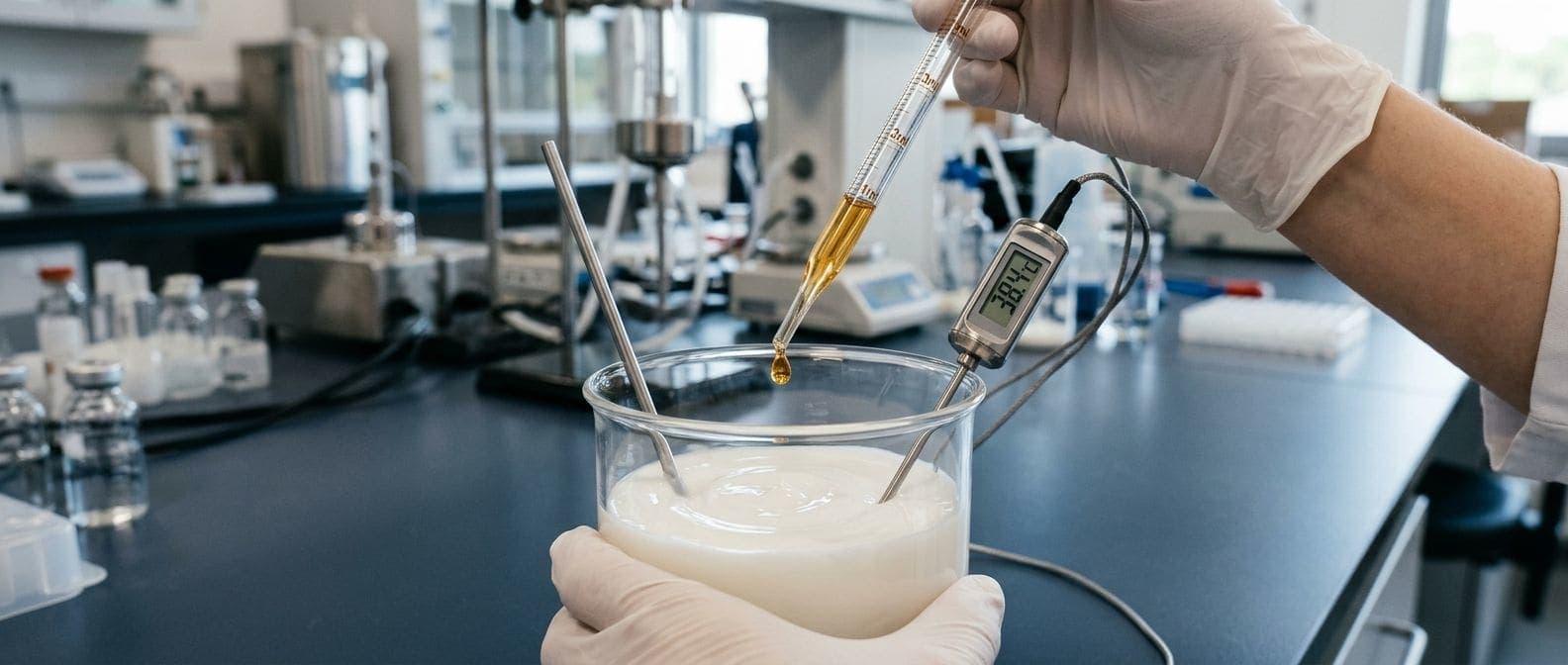
Optimise pigment dispersion: Incorporate dispersants like Polyhydroxystearic Acid to keep pigments suspended and maintain viscosity stability. This prevents particle agglomeration in lip tints and multi-use sticks, guaranteeing smooth application and vibrant, single-swipe color payoff during instore trials.
Integrate active skin-care emollients: Blend Squalane, Tocopherol, and Sodium Hyaluronate into long-wear polymer bases to cushion the formula, balancing long-wear performance with real-time dermal hydration.
Scaling B2B distribution brings immediate regulatory scrutiny from the Central Drugs Standard Control Organisation (CDSCO) under India’s Cosmetics Rules 2020. Modern Trade buyers require strict compliance auditing before approving floor space:
Verify Colour Additive Standards: Ensure synthetic dyes and pigments strictly adhere to IS 14318 specifications. Analytical lab panels must verify that heavy metals stay well within legal limits, specifically Lead (Pb) at or below 20 ppm and Arsenic (As) at or below 2 ppm.
Lock Down Packaging Compliance (Rule 34): Secondary packaging must prominently display the manufacturing license number (Form COS-8), full INCI lists, net weight, batch numbers, and expiry details to guarantee end-to-end traceability during retail audits.
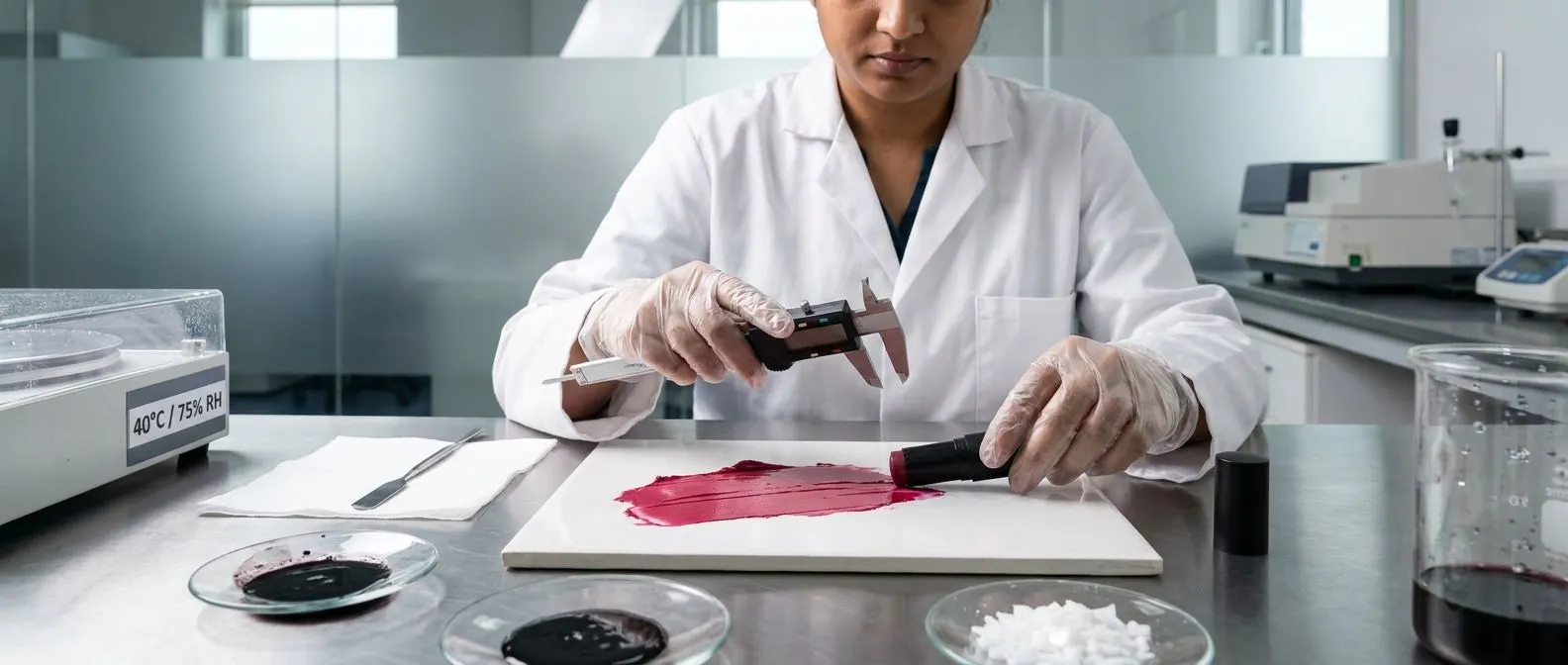
Capturing offline market share requires turnkey product formats backed by agile Contract Development and Manufacturing Organisations (CDMOs). Demand is surging for multi-use colour sticks, transfer-proof lip stains, and serum bases engineered for Modern Trade logistics. CDMO partners must run accelerated stability protocols at 40°C and 75% relative humidity (RH) to ensure a 24-month shelf life across diverse climatic zones. Partnering with established units like Elegant Cosmed Pvt Ltd (Maharashtra) gives growing brands the infrastructure needed for low-MOQ shade runs and rapid commercialisation.
Typsy Beauty’s retail push proves that brick-and-mortar expansion is vital for long-term margin health. For brand founders and contract manufacturers, success relies on tackling bench realities head-on—from preventing formula meltdown under spotlight heat to maintaining batch consistency through high-turnover production cycles. Bridging active formulation chemistry with strict regulatory execution is the exact playbook required to build an enduring omnichannel beauty brand.